Industrial · Dining Room
Industrial Dining Room Ideas
Industrial dining rooms borrow their bones from converted warehouses: exposed brick, blackened steel, raw wood and big honest fixtures instead of polish and upholstery. The palette runs charcoal, rust and timber, and the room feels made rather than decorated. Here is what actually defines the look, and how to preview it on a photo of your own dining room before you commit to a single material.
What makes a dining room Industrial
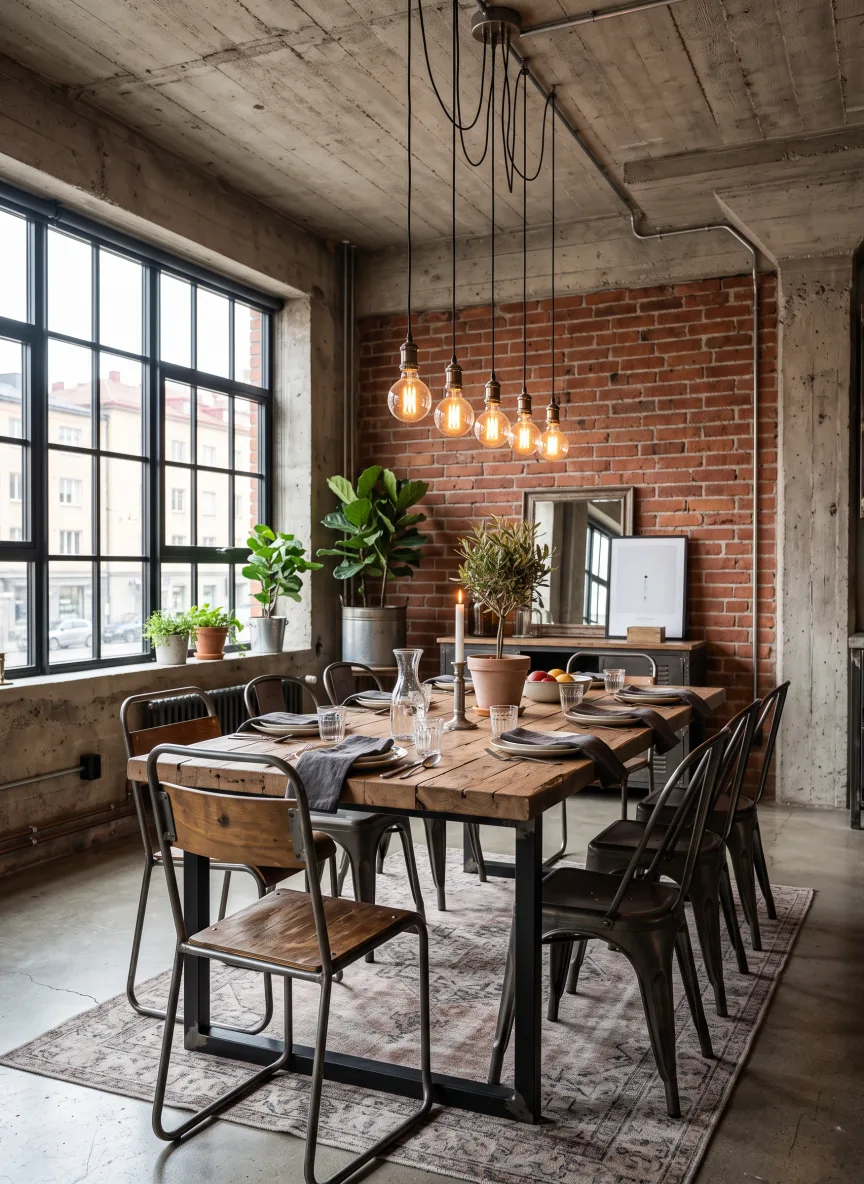
Start with the shell. Walls go exposed brick, raw plaster or a deep charcoal paint, and the ceiling stays honest, with visible beams, ducting or at least a matte dark finish instead of pristine white. Floors are concrete, dark stained wood or worn boards. The point is that every surface shows its material, so anything glossy, papered or heavily trimmed works against the look.
The furniture is heavy and simple: a thick slab or reclaimed-wood table on a steel base, stamped-steel cafe chairs or metal stools, and open shelving on iron brackets rather than a closed sideboard. Lighting is the signature move. A row of oversized black or aged-brass pendants with exposed bulbs, hung low over the table, does more for the room than any accessory. Add one aged leather piece or a factory clock and stop, because Industrial dies the moment it fills up with themed props.
Industrial versus mid-century, and the mistakes to avoid
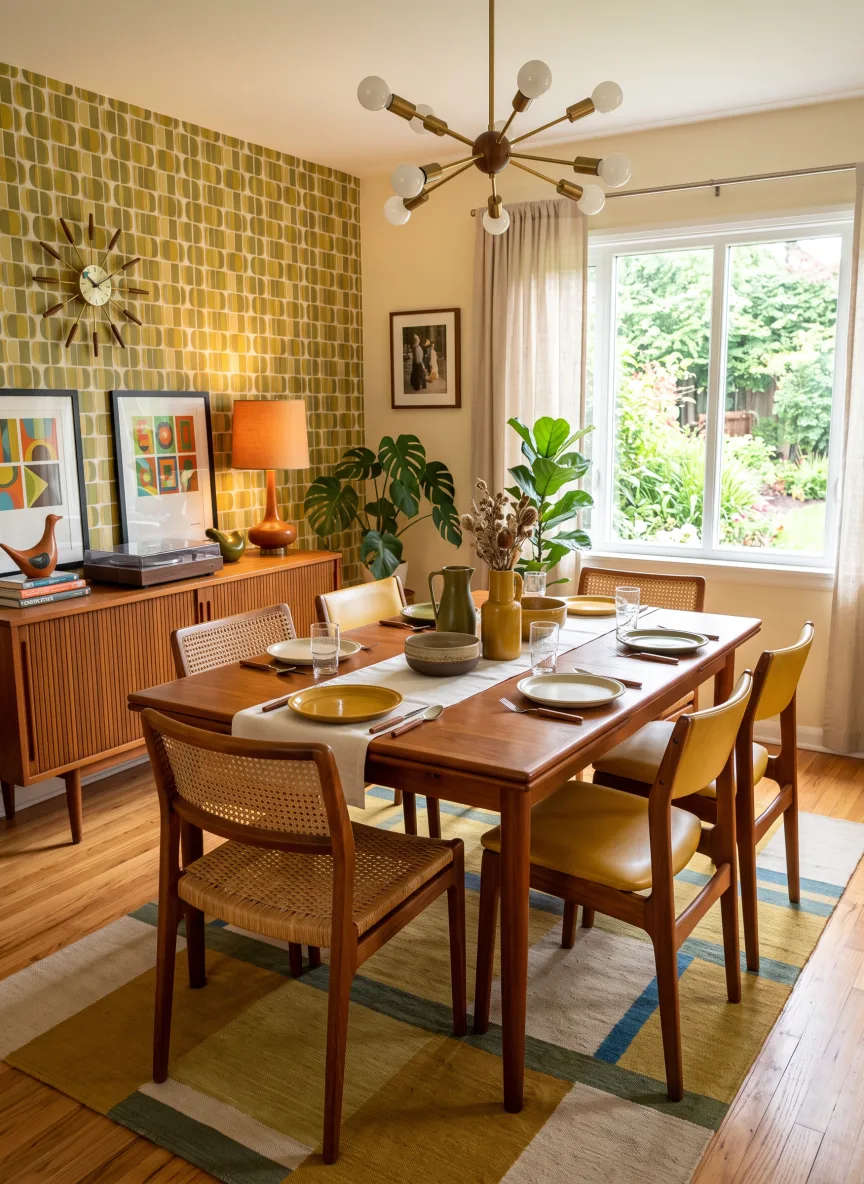
People blur Industrial with mid-century because both love honest materials and simple lines. The difference is weight and warmth. A mid-century modern dining room runs on slim tapered legs, warm teak and walnut, and a lighter, more optimistic palette, while Industrial goes thicker, darker and rougher, using steel where mid-century would use wood. If your instinct is a delicate leggy table, you are leaning mid-century, not Industrial.
The two common mistakes are overdoing the darkness and faking the age. An all-charcoal room with one small window turns into a cave, so balance the dark metal with pale raw wood and keep window treatments minimal to let daylight hit the rough textures. And skip the mass-produced faux-rust props. One genuinely old or genuinely heavy piece, a real workbench, a true steel pendant, reads more convincing than a shelf of distressed-by-machine decor.
How to get the Industrial look in your dining room
- Darken and roughen the shell. Exposed brick, raw plaster or charcoal paint on at least one wall, with concrete or dark timber underfoot, sets the warehouse base.
- Anchor with a slab table on steel. A thick reclaimed-wood top with a black metal base is the centerpiece the whole style hangs on.
- Hang big, low pendants. Oversized black or aged-brass shades with exposed bulbs over the table are the single most recognizable Industrial move.
- Mix metal seating with one soft note. Stamped-steel chairs or stools do the utility, and a single aged leather bench or chair keeps the room from feeling like a canteen.
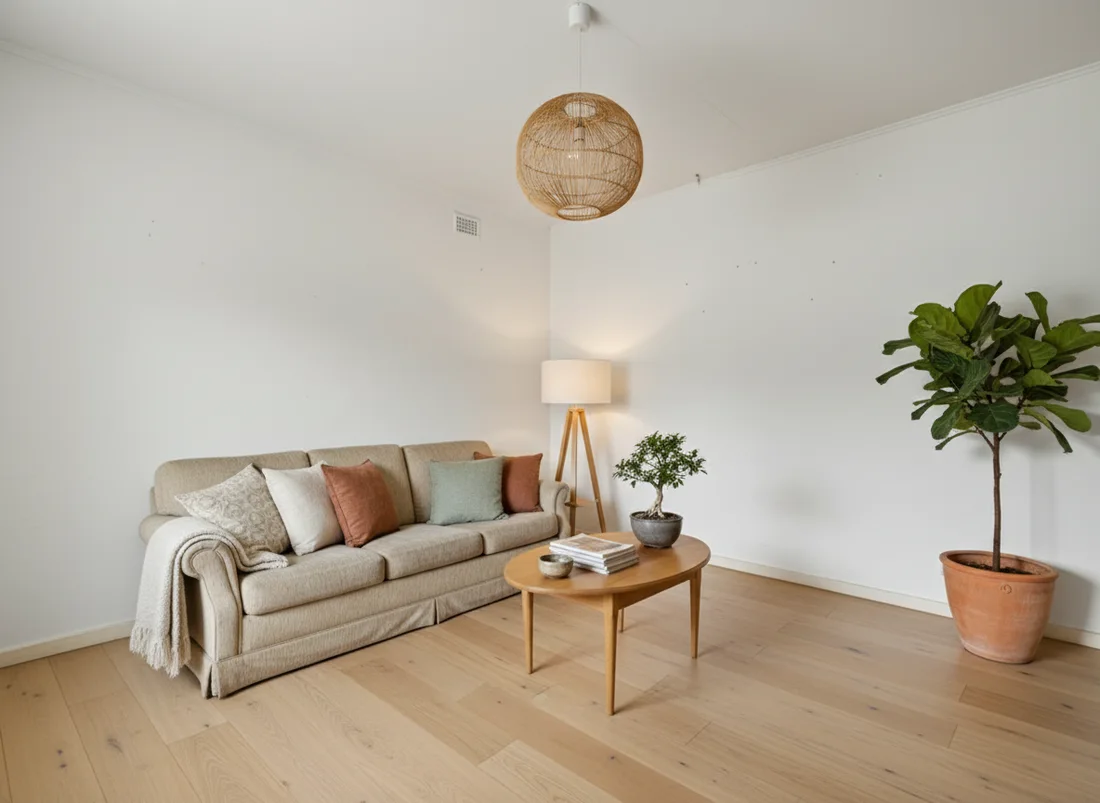
- Test it on your real dining room first. Industrial depends on your actual walls and light, so upload a photo to restylai and see the style rendered on your own space before buying anything heavy.
 After
After
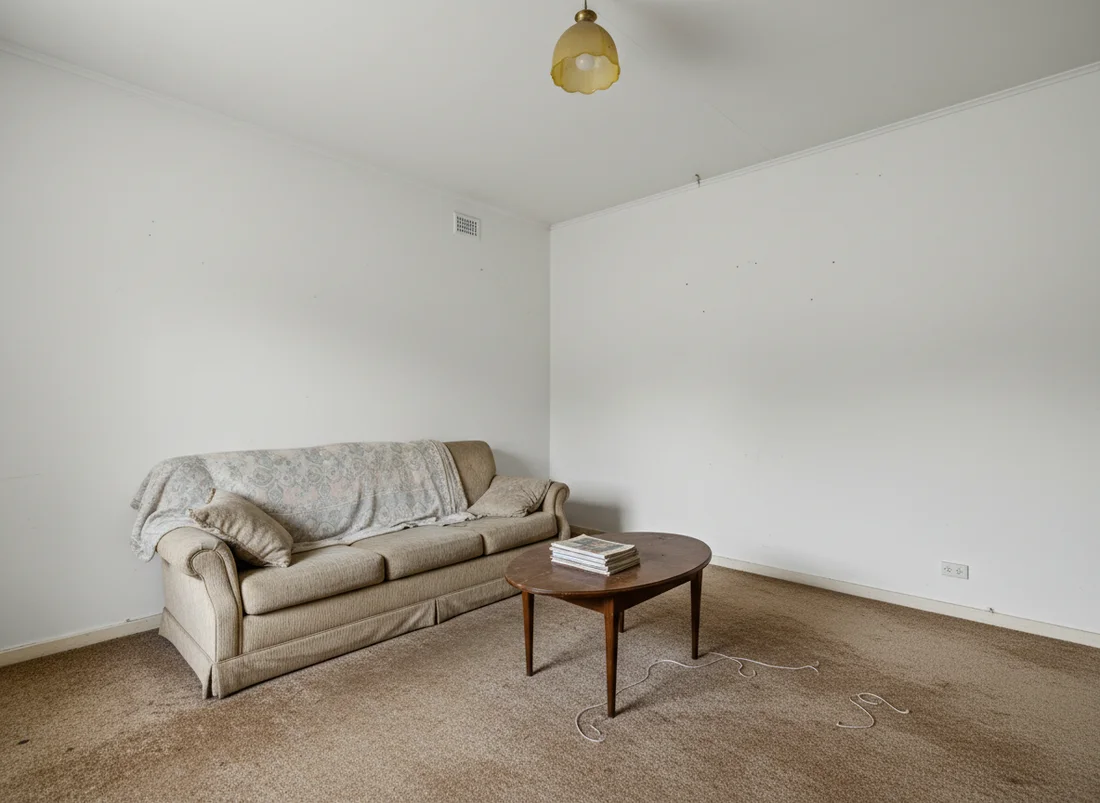 Before
See it on your own room
See your dining room in Industrial, free
Upload one photo and watch your real dining room in Industrial. Your walls, windows and layout stay exactly as they are.
Try it free, no signupOne photo. In seconds. No signup.