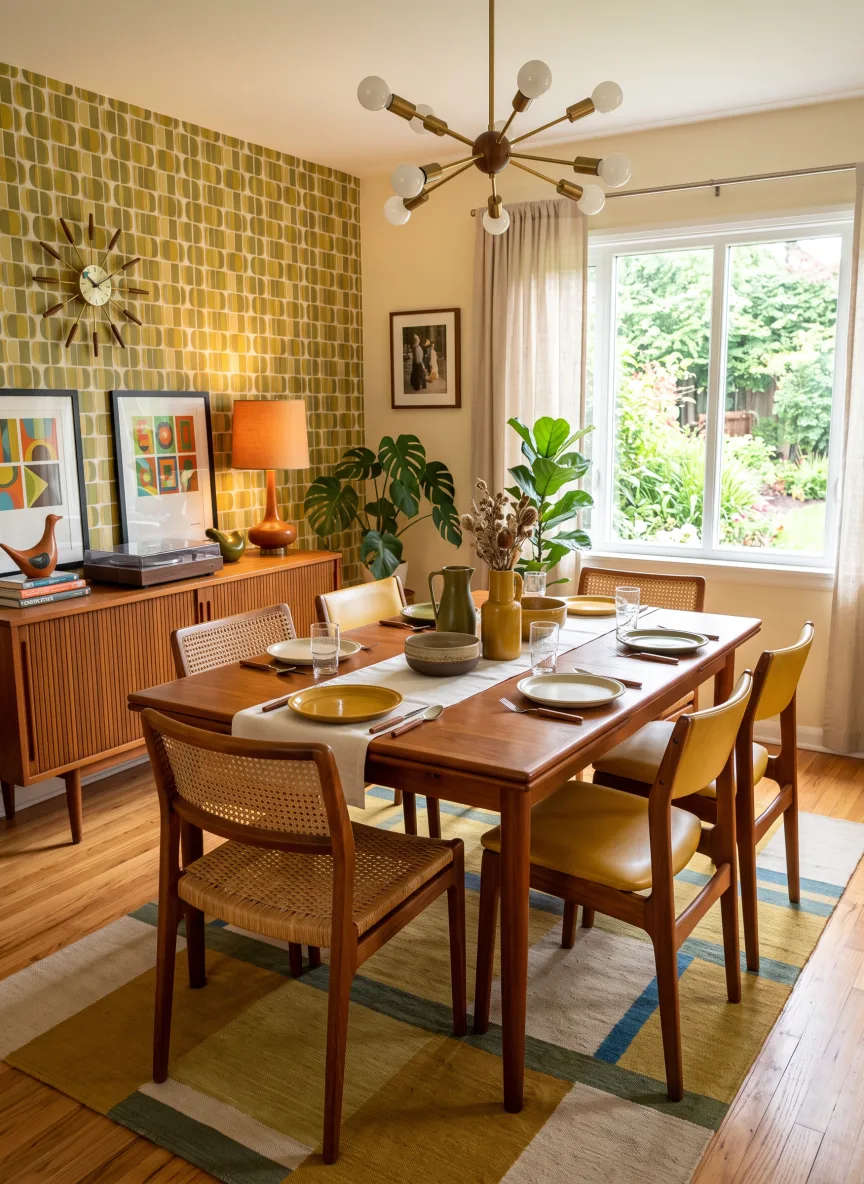
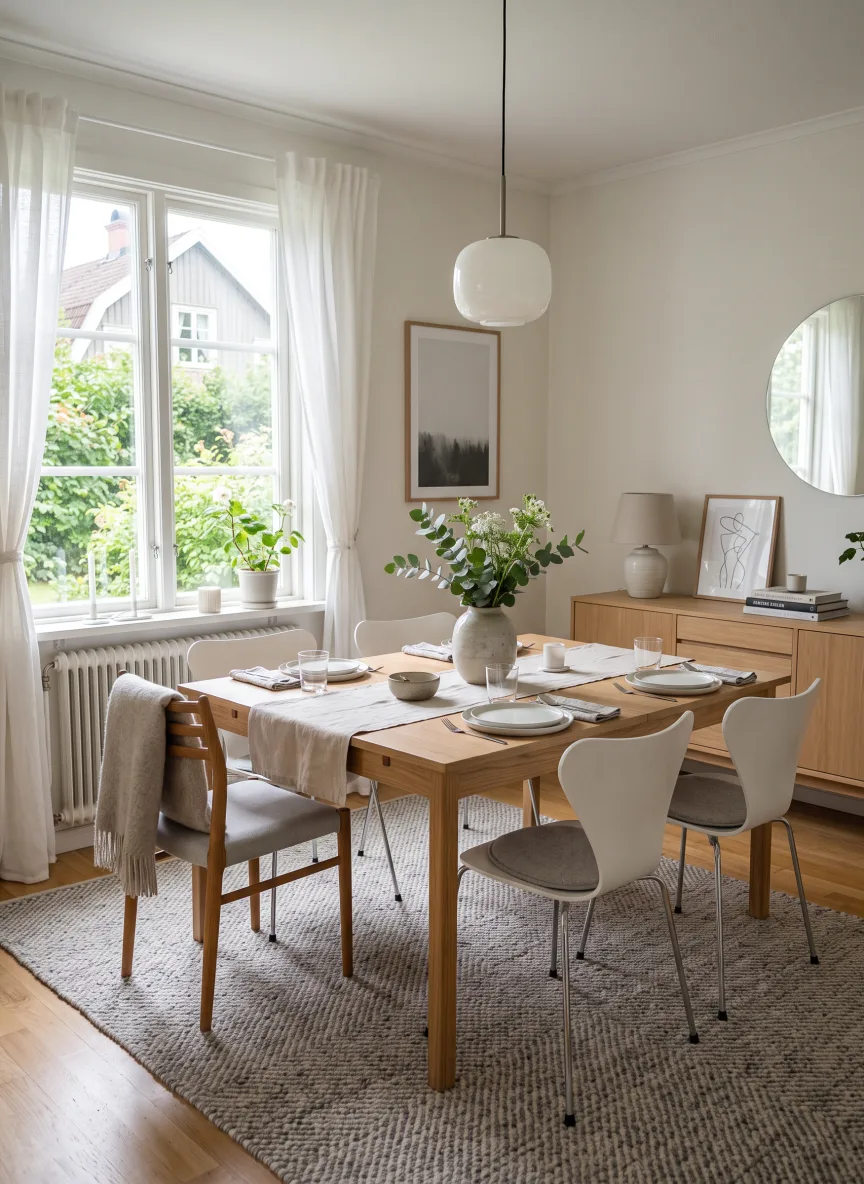
Traditional · Dining Room
Traditional Dining Room Ideas
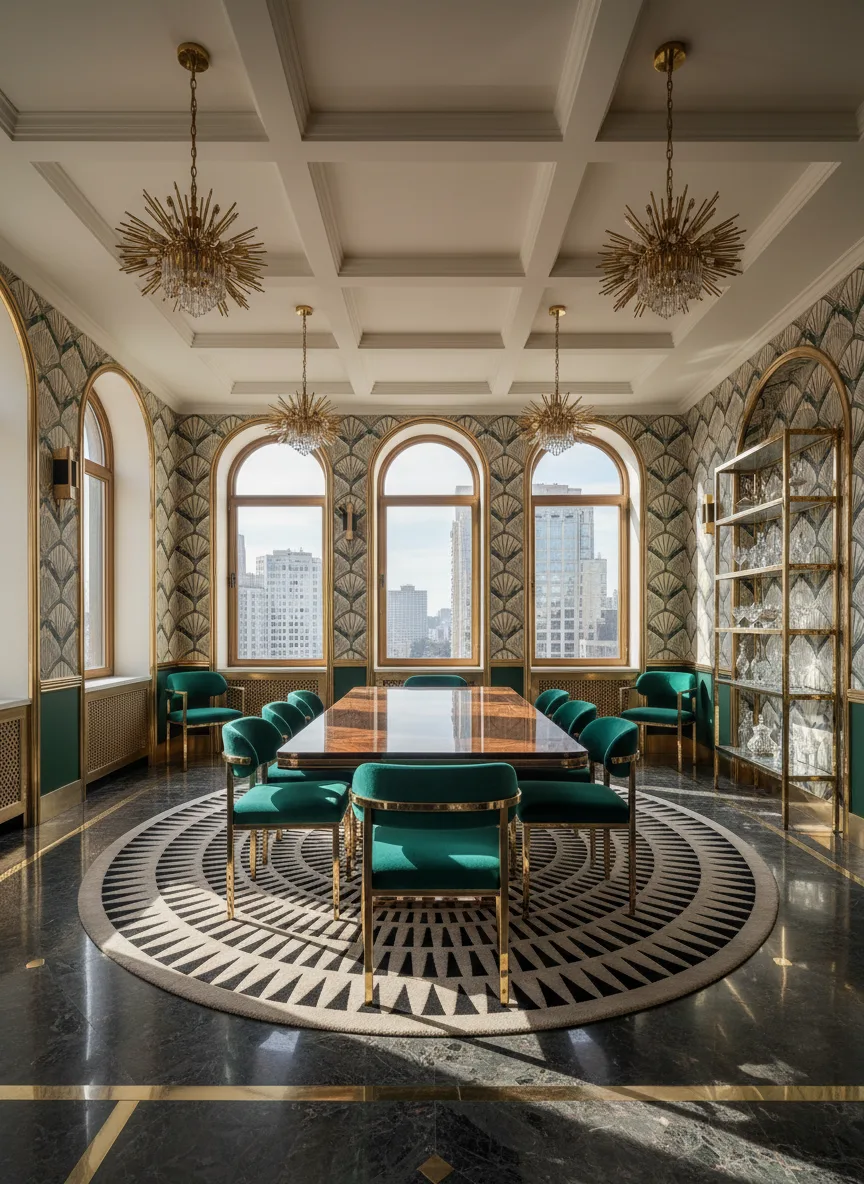
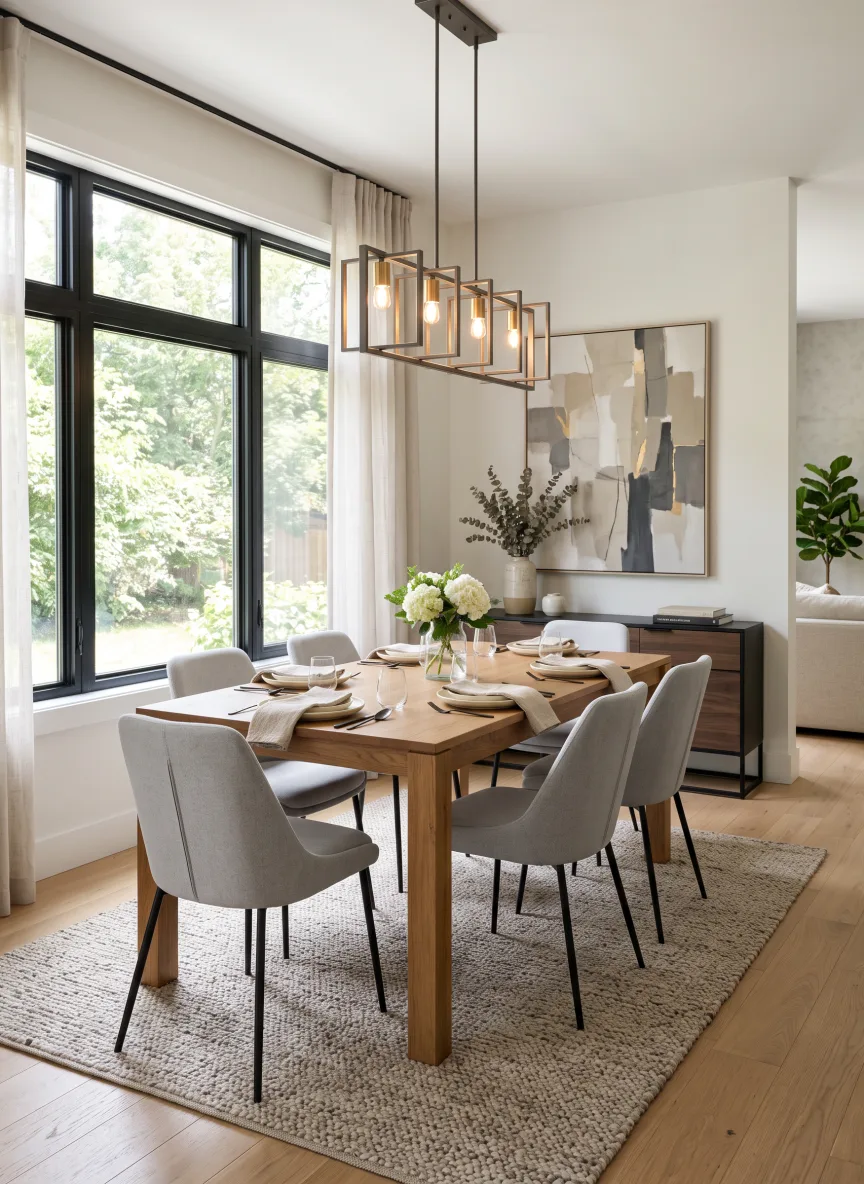
A Traditional dining room is built for the long meal: a solid wood table, upholstered chairs, a rug that anchors them, and a chandelier that says this is where the household gathers. The palette is warm and deep, the details are symmetrical, and nothing looks temporary. Here is what actually makes the style work, and how to preview it on a photo of your own dining room before you commit to anything.
What makes a dining room Traditional
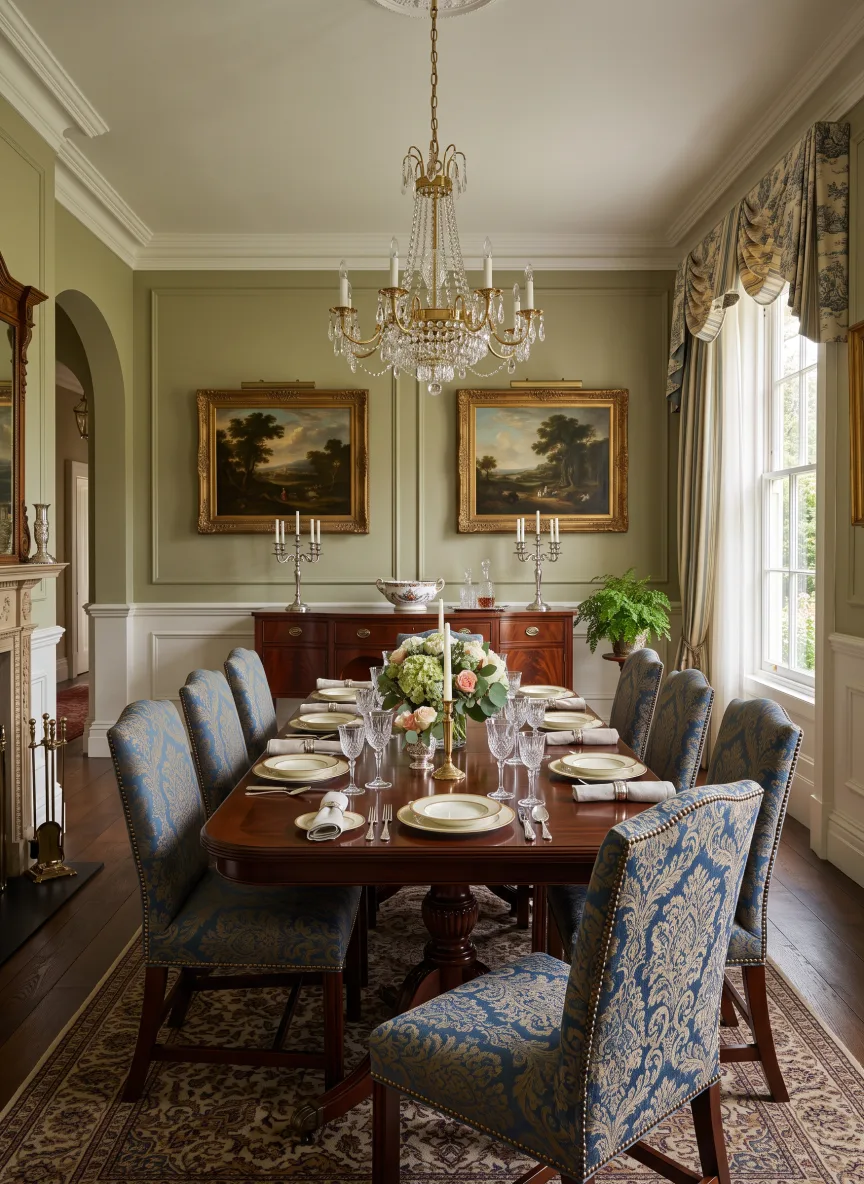
Start with the wood. The table is the centerpiece, usually mahogany, cherry or walnut with a visible grain and often turned or pedestal legs, and the chairs match or complement it rather than contrast. Around that core sit the classic supporting pieces: a sideboard or china cabinet against the longest wall, and a patterned rug, often Persian-style, sized so every chair leg stays on it even when pulled out.
Color and light do the rest. Walls run to warm, saturated tones like deep green, burgundy, navy or a soft cream, frequently framed by white wainscoting or picture-frame molding. Overhead, a chandelier hangs centered on the table, not the room, and the styling is symmetrical: paired candlesticks or lamps on the sideboard, framed art hung in balanced sets. Symmetry and molding are the two signature moves that read Traditional at a glance.
Traditional versus farmhouse, and the mistake to avoid
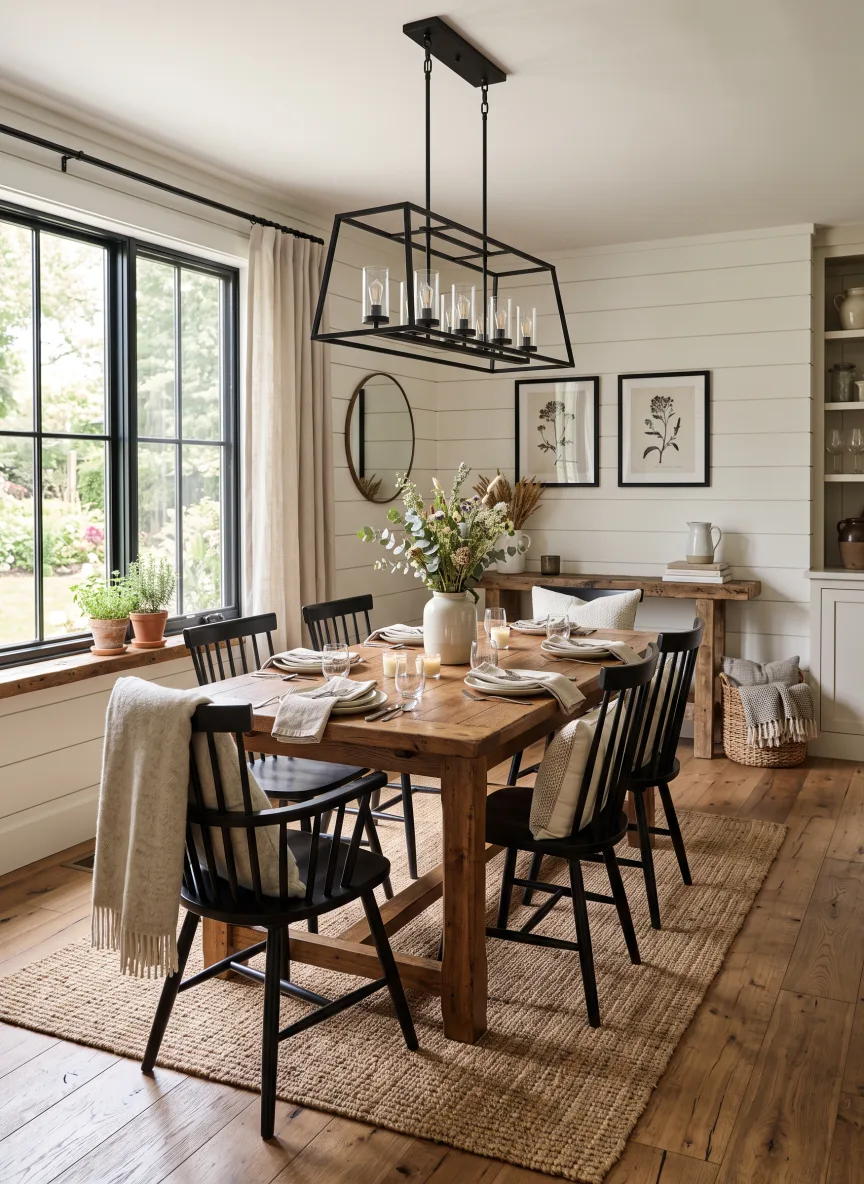
The nearest neighbor is farmhouse, and the split is polish versus rusticity. A farmhouse dining room uses a chunkier, often distressed table, mismatched or bench seating, and lighter, more casual finishes. Traditional keeps the same warmth but dresses it up: polished wood, upholstered seats, heavier drapery and a formal chandelier instead of a lantern or pendant.
The common mistake is going matched-set on everything, which tips formal into stuffy. One antique or inherited piece, chairs upholstered in a fabric that is not the same tone as the rug, or a modern artwork over the sideboard keeps the room feeling collected rather than ordered from a single catalog page. In a small dining room, keep the deep wall color and molding but choose a round pedestal table, which seats the same number in less floor space and softens the symmetry.
How to get the Traditional look in your dining room
- Anchor with a real wood table. Mahogany, cherry or walnut with turned or pedestal legs sets the tone; everything else in the room supports it.
- Add molding or wainscoting. Picture-frame panels or a chair rail under a deep wall color is the fastest way to make a plain box read Traditional.
- Center a chandelier on the table. Hang it over the table, not the middle of the room, roughly 30 to 34 inches above the surface in a standard-height space.
- Size the rug to the chairs. A patterned rug should hold every chair leg even when the chairs are pulled out, or it will look like an afterthought.
- Try it on your actual dining room first. Upload a photo to restylai and apply the Traditional style to see the wood tones, wall color and chandelier in your real space, with your walls and windows kept exactly as they are.
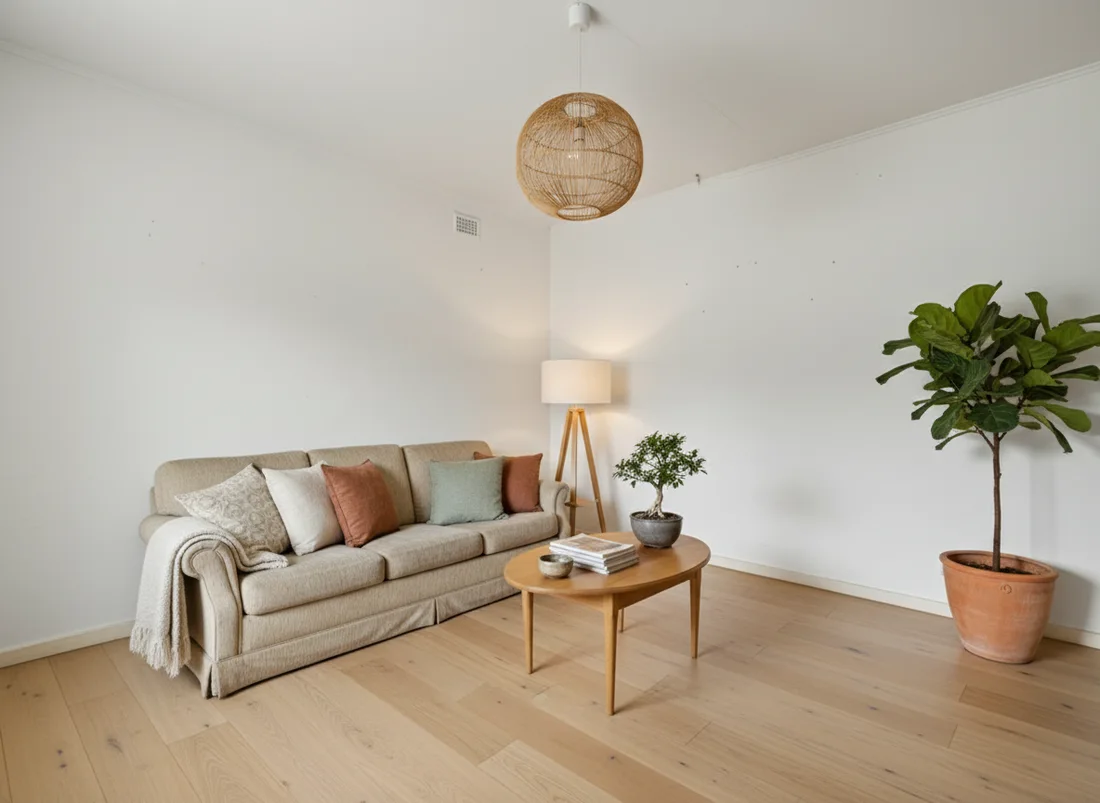 After
After
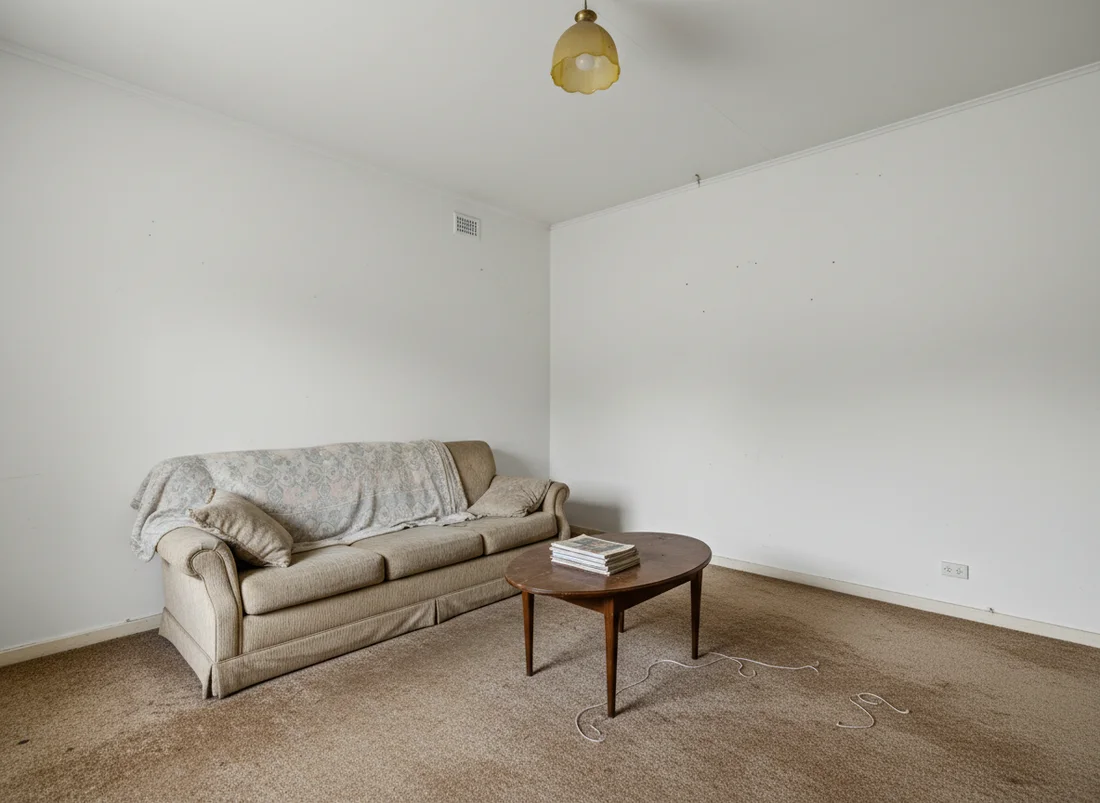 Before
See it on your own room
See your dining room in Traditional, free
Upload one photo and watch your real dining room in Traditional. Your walls, windows and layout stay exactly as they are.
Try it free, no signupOne photo. In seconds. No signup.