Mid-Century Modern · Dining Room
Mid-Century Modern Dining Room Ideas
A Mid-Century Modern dining room is warm wood, clean geometry and one great light fixture doing most of the talking. The look was built in the 1950s around walnut and teak, tapered legs and honest, functional shapes, and it still reads fresh today. Here is what actually defines the style at the table, and how to preview it on a photo of your own dining room before you move a single chair.
What makes a dining room Mid-Century Modern
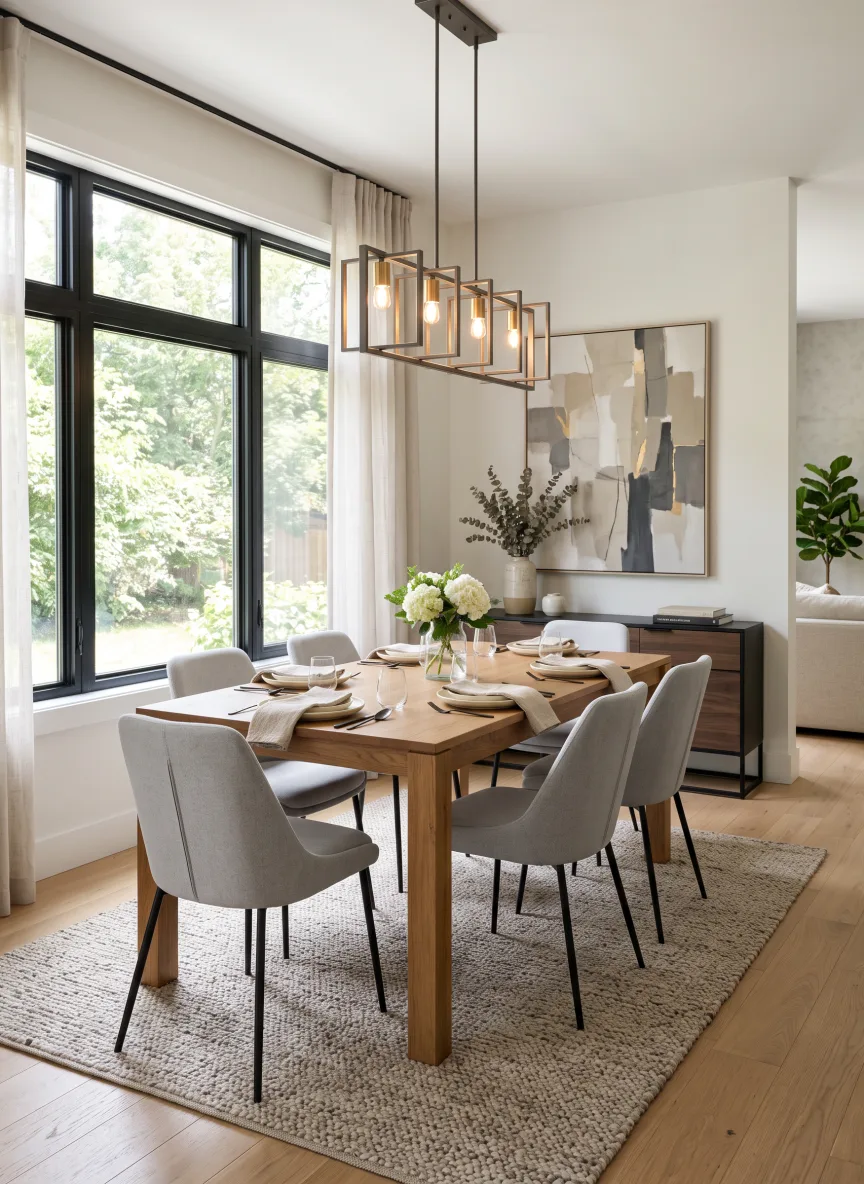
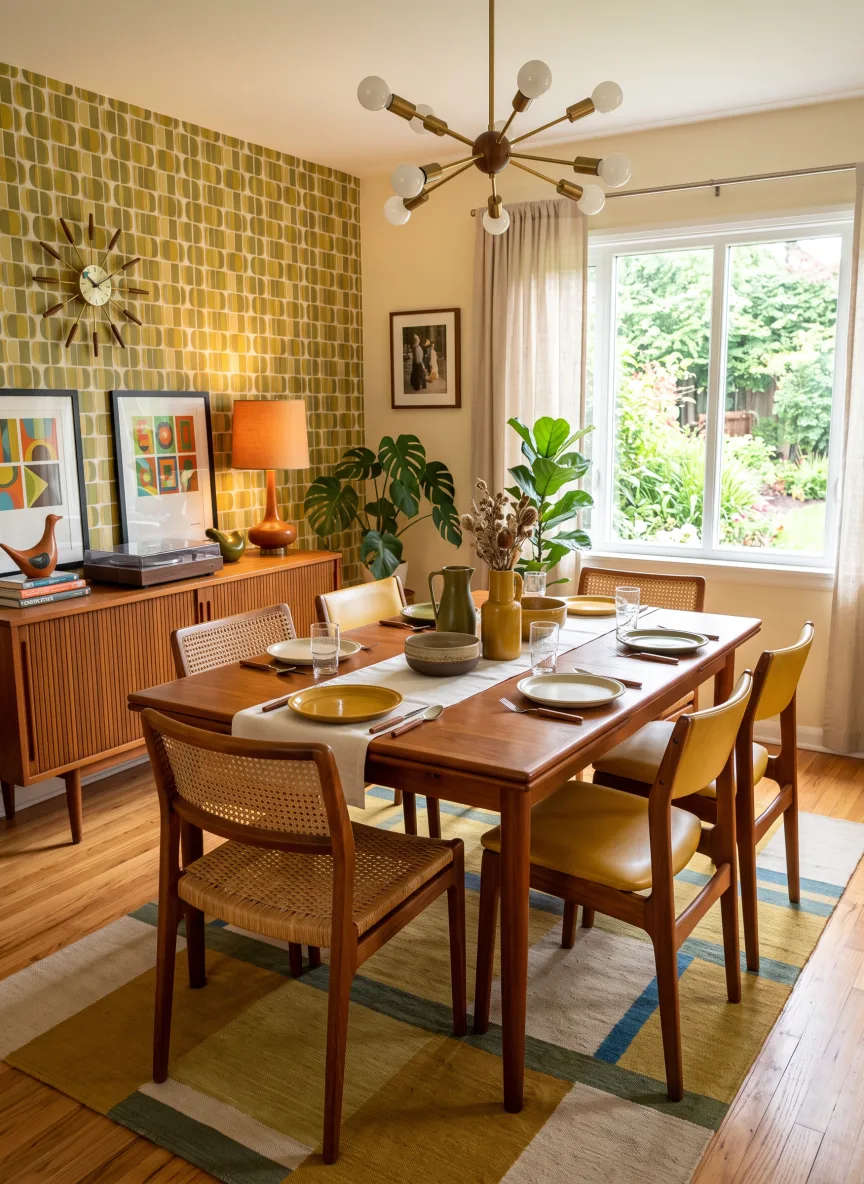
Start with the wood. Walnut and teak in a satin finish are the backbone: a round or oval pedestal table, or a rectangular one on slim tapered legs that angle slightly outward. Chairs are sculpted rather than upholstered boxes, think molded plywood or shell seats, often in a set that matches the table's tone. Against the timber, the palette runs warm and slightly retro: olive, mustard, burnt orange or teal used in one or two doses, on chair fabric or a single wall, never everywhere at once.
The signature move is the light fixture. A sputnik chandelier, a globe pendant or a wide saucer shade hung low over the table anchors the whole room, and it is usually brass or matte black. The second move is the credenza: a long, low sideboard on legs, with clean sliding doors and no ornament. Keep the floor simple, a wood tone or a low-pile geometric rug, and let those two pieces plus the table carry the room.
Mid-Century Modern versus plain modern, and the mistakes to skip
A modern dining room shares the clean lines but strips out the warmth: cooler palettes, more glass and lacquer, less visible wood grain. Mid-Century keeps the same restraint while staying organic, curved edges, warm timber, a bit of retro color. If a room feels sleek but cold, it has drifted modern; if it feels warm but ornate, it has drifted vintage. The style lives in the narrow band between the two.
The common mistakes are all versions of overdoing it. Buying every piece as period reproduction turns the room into a theme set, so mix one or two true mid-century shapes with plainer pieces. Hanging the pendant too high kills the intimacy, aim for roughly 30 inches above the tabletop. And piling on accent colors breaks the calm: pick one retro shade, repeat it twice, and stop. In a small dining room, a round pedestal table and armless shell chairs keep the tapered-leg openness without eating floor space.
How to get the Mid-Century Modern look in your dining room
- Commit to warm wood. A walnut or teak table with tapered legs sets the tone; satin finish, visible grain, no heavy varnish.
- Hang one statement pendant low. A sputnik, globe or saucer fixture about 30 inches over the table is the style's clearest signal.
- Add a low credenza on legs. A long, clean-fronted sideboard gives you storage and the room's second anchor piece.
- Use retro color in one dose. Olive, mustard or teal on the chair fabric or a single wall reads mid-century; three accent colors reads clutter.
- Try it on your real dining room first. Upload a photo to restylai and apply Mid-Century Modern to your actual space, with your walls and windows kept intact, before you buy the table.
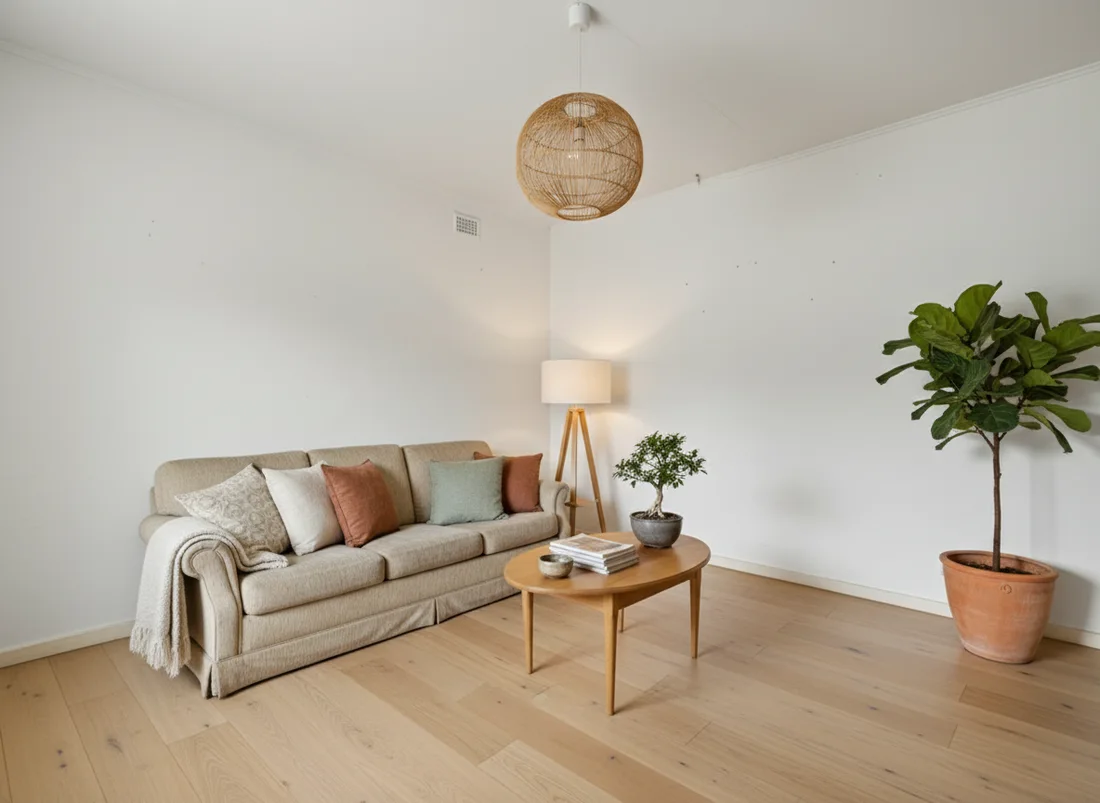 After
After
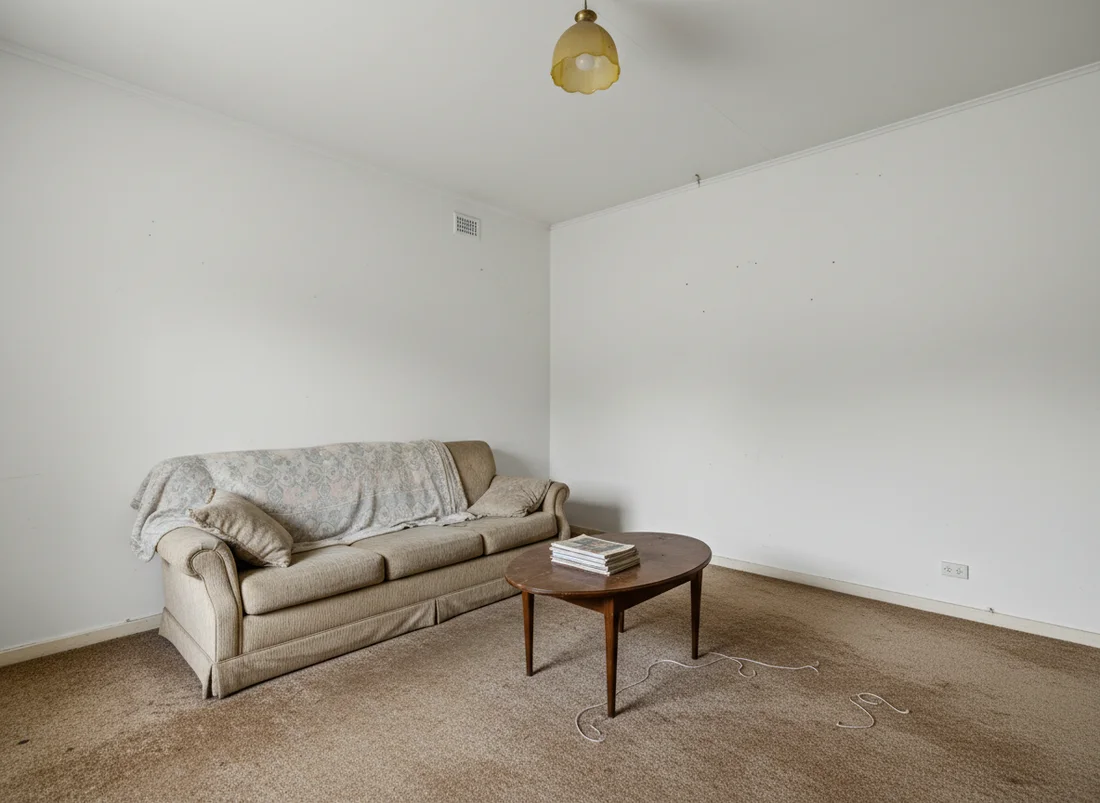 Before
See it on your own room
See your dining room in Mid-Century Modern, free
Upload one photo and watch your real dining room in Mid-Century Modern. Your walls, windows and layout stay exactly as they are.
Try it free, no signupOne photo. In seconds. No signup.