restylai blog
Japandi Style Guide: Colors, Rooms and How to Get It
Updated July 19, 2026 · by the restylai team
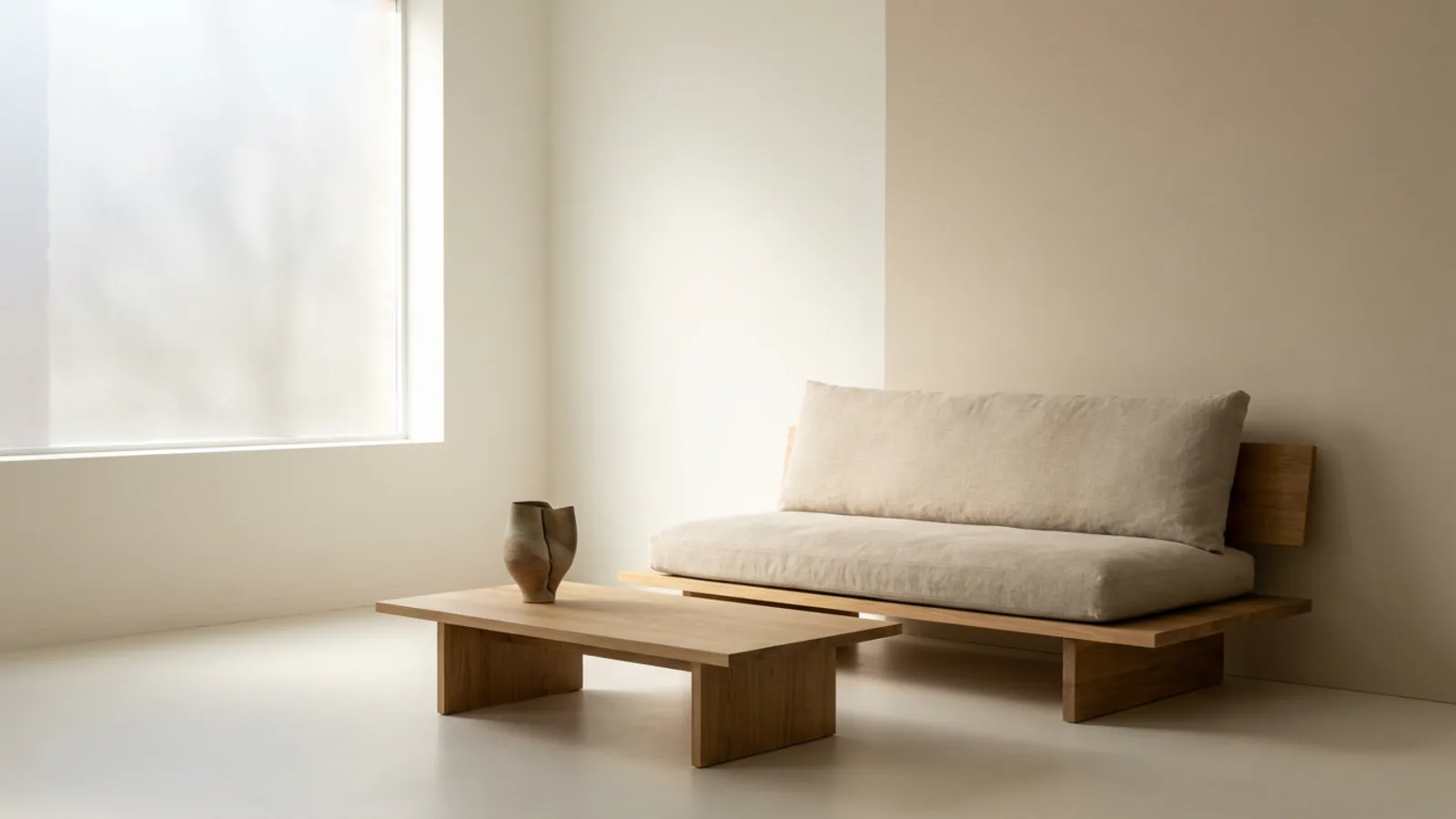
Japandi is what you get when you cross Japanese minimalism with Scandinavian warmth: a calm, natural, deeply liveable style that feels like a retreat. It has become one of the most loved looks of the decade because it is both beautiful and achievable, since so much of it comes down to editing what you already have rather than buying more. This guide is the practical version: what defines Japandi, how it differs from its two closest relatives, the colors and materials, and a simple way to get the look, on any budget.
For the full room-by-room walkthrough, our Japandi interior design guide goes deep on the living room, bedroom, kitchen, and bathroom. This piece focuses on understanding the style and getting the look.
What defines Japandi style
In one sentence, Japandi is a hybrid style that pairs the Japanese idea of wabi-sabi, beauty in natural imperfection and restraint, with the Scandinavian idea of hygge, warm everyday comfort. In practice that means calm rooms built from warm neutral colors, natural materials like wood and linen, low functional furniture, and only a few meaningful objects rather than clutter.
The feeling it aims for is a sense of retreat, a space that lets you exhale. It is minimal, but a warm minimalism, softened by texture and grounded by natural tones, never cold or stark. That balance of restraint and warmth is the whole style, and everything below is a way of striking it. You can see it on your own space when you redesign a room from a photo.
Japandi vs Scandinavian
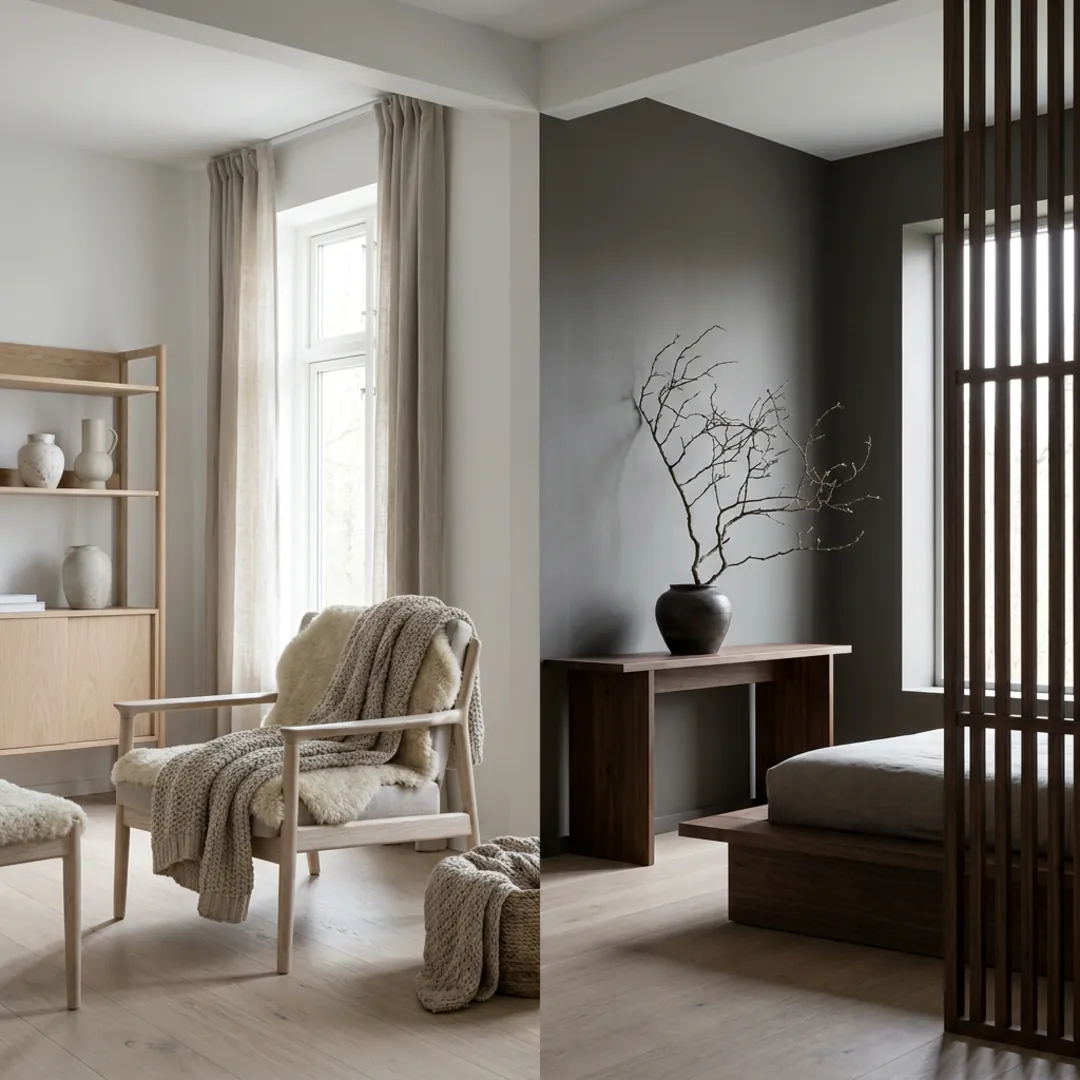
Because Japandi grew out of Scandinavian design, the two look similar and are often confused. Both are minimalist, both love natural materials and light woods, and both value quality over quantity. The difference is temperature and weight: Scandinavian is lighter and brighter, built on pale woods and crisp warm whites, while Japandi is warmer and more grounded, using muted earth tones, deeper contrast through charcoal and greens, and more tactile materials like rattan, stone, and matte black metal.
The short version: choose Scandinavian for a light, cozy feel, and Japandi for calm, craft, and a sense of retreat. Japandi essentially takes the Scandinavian base and adds Japanese depth, a little more shadow, a little more contrast. For a full side-by-side breakdown, see Scandinavian vs Japandi.
Japandi vs wabi-sabi
The other comparison worth making is with wabi-sabi itself, since the two are related but not the same. Wabi-sabi is a Japanese philosophy that finds beauty in imperfection, impermanence, and the naturally worn, the cracked glaze, the weathered wood, the handmade object that is slightly irregular. Japandi borrows that love of craft, natural materials, and gentle imperfection, but it keeps the Scandinavian side's tidiness, function, and comfort.
So a pure wabi-sabi room can feel raw, spare, and even austere, while a Japandi room takes the same appreciation of the imperfect and makes it warm, orderly, and easy to live in. Think of Japandi as wabi-sabi with a Scandinavian sense of coziness and function layered on top. That is why it works so well in a modern home: it has the soul of wabi-sabi without asking you to give up comfort.
Japandi colors
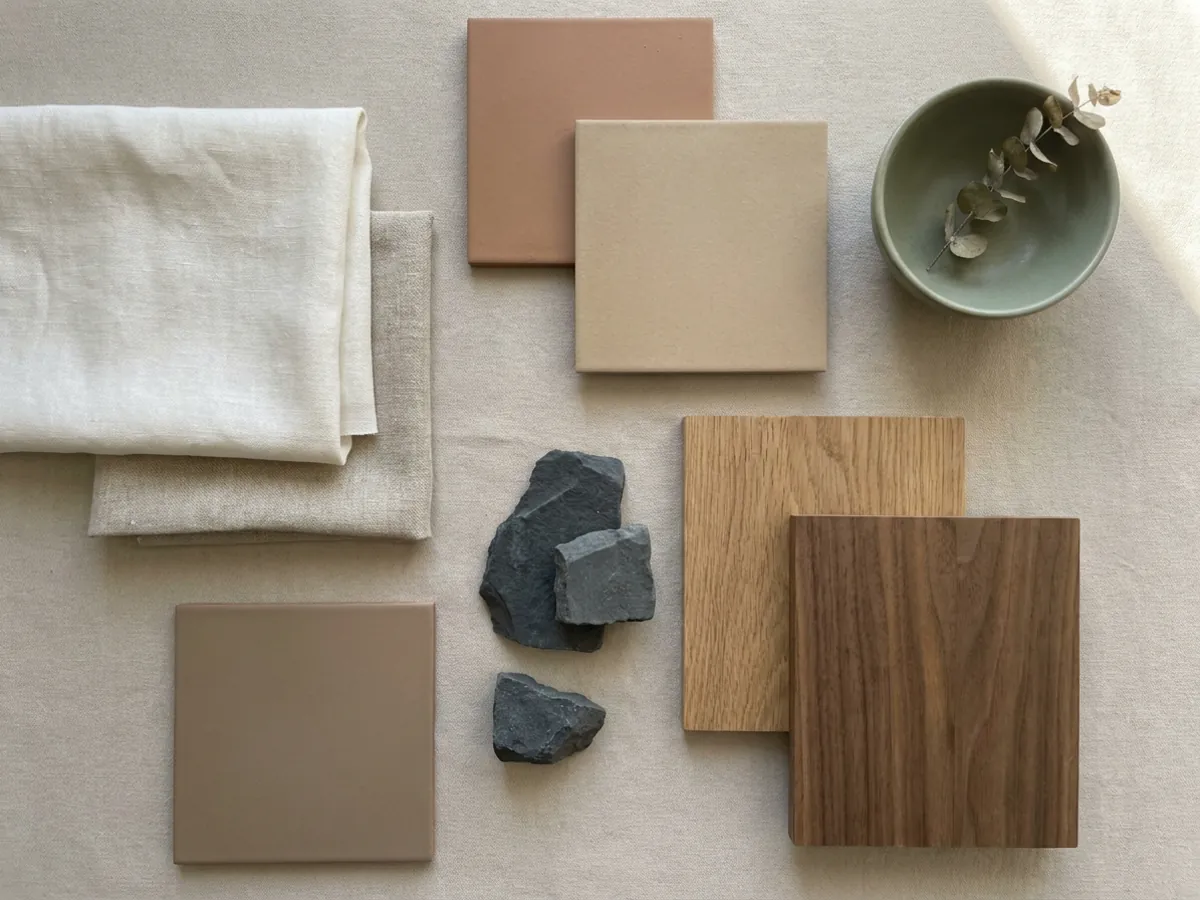
Japandi is built on warm neutrals rather than bright white, which is what gives it warmth and keeps it from feeling clinical. The base colors are warm white, oatmeal, greige, sand, and clay, alongside natural wood tones. On top of that you add sparing accents: soft charcoal, muted sage or olive, and the occasional deep blue, always in small, deliberate doses.
A simple approach is roughly 60 percent warm neutrals, 30 percent mid-tones and wood, and 10 percent darker earthy accents. The two colors to avoid are pure white and cool blue-gray, both of which pull the room toward the cold, clinical feeling that is the opposite of Japandi. Keep the base warm and let wood do a lot of the work, and the palette largely takes care of itself.
Japandi materials
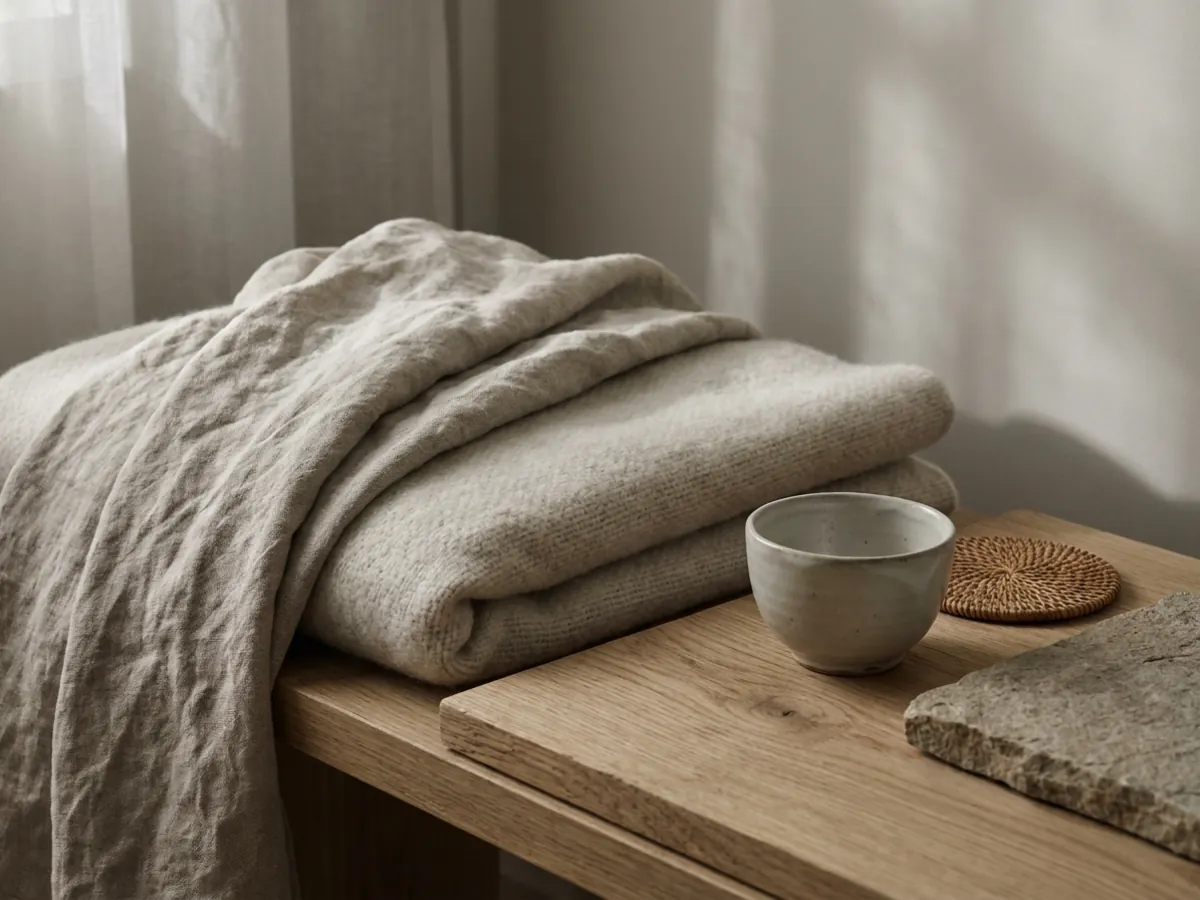
Because the colors are so restrained, texture does the work that color does in other styles, which makes materials the heart of Japandi. The core ones are natural and tactile: warm woods like oak and walnut, linen and cotton, rattan and cane, stone and ceramic, paper, and matte black metal for fine contrast. The art is in layering them so a muted room never feels flat, a linen sofa against an oak floor, a rattan chair beside a stone lamp.
One discipline matters more than any other: stick to one main wood tone and repeat it, rather than mixing several clashing woods, which is the fastest way to make a Japandi room look unresolved. Get the materials and their layering right and the style is most of the way home. It is the kind of thing worth testing on your own room in interior design software before buying.
How to get the Japandi look in five steps
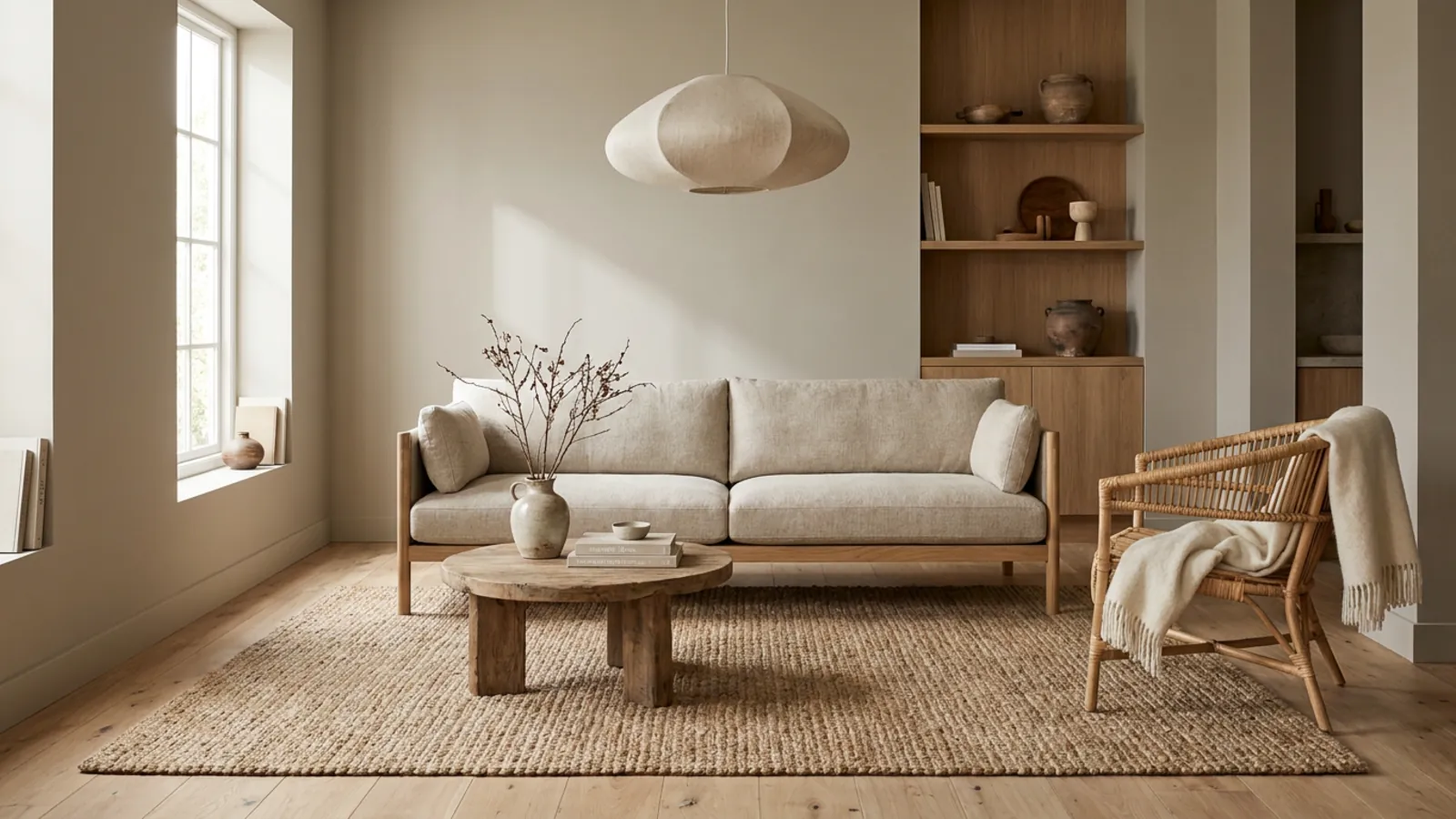
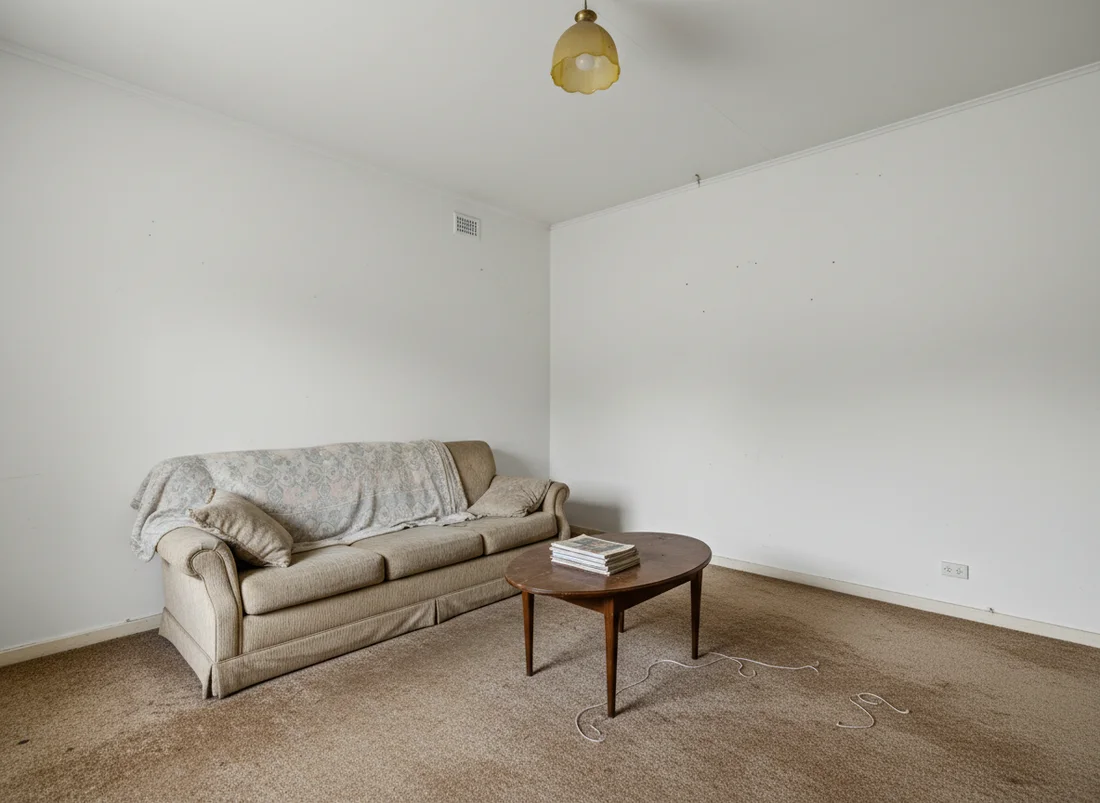
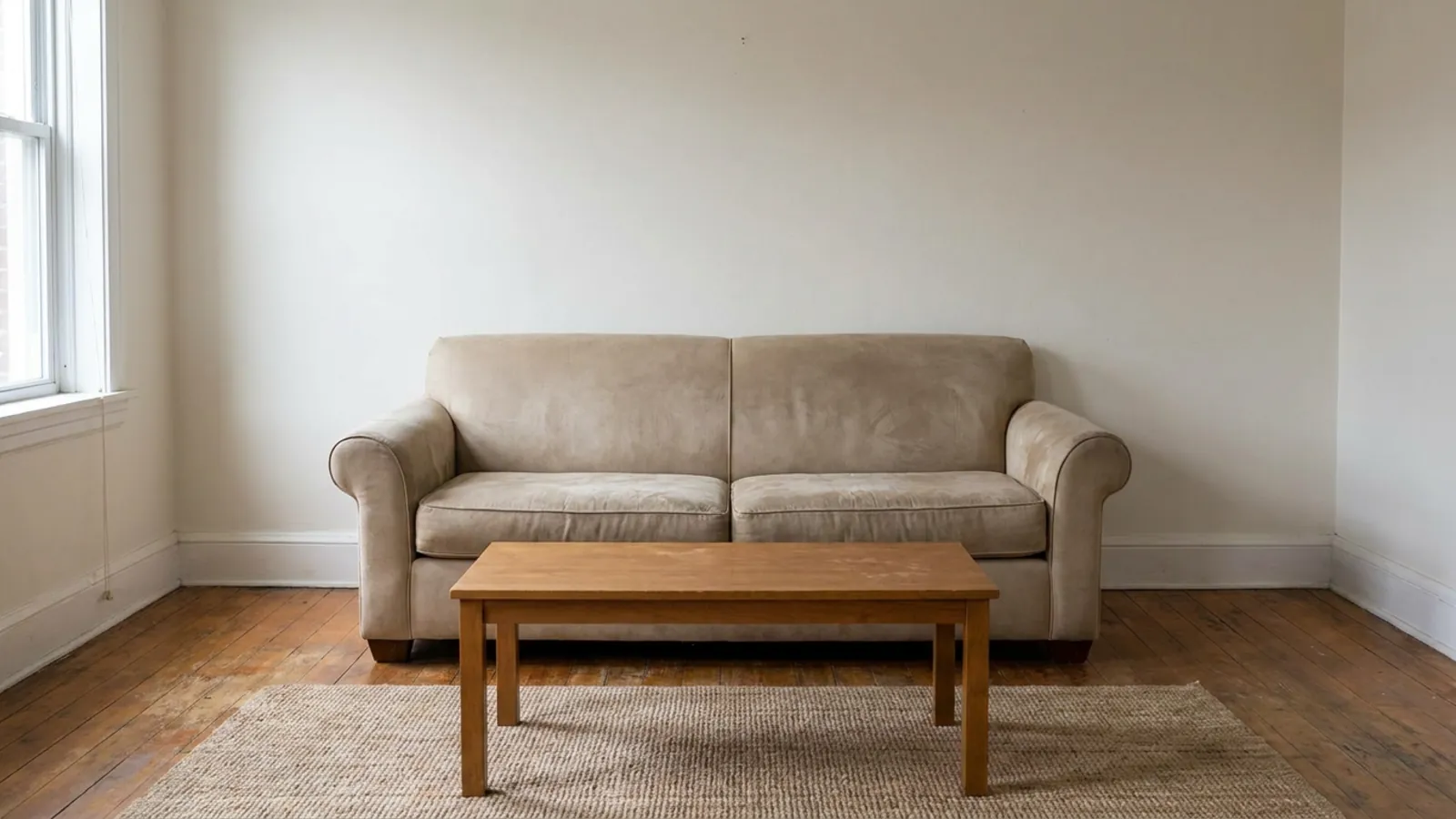 Before
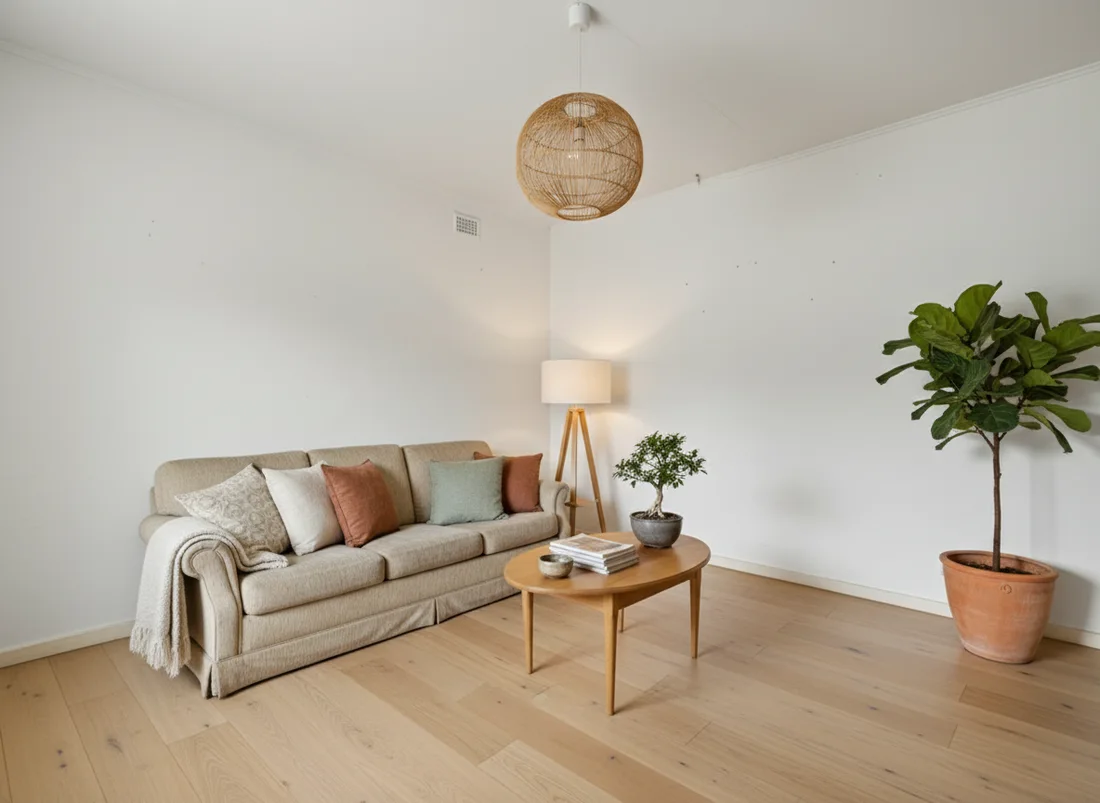
Japandi
Before
Japandi
Getting the look is more about editing than shopping. Five steps do most of the work:
- Subtract first. Declutter and clear surfaces, since Japandi is defined as much by what is absent as by what is present.
- Warm the palette. Move walls and large pieces to warm neutrals, and drop pure white and cool gray.
- Choose one wood tone and repeat it through floor, furniture, and details.
- Go low and natural. Low, clean-lined furniture and layered natural textures, linen, wool, rattan, stone.
- Add a few meaningful objects. A ceramic vessel, a single plant, one piece of quiet art, and stop there.
Notice that most of the list costs nothing, because it is about removing, rearranging, and recoloring rather than buying. The single most useful step before spending is to preview the result, so you buy only the few pieces that genuinely complete the look.
Japandi room by room
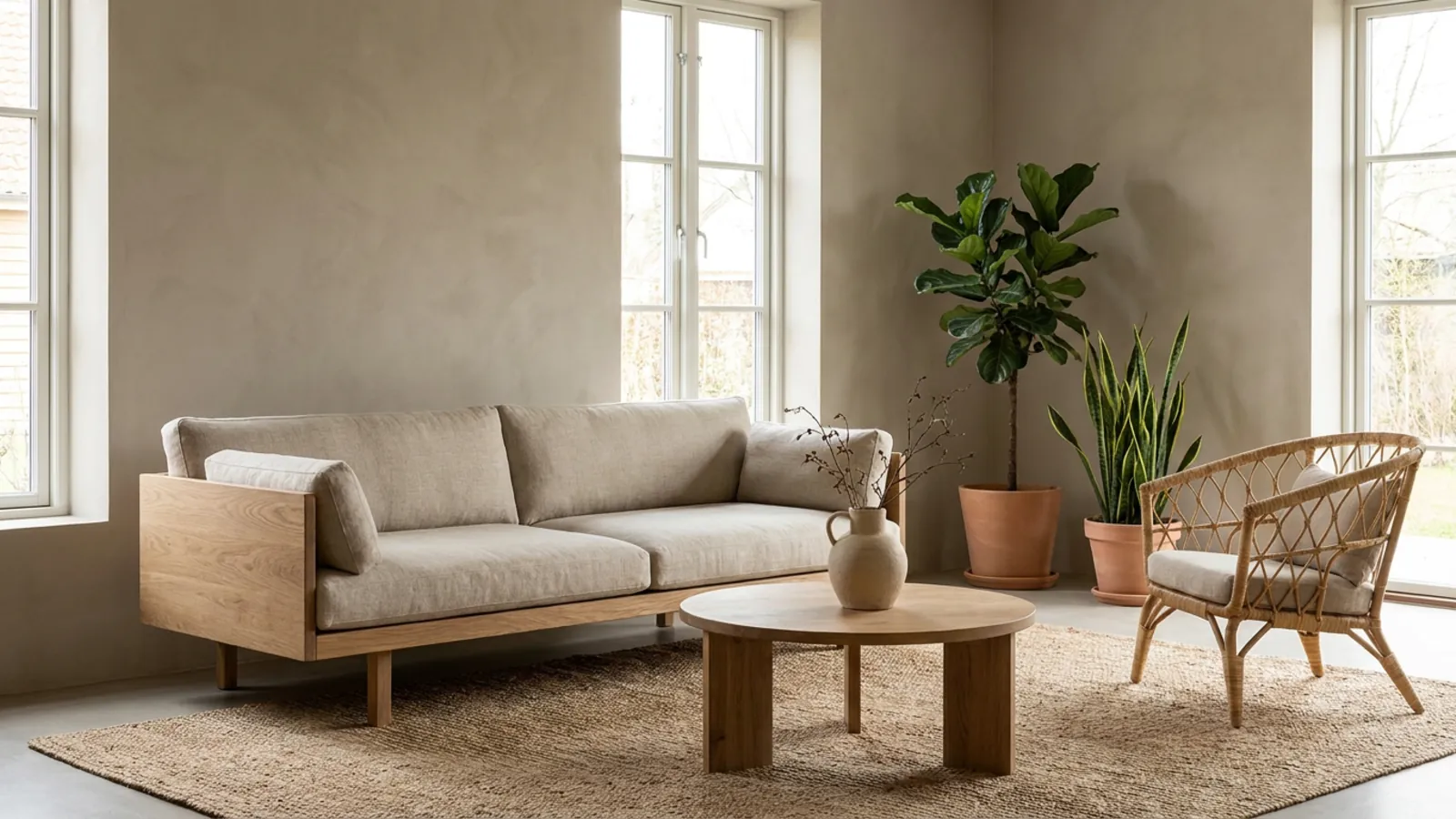
Japandi carries beautifully through the whole home, each room with its own emphasis: a living room built around a low sofa and a few natural textures, a bedroom made for rest with a low platform bed and warm linen, a kitchen kept calm through flat wood cabinets and clear counters, and a bathroom turned into a small spa with wood and stone. The unifying thread is always the same warm palette and low, natural furniture, so the whole home reads as one calm place.
For the detailed, room-by-room version, with what to buy and what to avoid in each space, see the full Japandi interior design guide. You can also design a Japandi bedroom or a Japandi kitchen from a photo, or start from a Japandi living room for reference.
Lighting, decor, and common mistakes
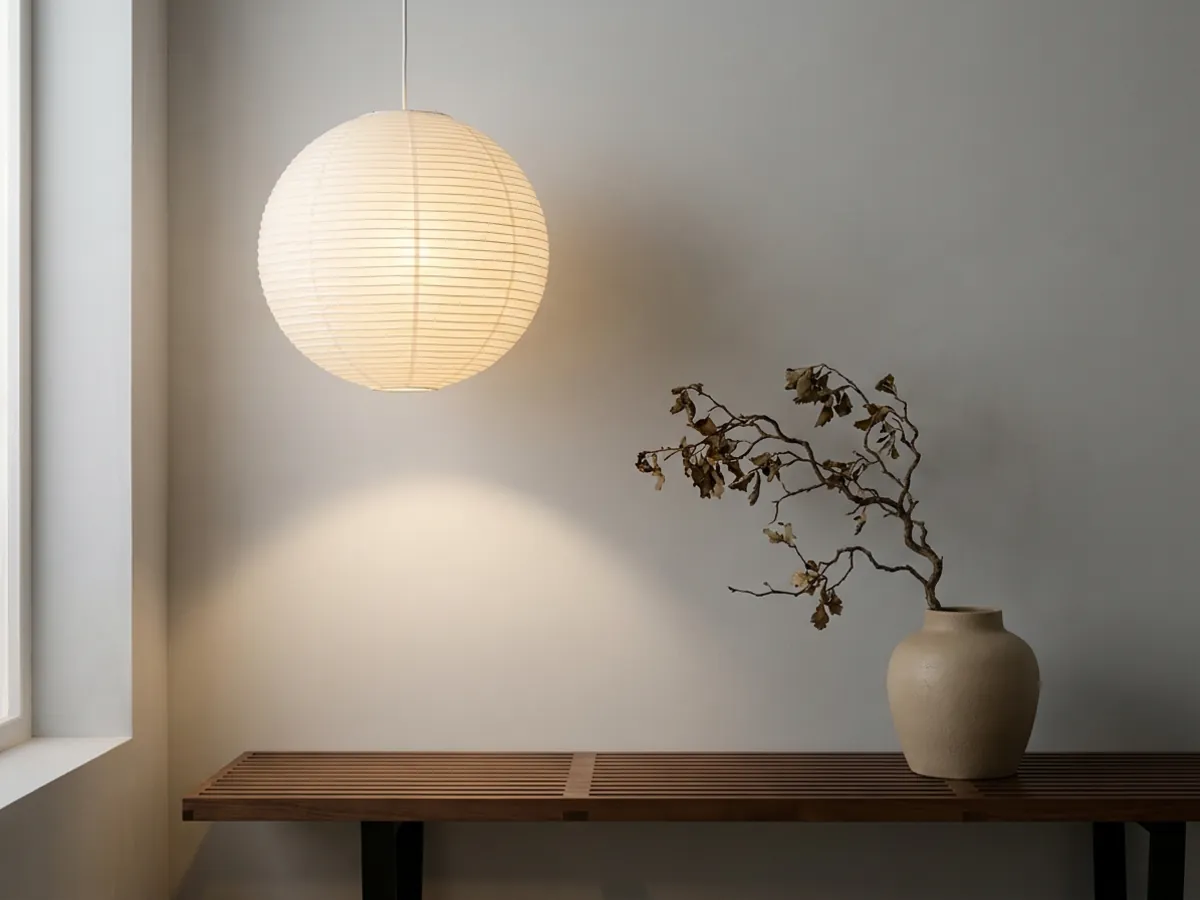
Lighting is where many Japandi rooms fall down. The style wants warm, low, layered light, from paper, ceramic, or rattan fixtures and lamps, never a single harsh overhead, which flattens the texture the whole look depends on. Decor stays sparse and intentional: a few handmade objects, one or two plants, and plenty of negative space, treating the empty space between things as part of the design.
The common mistakes are easy to avoid once named: using bright pure white or cool gray instead of warm neutrals, treating Japandi as cold minimalism so the room feels empty, skipping texture so the muted palette looks flat, overcrowding with too many objects, mixing clashing wood tones, and lighting the room with a harsh overhead. Each fix returns to the same principles, warm neutrals, natural texture, one wood tone, a few good pieces, and soft light.
Is Japandi expensive? Getting the look on a budget
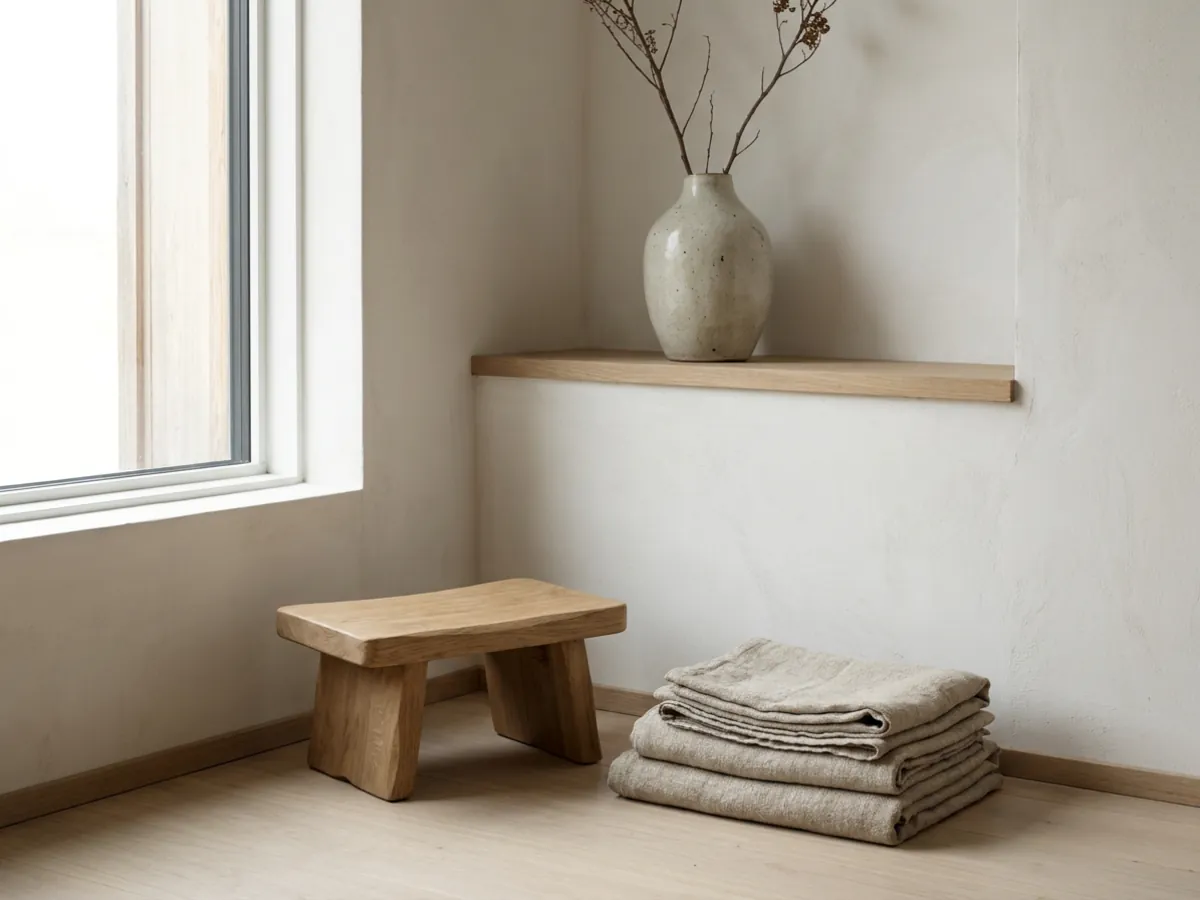
Japandi does not have to be expensive, and in fact it is one of the most budget-friendly styles to adopt, because its first principles are subtraction and restraint. Decluttering, warming your paint, rearranging what you own, and hiding the clutter cost little or nothing, and they deliver most of the effect. From there, a few well-chosen natural pieces, a linen throw, a rattan basket, a ceramic vessel, a single plant, complete the look for far less than a room full of new furniture.
The style rewards buying less but better, so the money you do spend goes on one good wood piece rather than many cheap ones. That makes it forgiving of a small budget and a slow, gather-over-time approach. Previewing the room first is what keeps a budget on track, because you buy only the pieces you have already seen working in the space.
See your own room in Japandi
The best way to know whether Japandi suits your home is to see it there. Upload a photo and restyle your actual room in the look, keeping your layout and windows while the palette, materials, and furniture change, and you will see your own space become the calm retreat the style promises. The first render is free with no signup, so you can test it before buying a thing. You can plan the layout with an AI room planner, furnish an empty room with virtual staging, then restyle your own room in Japandi and keep what works.
Frequently asked questions
What is Japandi style in one sentence? +
Japandi is a hybrid style that pairs the Japanese idea of wabi-sabi, beauty in natural imperfection and restraint, with the Scandinavian idea of hygge, warm everyday comfort. In practice it means calm rooms with warm neutral colors, natural materials like wood and linen, low functional furniture, and only a few meaningful objects rather than clutter.
What is the difference between Japandi and Scandinavian style? +
The two share calm, natural materials, and light woods, but Japandi is warmer and more grounded, using muted earth tones, deeper contrast, and more tactile materials, while Scandinavian stays lighter and brighter. Choose Scandinavian for a light cozy feel and Japandi for calm, craft, and a sense of retreat.
Is Japandi expensive to achieve? +
It does not have to be, and it is one of the more budget-friendly styles because its first principles are subtraction and restraint. Decluttering, warming your paint, and rearranging what you own deliver most of the effect for little cost, and a few well-chosen natural pieces finish it. Buying less but better is central to the look.
What colors are used in Japandi design? +
Warm neutrals rather than bright white: warm white, oatmeal, greige, sand, and clay, alongside natural wood tones. Add sparing accents of soft charcoal, muted sage or olive, and the occasional deep blue. Avoid pure white and cool blue-gray, which read cold and clinical, the opposite of Japandi.
What materials work best for Japandi? +
Natural, tactile materials do the work that color does in bolder styles: warm woods like oak and walnut, linen and wool, paper, ceramic, rattan and cane, and stone, with matte black metal for fine contrast. Layer the textures, and stick to one main wood tone rather than mixing clashing woods.
Is Japandi the same as wabi-sabi? +
No. Wabi-sabi is a Japanese philosophy of finding beauty in imperfection and the naturally worn. Japandi borrows that love of craft and gentle imperfection but keeps the Scandinavian side's tidiness, function, and comfort, so it feels warm and orderly rather than raw or austere.
How do I make a small room look Japandi? +
Subtract first, since Japandi is defined as much by empty space as by objects. Use low furniture to open the walls, anchor the room with a single wood tone, keep the floor as clear as possible, and add just one or two natural textures. Previewing it on a photo before buying keeps a small room from getting crowded.
Can I see my own room in Japandi before I redecorate? +
Yes. Upload a photo of your room and apply the Japandi style, keeping your walls, windows, and layout while the palette, materials, and furniture change. You see a photorealistic version of your actual room in seconds, and the first render is free.
 After
After
 Before
See it on your own room
Your room, redesigned
Upload one photo and watch your room restyled in a wide range of designer looks. Your walls, windows and layout stay exactly as they are.
Try it free, no signupOne photo. In seconds. No signup.