restylai blog
Art Deco Interior Design: A Complete Style Guide
Updated July 19, 2026 · by the restylai team
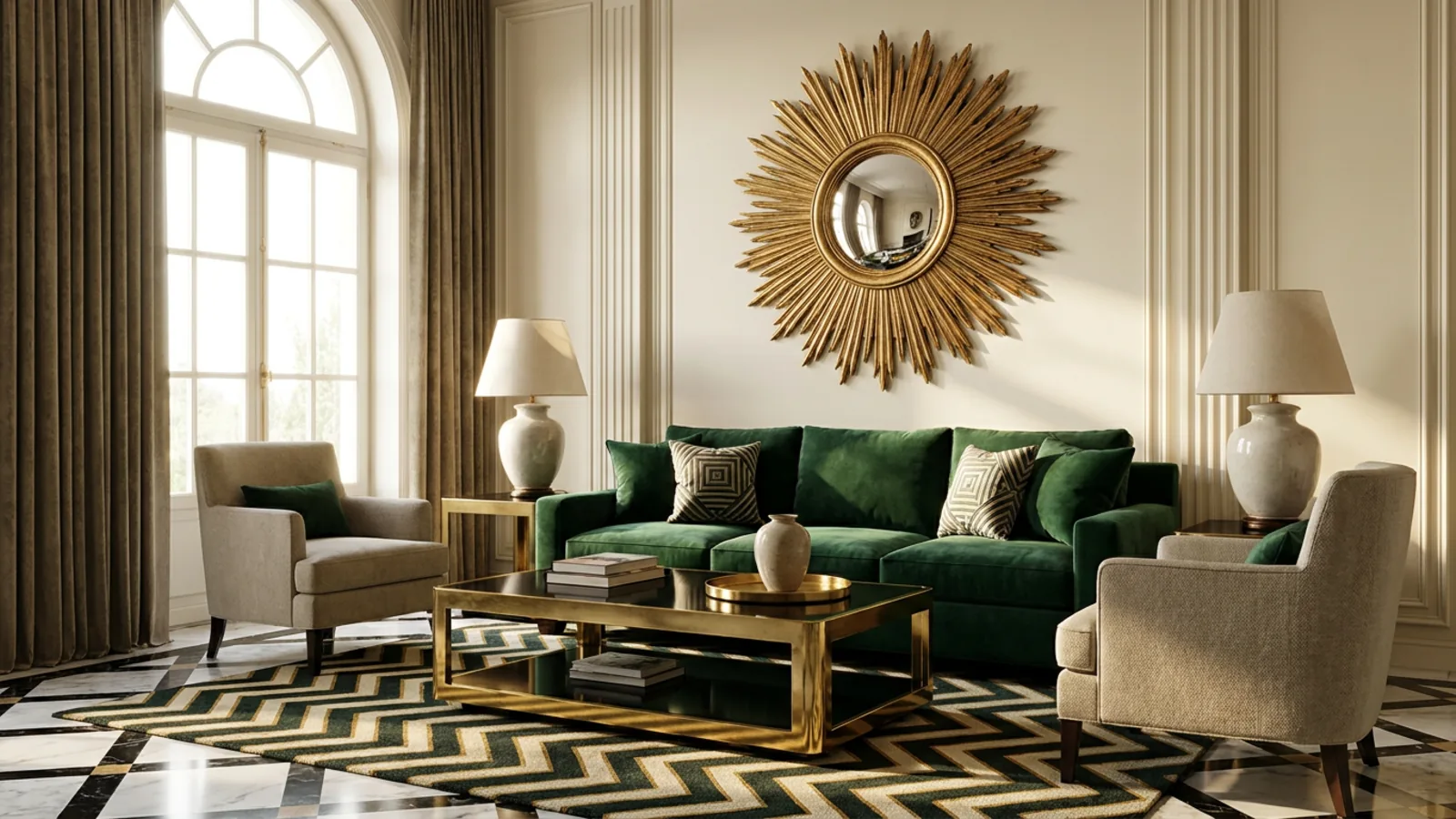
Few styles announce themselves like Art Deco. Walk into a room with a sunburst mirror over a fluted brass cabinet, a deep emerald velvet chair, and a bold geometric rug, and the effect is immediate: glamorous, confident, and ordered. Born in the 1920s, Art Deco has never really gone away, because its mix of geometry, symmetry, and shine is as striking now as it was a century ago. The good news is that you do not need a whole 1920s apartment to use it. A few well-chosen elements can carry the style.
This guide covers what Art Deco actually is, its palette, its materials, its patterns, its furniture, its lighting, how it plays in the living room and bedroom, the difference between modern and traditional Art Deco, and how to preview the look on a photo of your own room.
What is Art Deco interior design?
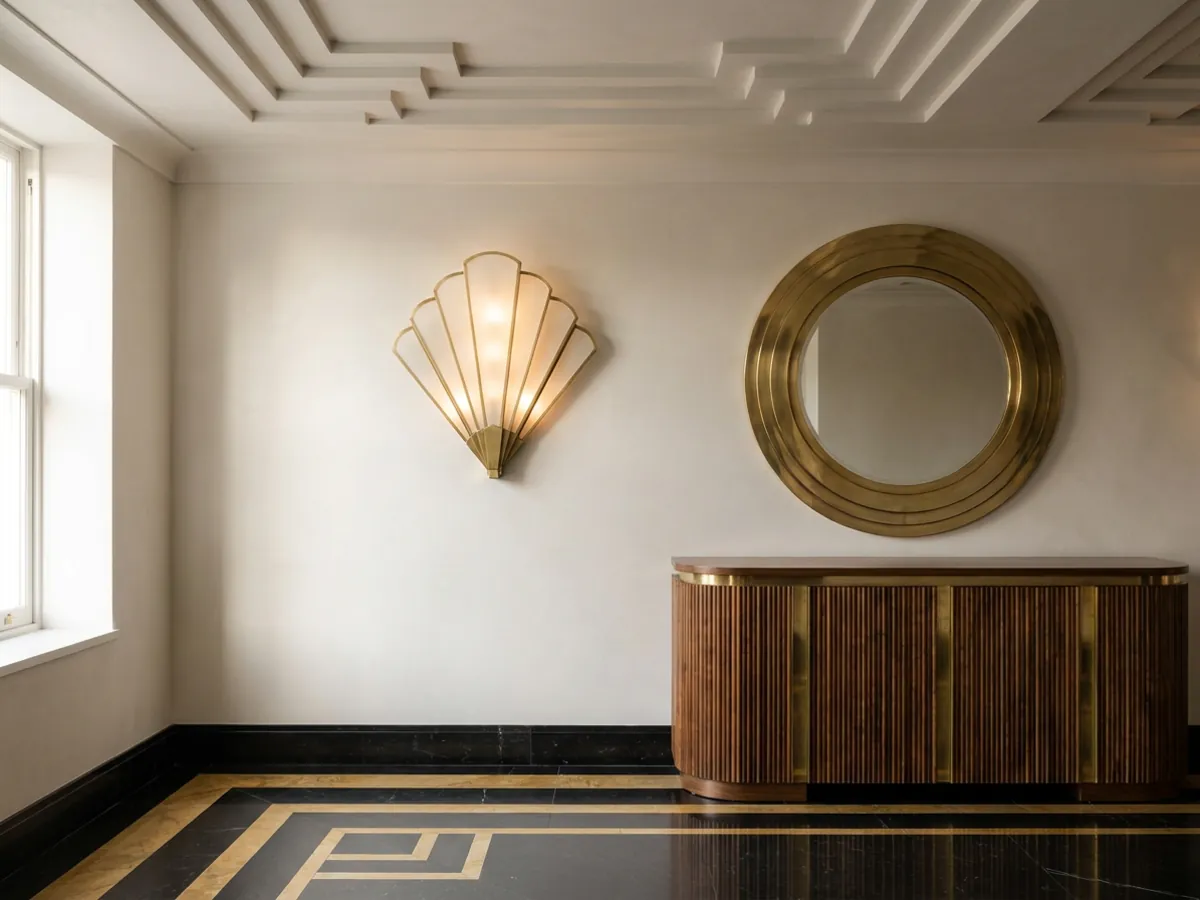
Art Deco is a decorative style that emerged in the 1920s and spread widely after the 1925 International Exhibition of Modern Decorative and Industrial Arts in Paris, which gave the movement its name. It combines bold geometry, strong symmetry, and rich color with luxurious but streamlined materials like brass, glass, marble, and velvet. The result is glamorous and orderly rather than fussy, a celebration of modern luxury that still feels composed.
Its staying power comes from the mood it captures. Art Deco was the look of the 1920s and 1930s at their most optimistic, an era of jazz, travel, and new machines, and it channeled all of that energy into design that felt modern and luxurious at once. That confidence still reads today. A room with real Art Deco in it feels a little like an occasion, which is exactly why the style keeps returning in hotels, bars, and homes that want a sense of glamour.
What makes Art Deco so usable today is that it works through a few signature moves rather than total commitment. A single sunburst mirror, one velvet statement chair, or a geometric rug can signal the style without redecorating an entire room. That is the key to using it well: Art Deco is bold, but it is not maximalist for its own sake. It is precise. Understanding its elements lets you add glamour with intention, which is what the rest of this guide is about.
The Art Deco color palette
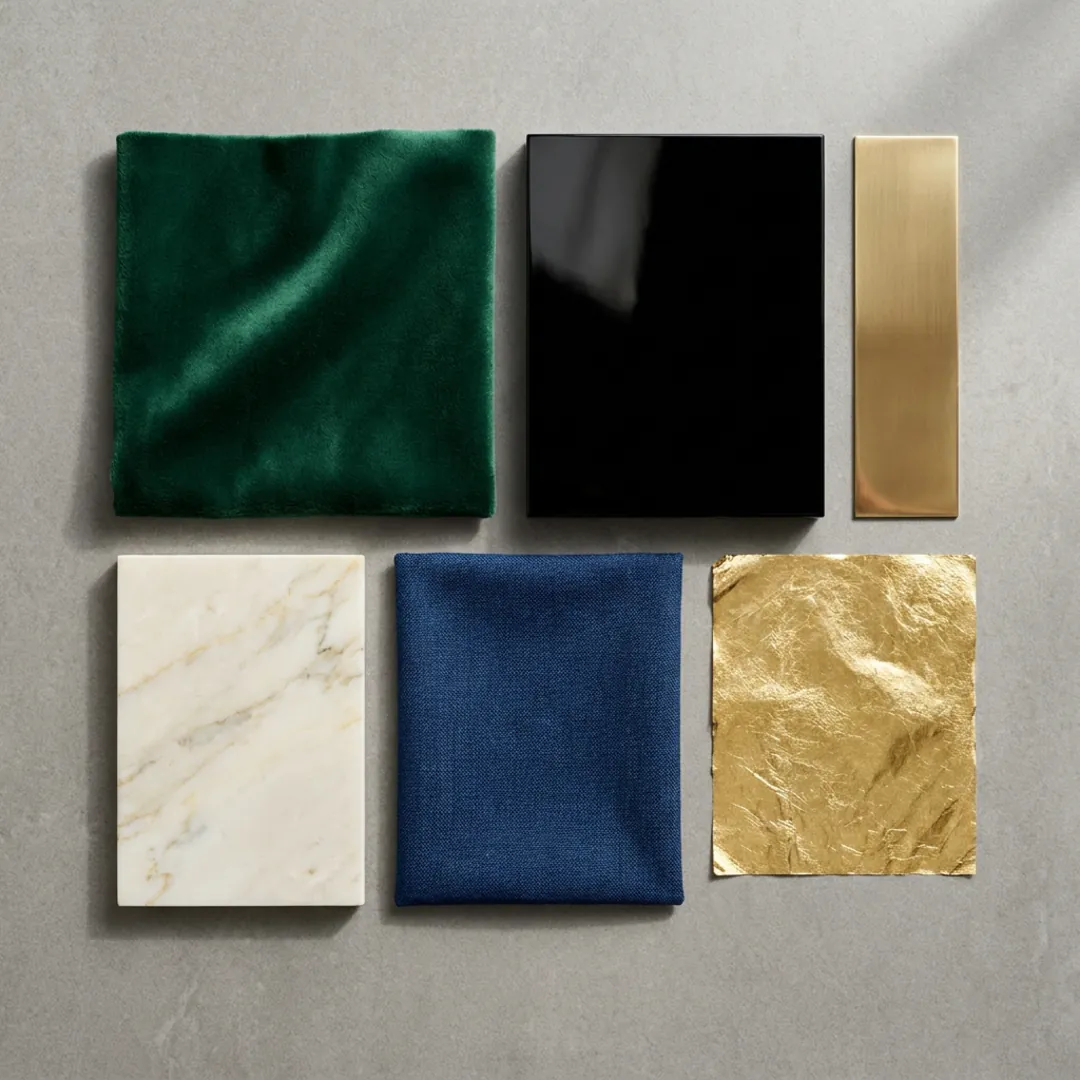
Color is where Art Deco gets its drama, and the scheme is more disciplined than it first appears. The classic palette pairs a restrained base of black, cream, or charcoal with one or two jewel tones, emerald green, sapphire blue, ruby, or mustard gold. Then metallics in brass, gold, or chrome add contrast and shine. A softer route to the same look uses 1920s pastels like blush and powder blue in place of the deep jewels.
The discipline is in the count. Keeping to roughly three main colors is what lets a bold palette feel composed rather than chaotic: a base, a jewel tone, and a metallic. Add a fourth and fifth strong color and the room tips from glamorous into busy. Let the base do the grounding, let one jewel tone carry the drama, and let the metallic tie it together with shine. That restraint is the difference between Art Deco and a costume.
Materials and finishes that define Art Deco
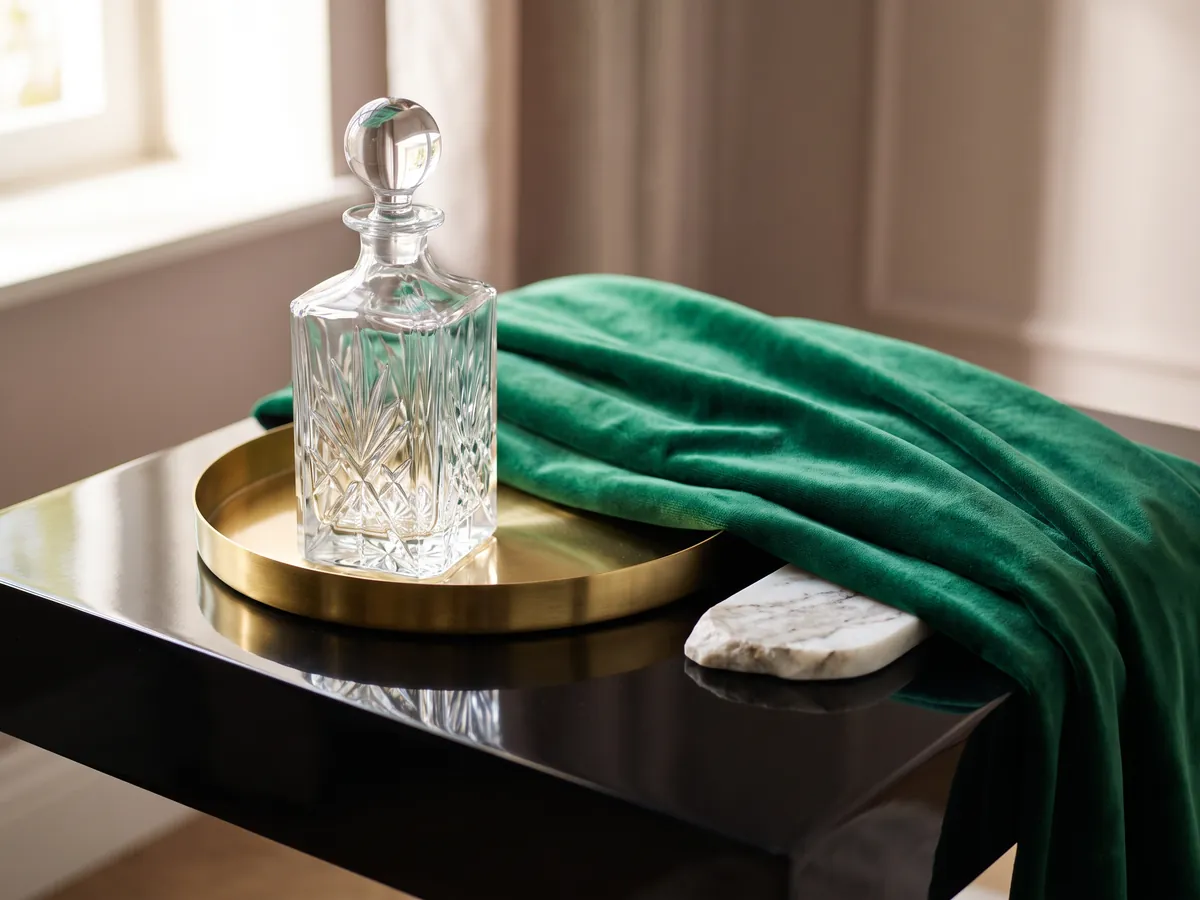
Materials are the soul of Art Deco, and the style lives on a specific contrast: hard, reflective surfaces against deep, soft textures. The reflective side brings chrome, brass, and satin metals, glass and mirror, and high-gloss lacquer. The soft side brings velvet and silk. Between them sit marble and onyx, and figured woods like walnut burl and ebony, often with inlay, which add warmth to all the shine.
That interplay of shine and depth is what gives an Art Deco room its richness. A velvet chair beside a brass table on a marble floor reads as luxurious precisely because the materials are so different from one another. And you do not need rare originals to get it: accessible substitutes like brass hardware, a lacquered cabinet, and velvet accents achieve the look convincingly. Before committing to expensive finishes, it is worth testing them with interior design software on a photo of your actual room.
Geometric patterns and motifs
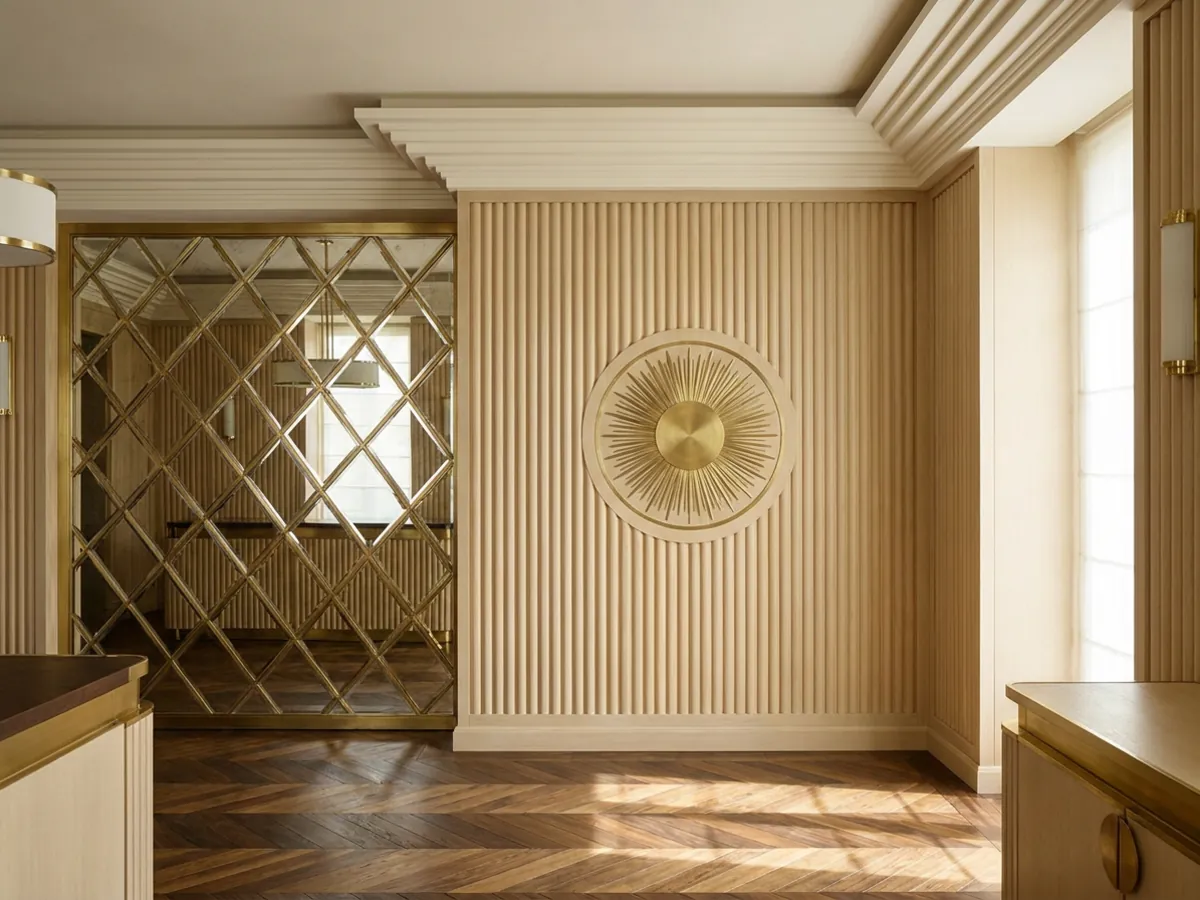
If color and materials set the mood, geometry is the language. Art Deco is built on repeating, symmetrical patterns, and a handful of motifs appear again and again:
- Sunbursts and fans, radiating lines that give the style its optimistic, radiant feel.
- Chevrons and zigzags, sharp repeating angles, often on floors and rugs.
- Stepped and tiered forms, the ziggurat shapes echoed in mirrors, cabinets, and mouldings.
- Strong symmetry, elements balanced in mirror image for a sense of order.
The trick is to let the geometry carry through one or two elements rather than every surface. A single bold geometric rug, a sunburst mirror, or a chevron feature wall does more than a room where the floor, walls, and upholstery all compete with pattern. Choose one or two pattern carriers, keep the rest calmer, and the geometry reads as deliberate rather than dizzying.
Art Deco furniture and silhouettes
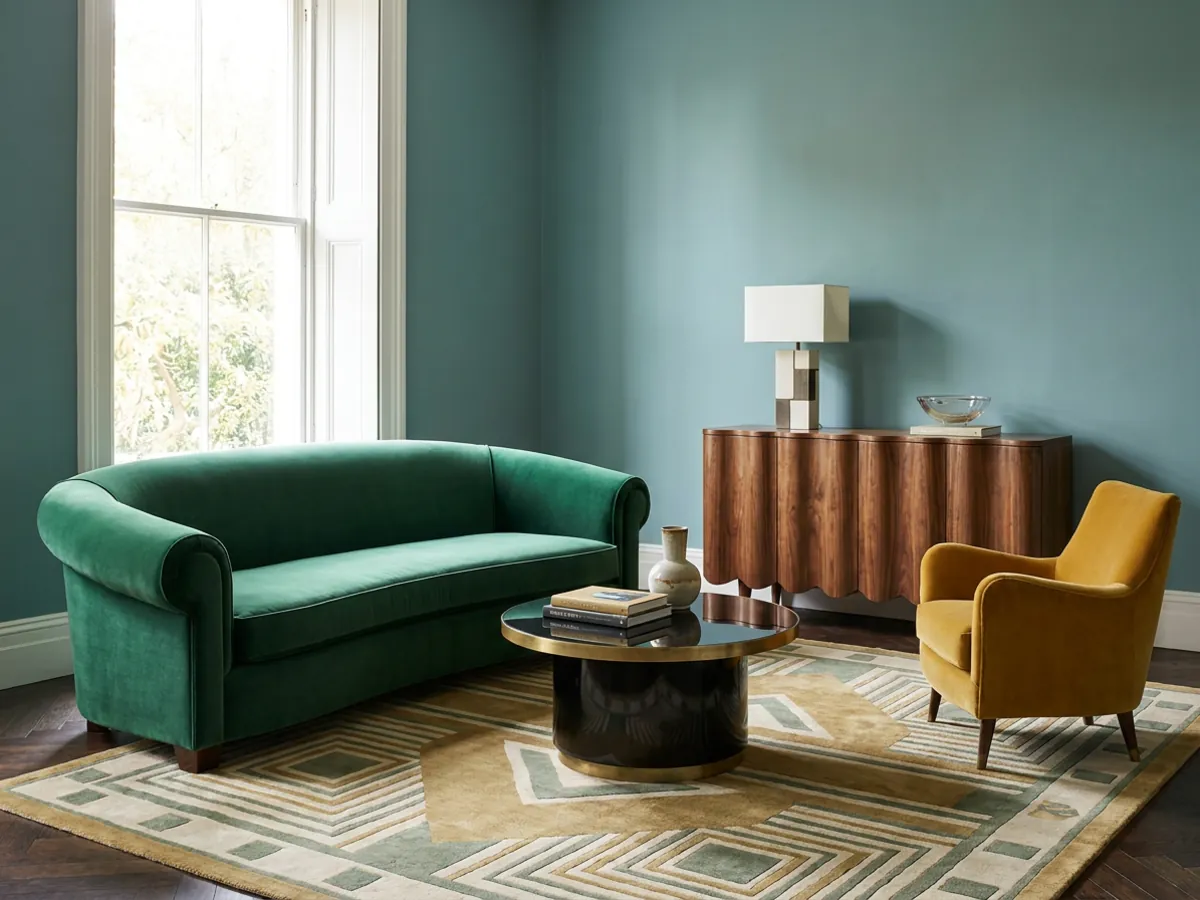
Art Deco furniture is generous and confident, with clean lines softened by curves. Think of a rounded velvet sofa, a club chair with a sweeping back, a fluted or scalloped cabinet, and low tables in brass and glass or marble. The silhouettes are substantial without being heavy, and they often feature curved fronts, tapered legs, or stepped detailing that ties back to the geometry of the style.
A little goes a long way. One statement piece, a fluted sideboard, a curved emerald sofa, an inlaid cocktail cabinet, can anchor a whole room and let the rest stay simpler. That is the most cost-effective way into the style, because a single well-chosen glamorous piece defines the space more than a dozen small accessories. If you want to see how a statement piece would sit in your space, you can redesign the room from a photo and try it before you buy.
Lighting and mirrors in Art Deco rooms
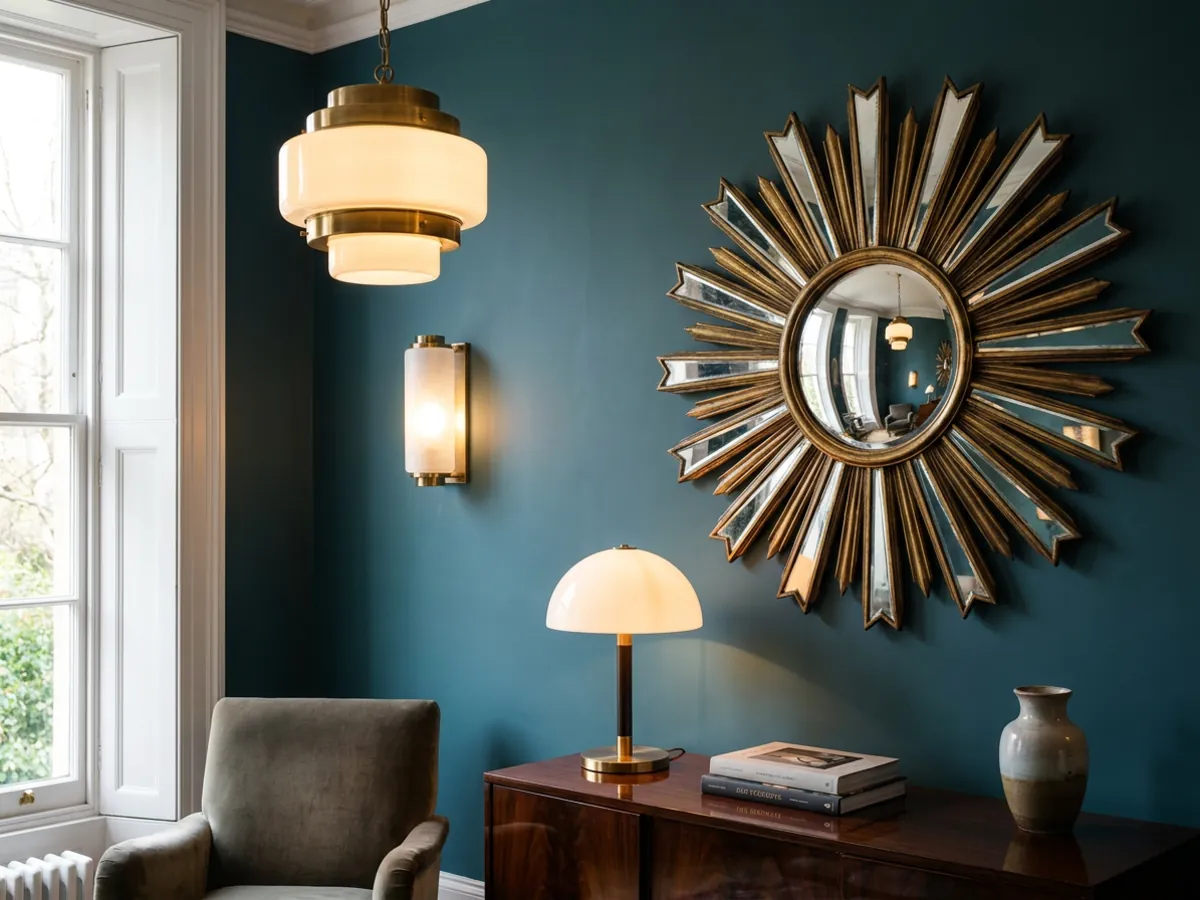
Light and reflection are central to the Art Deco effect. Lighting is treated as jewelry: a tiered brass chandelier, frosted glass wall sconces, a sculptural table lamp with a stepped base. The fixtures are meant to be seen and admired, not hidden, and their geometry and metallic finishes reinforce the whole scheme.
Mirrors do double duty. A sunburst mirror is one of the most recognizable Art Deco motifs, and mirrored surfaces, on a cabinet front, a tabletop, or a feature wall, bounce light around and amplify the room's glamour. Together, statement lighting and reflective surfaces create the shine that defines the style. A single sunburst mirror and one good fixture will move a room toward Art Deco faster than almost anything else.
Art Deco living room ideas
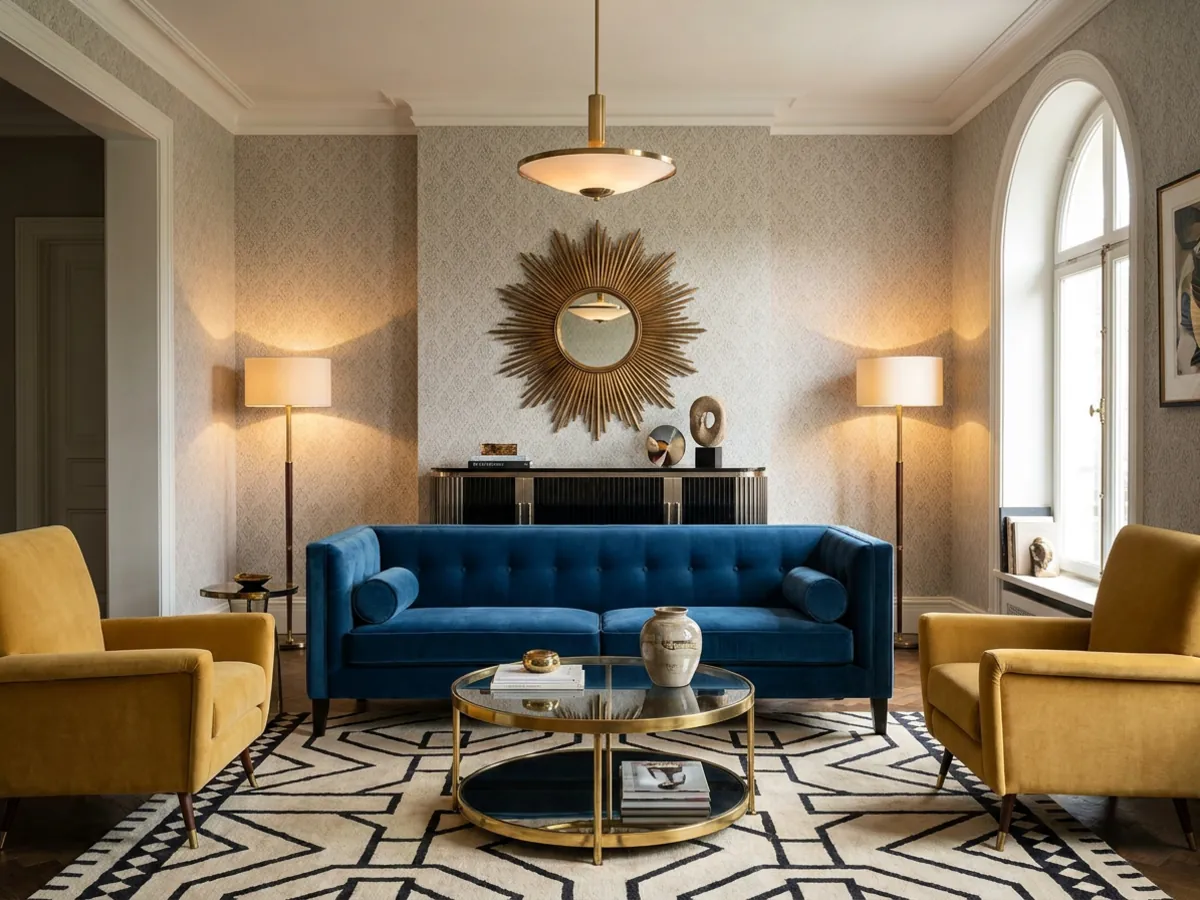
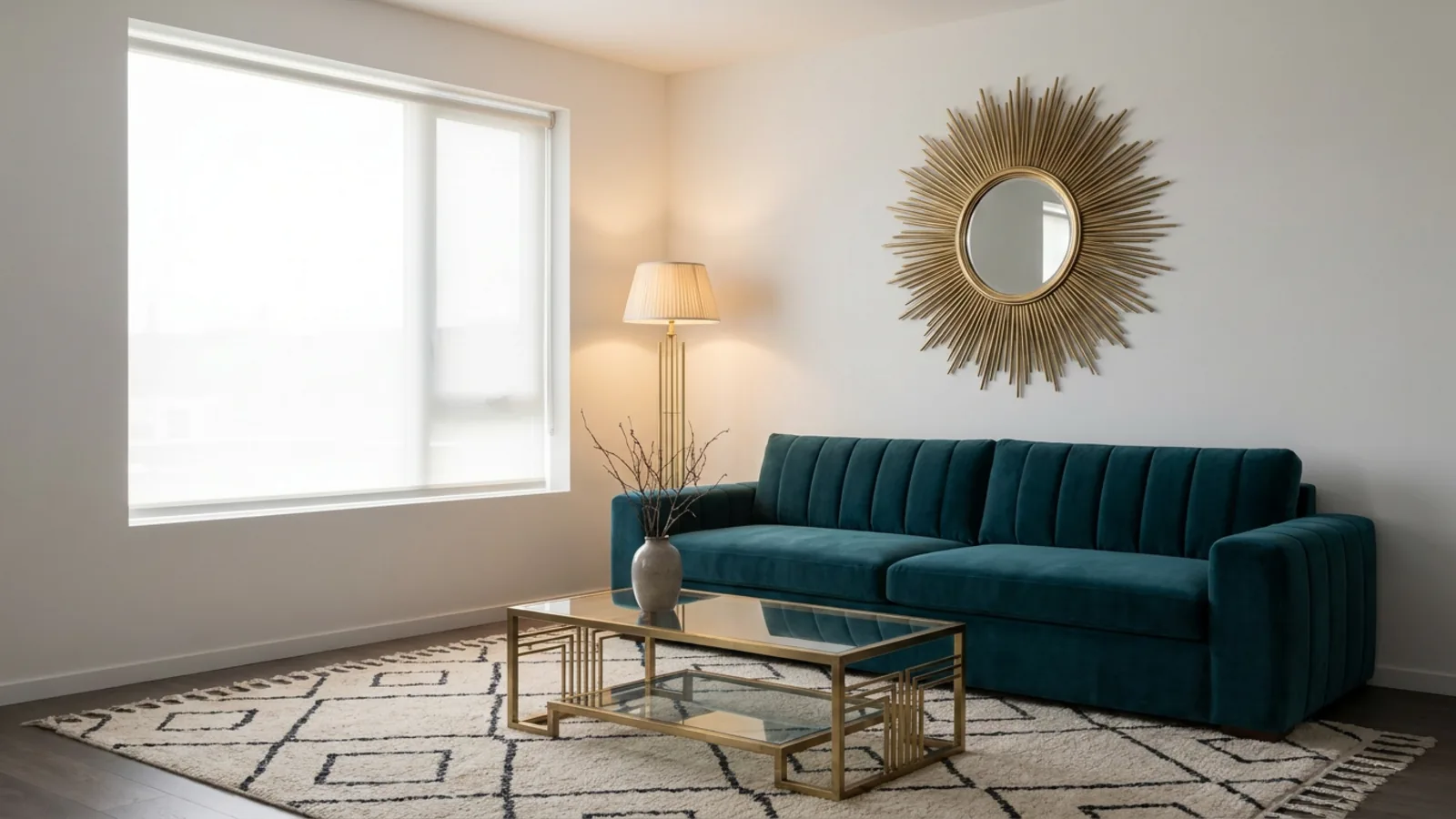
The living room is the natural showcase for Art Deco glamour. A winning recipe is a curved velvet sofa in a jewel tone, a pair of symmetrical club chairs, a brass and glass or marble coffee table, a bold geometric rug, and a sunburst mirror over a fluted console. Keep the walls calm, a deep charcoal or a soft cream, so the statement pieces can shine.
Symmetry does a lot of the work here: matching lamps, balanced seating, a centered mirror. That order is what keeps a glamorous room from feeling cluttered. You do not need every element at once; start with one anchor, the velvet sofa or the mirror, and build around it. To see the whole look come together on your own space, you can restyle the room with AI before committing to any pieces.
Art Deco bedroom ideas
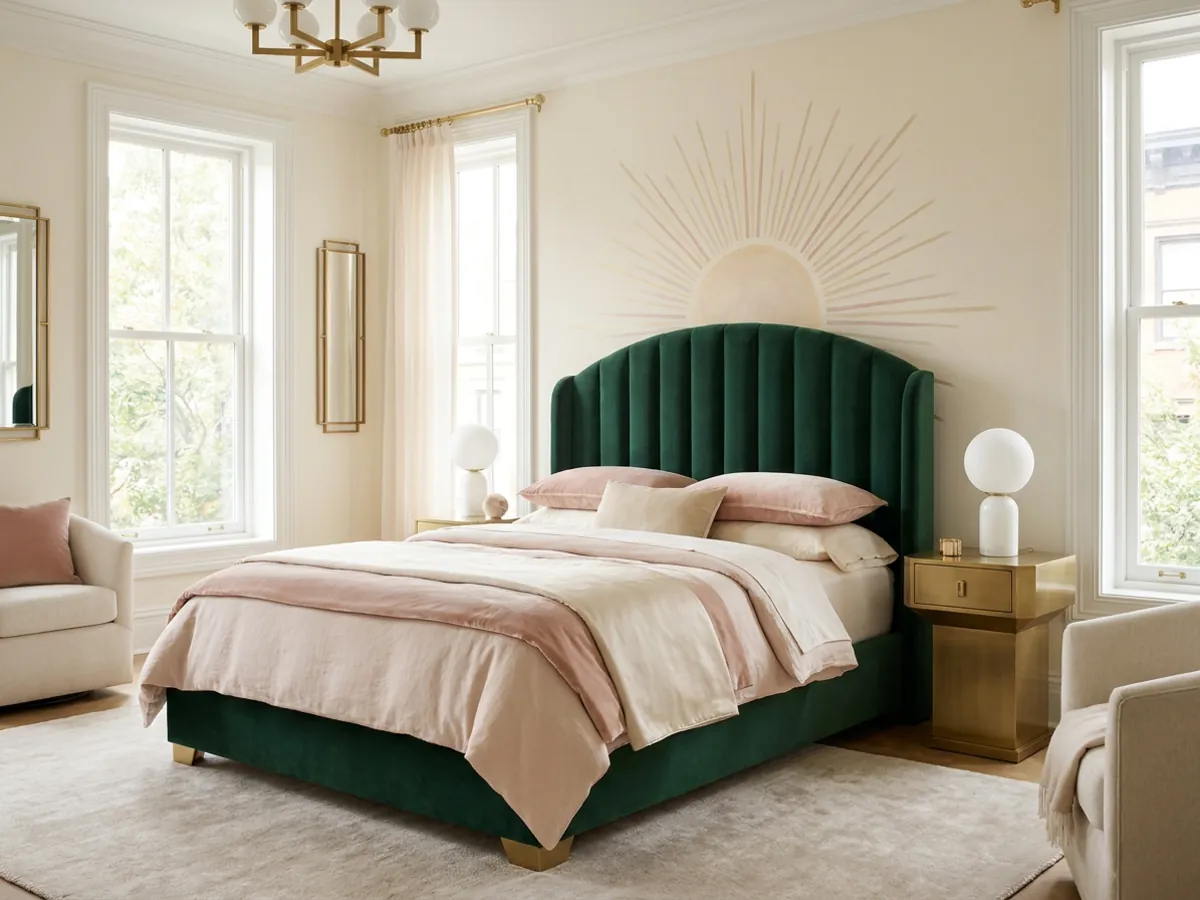
In the bedroom, Art Deco turns glamorous and restful at once. Anchor it with a channel-tufted or curved velvet headboard in a jewel tone, flanked by a symmetrical pair of nightstands and brass wall sconces. Add a geometric rug, a mirrored or fluted dresser, and soft metallic accents, and keep the palette to a calm base with one rich color so the room stays serene rather than busy.
The bedroom is where the softer side of the palette often works best: blush, powder blue, or deep teal against cream, with brass to lift it. Symmetry again keeps it calm, matching lamps and nightstands framing the bed. You can design an Art Deco bedroom with AI to find the right level of drama for your space, since a little glamour goes further in a room meant for rest.
Modern Art Deco vs traditional Art Deco
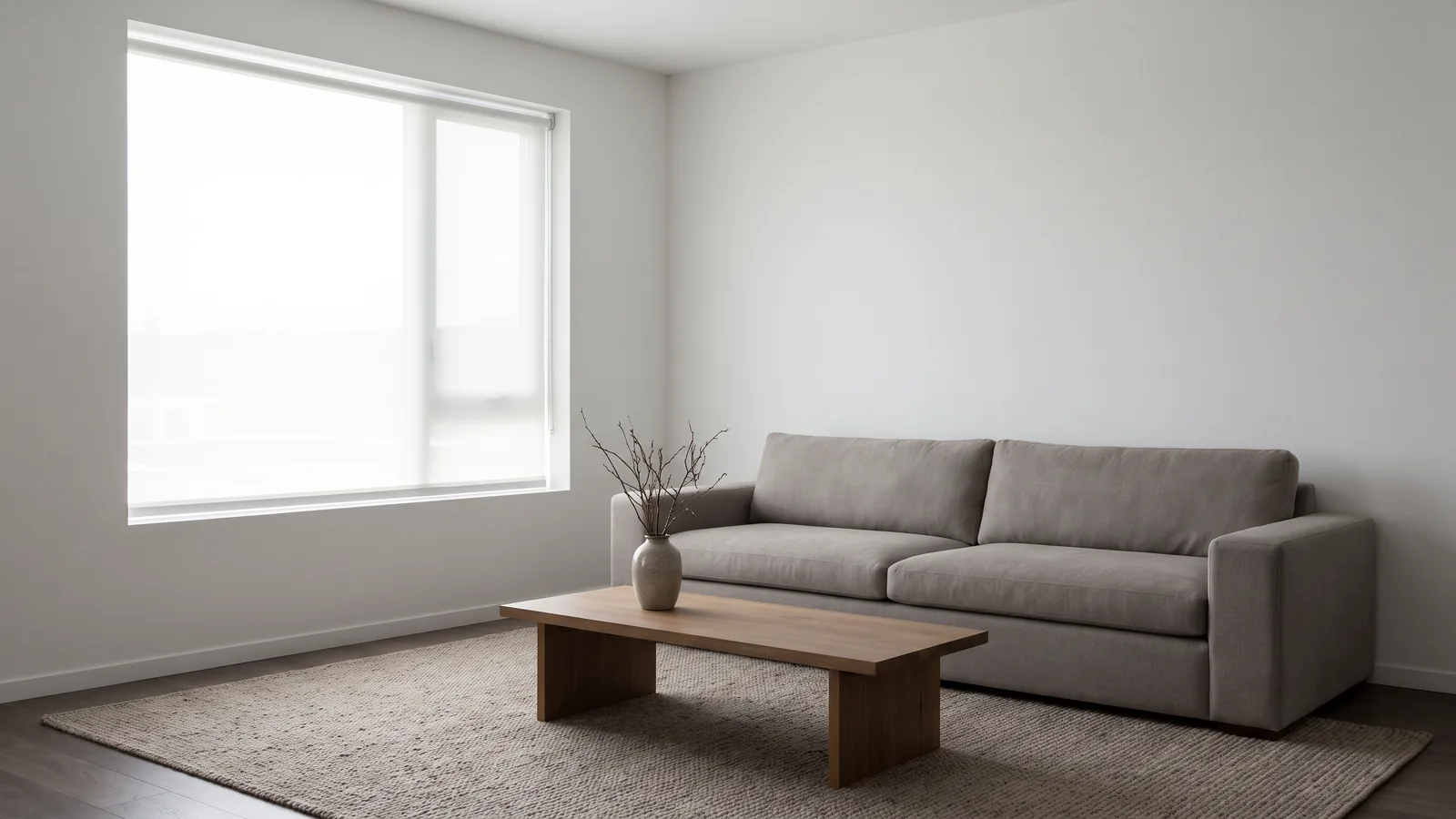 Before
Modern Art Deco
Before
Modern Art Deco
Art Deco comes in two temperaments, and knowing the difference helps you pitch it right for your home:
- Traditional Art Deco relied on rare materials, heavier ornament, and committing a whole room to the style. It reads as opulent and complete, a full period statement.
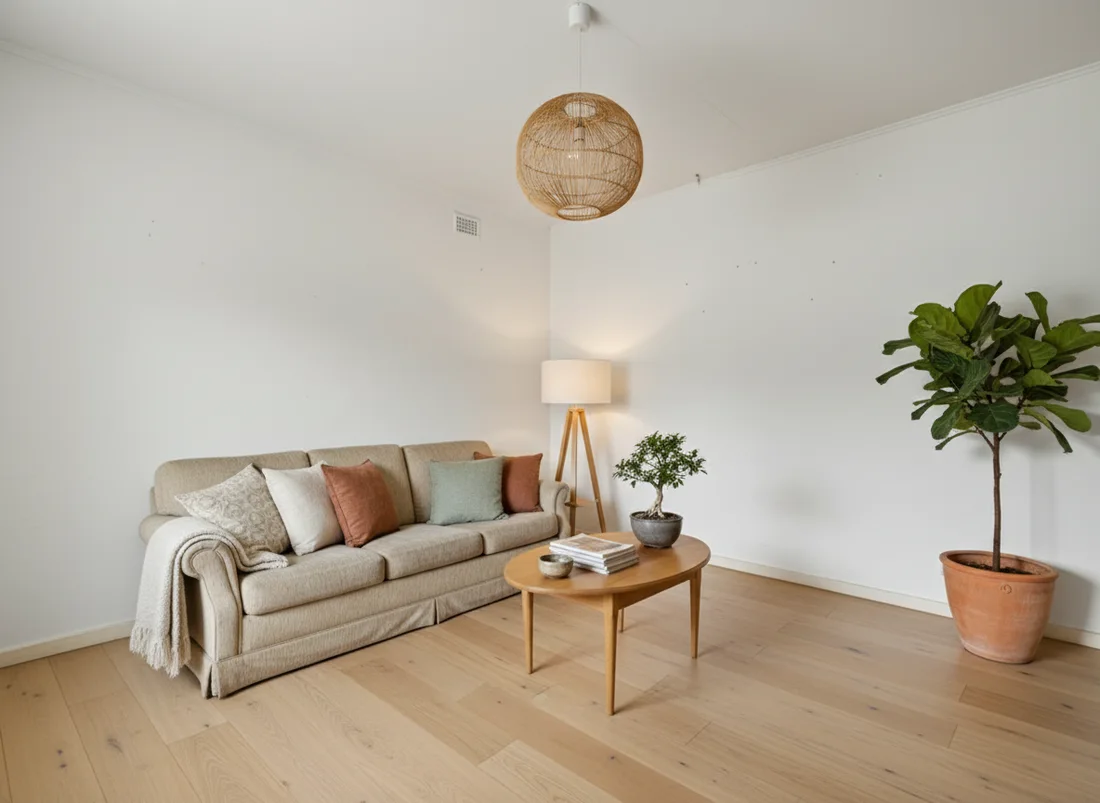
- Modern Art Deco keeps the same visual language, the geometry, symmetry, and metallic glamour, but uses restraint, accessible materials, and a neutral backdrop lifted by a few glamorous accents. It reads as glamorous nostalgia with a lighter touch.
Most homes today lean modern Art Deco, and for good reason: it keeps the drama that makes the style special while staying livable and current. A neutral base with a velvet chair, a brass light, and a geometric rug delivers the feeling without turning the room into a museum. That restraint is what keeps Art Deco feeling fresh rather than like a period recreation.
How to bring Art Deco into your own room
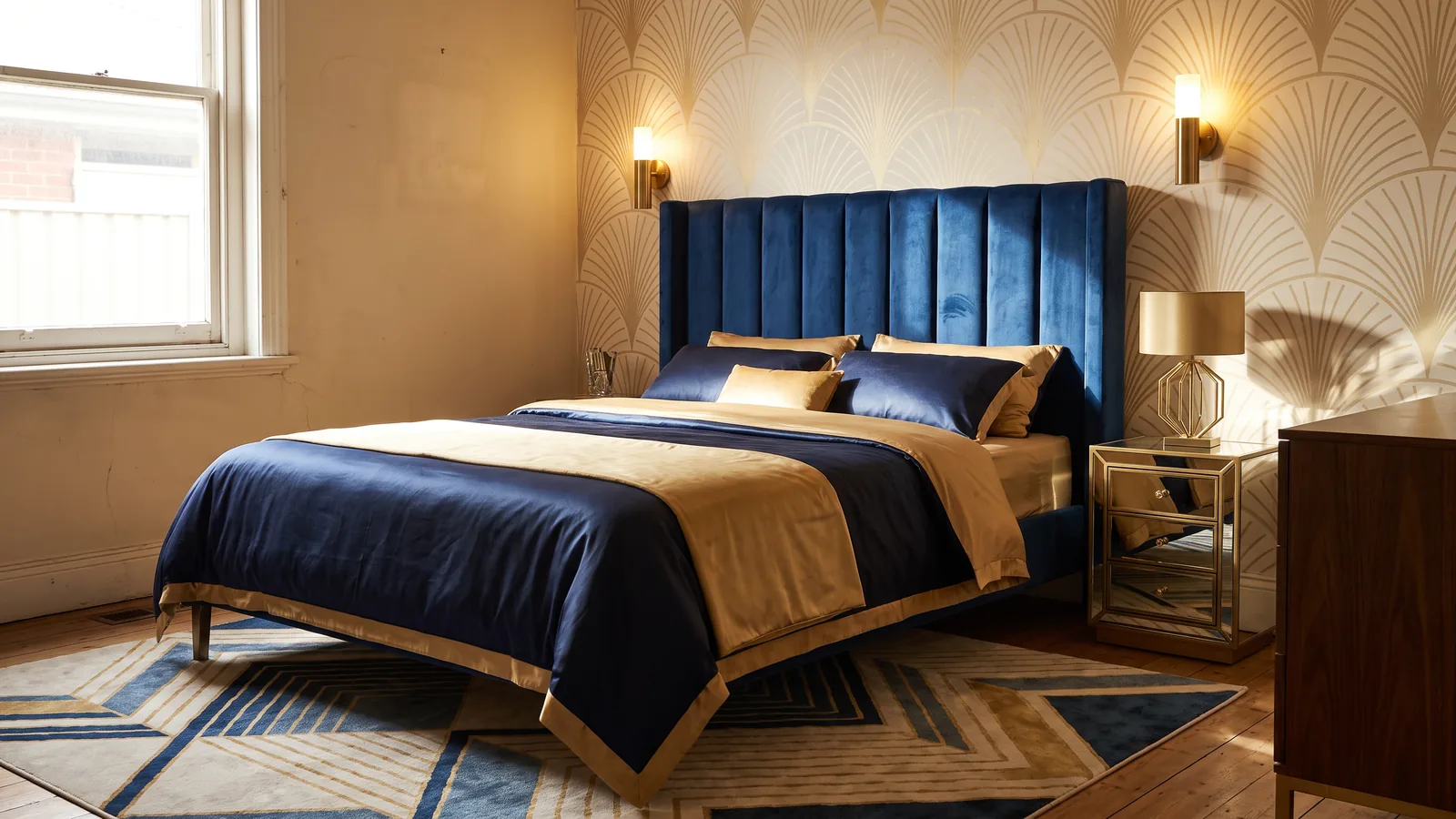
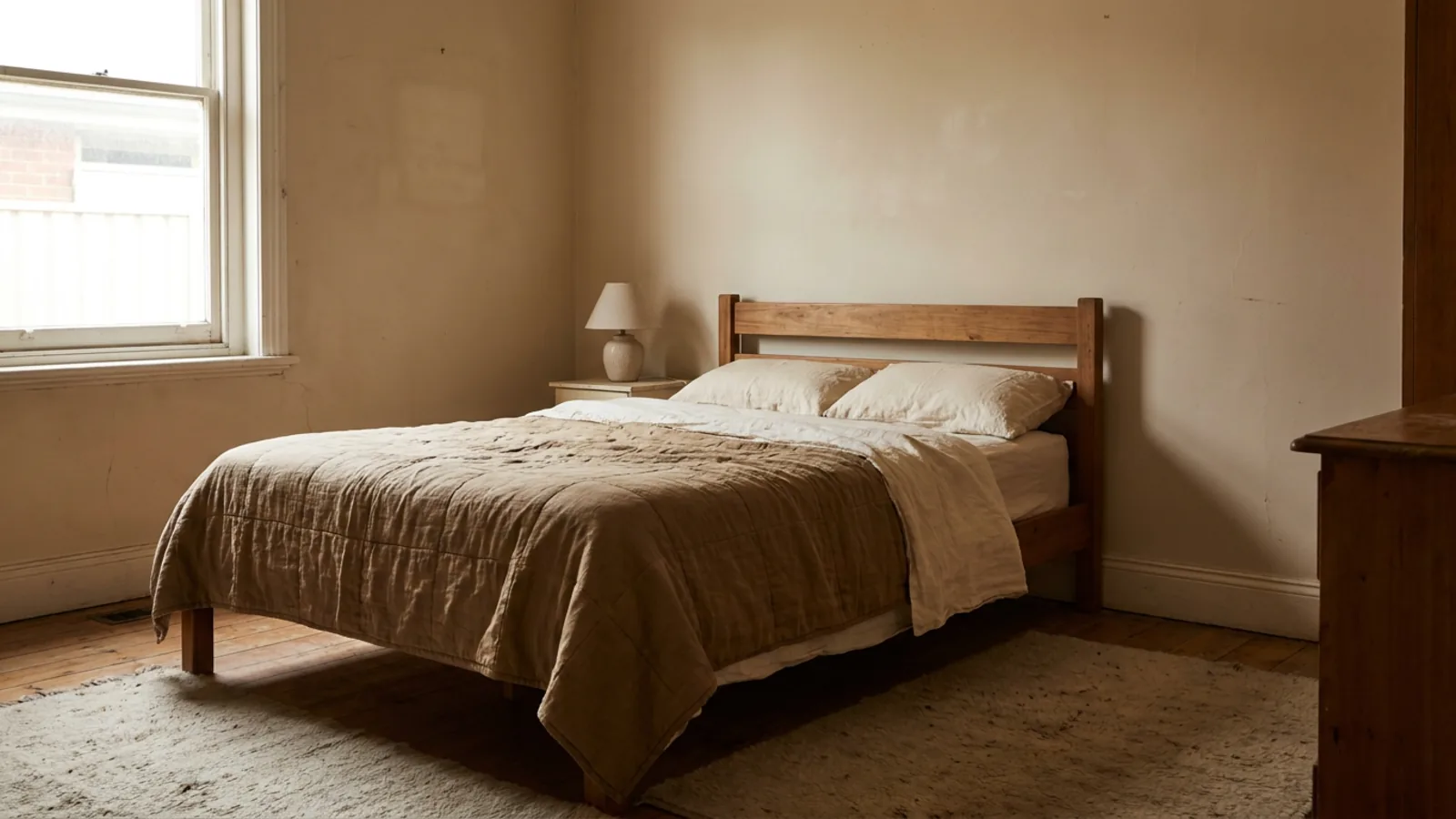 Before
Art Deco
Before
Art Deco
Bringing Art Deco into a room follows a simple recipe:
- Set a base of two neutrals and one jewel tone.
- Add one or two geometric carriers, a patterned rug or an accent wall.
- Introduce brass or chrome and a mirror to bounce light.
- Anchor with a statement piece, a velvet chair or a fluted cabinet.
- Keep the palette limited and the layout symmetrical so it looks intentional.
The style is not limited to the living room and bedroom, either. A kitchen can carry it through fluted cabinet fronts, brass hardware, and a marble or geometric-tiled backsplash. A bathroom takes it beautifully with black and white geometric floor tile, brass fittings, and a sunburst mirror. And an entryway is one of the best places of all to start, since a single Art Deco moment, a mirrored console under a fan-shaped mirror, sets the tone for the whole home in a small, affordable space. Wherever you use it, the same rule holds: one or two glamorous moves, a calm backdrop, and symmetry to keep it composed.
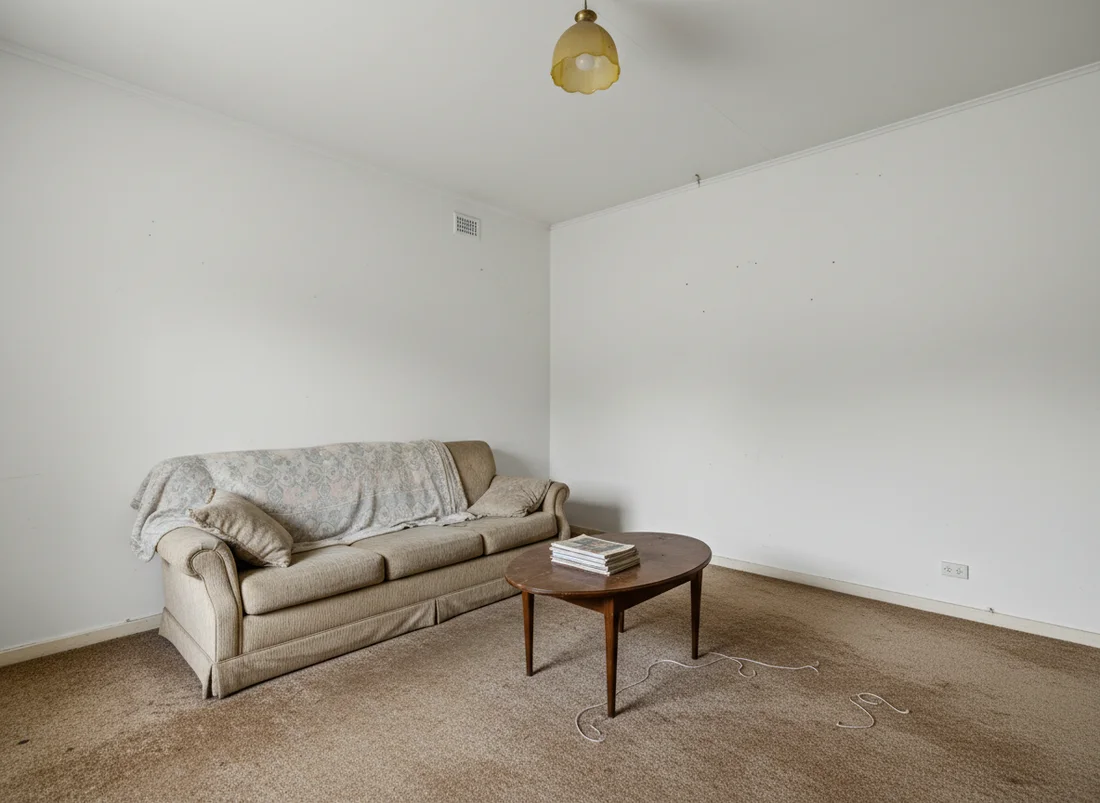
The surest way to get the balance right is to see it on your actual room first. Upload a photo and preview it in Art Deco, keeping your layout and windows while the palette, materials, and statement pieces change, so you can judge how much glamour your space wants before spending anything. The first render is free with no signup. You can furnish an empty room with virtual staging, restyle a kitchen, or try Art Deco on your own room now.
Frequently asked questions
What is Art Deco interior design? +
Art Deco is a decorative style that emerged in the 1920s and spread widely after the 1925 International Exhibition of Modern Decorative and Industrial Arts in Paris. It combines bold geometry, symmetry, and rich color with luxurious but streamlined materials like brass, glass, marble, and velvet. The result is glamorous and orderly rather than fussy. A few well chosen elements can signal the style without redecorating an entire room.
What colors are used in Art Deco interiors? +
The classic scheme pairs a restrained base of black, cream, or charcoal with one or two jewel tones such as emerald green, sapphire blue, ruby, or mustard gold. Metallics in brass, gold, or chrome add contrast and shine. Softer 1920s pastels like blush and powder blue are a lighter route to the same look. Keeping to about three main colors helps a bold palette feel composed.
What are the key features of Art Deco style? +
The signatures are geometric patterns like sunbursts, chevrons, and stepped forms, strong symmetry, reflective materials such as mirror, brass, and lacquer, and generous furniture with clean lines and curved fronts. Rich jewel tones and metallic accents complete the picture. Most rooms carry the style through one or two bold elements rather than covering every surface.
Is Art Deco still in style? +
Art Deco continues to appear in contemporary interiors, usually in a lighter, more restrained form. Modern versions keep the geometry, symmetry, and metallic glamour but pair them with neutral bases and a few statement pieces. This makes the look feel current rather than like a period recreation, which is why it keeps a steady place in modern interiors.
What is the difference between modern and traditional Art Deco? +
Traditional Art Deco relied on rare materials, heavier ornament, and committing a whole room to the style. Modern Art Deco keeps the same visual language but uses restraint, accessible materials, and a neutral backdrop lifted by a few glamorous accents. Traditional reads as opulent and complete, while modern reads as glamorous nostalgia with a lighter touch.
How do you add Art Deco style to a room? +
Start with a base of two neutrals and one jewel tone, then add one or two geometric carriers such as a patterned rug or an accent wall. Introduce brass or chrome and a mirror to bounce light, and anchor the space with a statement piece like a velvet chair or a fluted cabinet. Keeping the palette limited and the layout symmetrical is what makes it look intentional. You can also upload a photo of the room and preview the style before buying anything.
What materials are used in Art Deco design? +
Common materials include chrome, brass, and satin metals, glass and mirror, high gloss lacquer, marble and onyx, and soft velvet and silk. Figured woods such as walnut burl and ebony, often with inlay, add warmth. The style relies on contrast between hard reflective surfaces and deep soft textures. Accessible substitutes like brass hardware and velvet accents achieve the look without rare materials.
 After
After
 Before
See it on your own room
Your room, redesigned
Upload one photo and watch your room restyled in a wide range of designer looks. Your walls, windows and layout stay exactly as they are.
Try it free, no signupOne photo. In seconds. No signup.