restylai blog
Japandi Interior Design: 2026 Guide, Palette, Rooms
Updated July 19, 2026 · by the restylai team
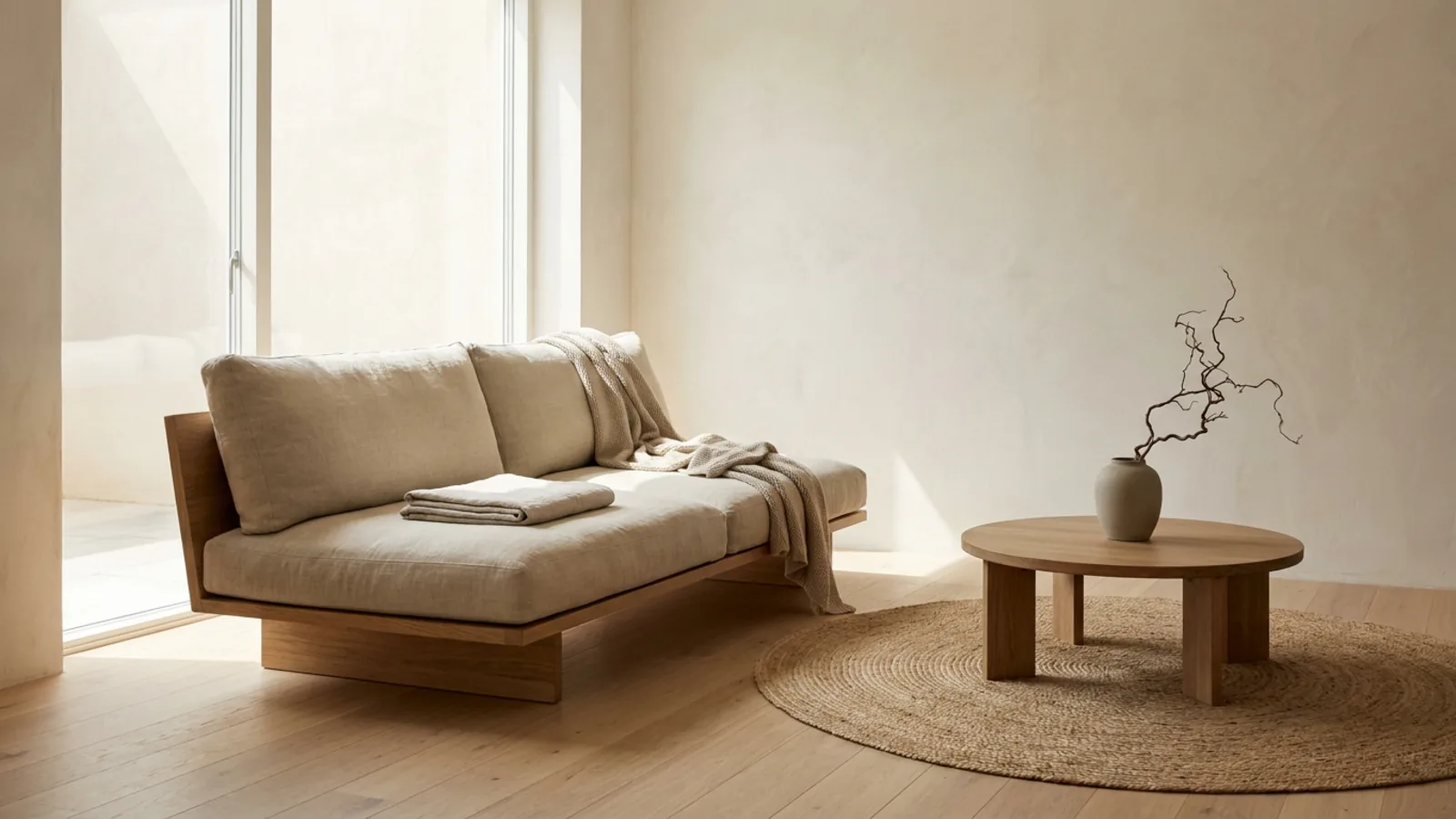
Japandi is the calmest room in the house made into a whole design philosophy. It takes the restraint and craft of Japanese design and the warmth and comfort of Scandinavian design and blends them into something that feels both serene and lived-in. The result is a home that is quiet without being cold, minimal without being empty, and natural without being rustic. It is one of the most searched and most loved interior styles of the decade, and it is unusually achievable, because so much of it comes down to editing rather than buying.
This guide covers what Japandi actually is, how to tell it apart from Scandinavian, its warm palette, its materials, how it works room by room in the living room, bedroom, kitchen, and bathroom, the common mistakes that trip people up, and how to preview the look on a photo of your own room.
What is Japandi interior design?
Japandi is a hybrid interior style that blends Japanese and Scandinavian design. It combines the Japanese idea of wabi-sabi, finding beauty in natural imperfection and restraint, with the Scandinavian idea of hygge, warm everyday comfort. Those two ideas turn out to be a natural fit: both value simplicity, natural materials, and craftsmanship, and both prefer a few good things to a lot of stuff.
It helps to understand the two ideas at the root of it. Wabi-sabi, from the Japanese side, is the acceptance of imperfection and impermanence: it prizes the handmade, the worn, the natural grain and the slightly irregular over the flawless and mass-produced. Hygge, from the Scandinavian side, is the pursuit of cosy contentment: soft light, warm textiles, and spaces that make everyday life feel good. Japandi is what happens when you honor both at once, a room that is disciplined and imperfect and warm at the same time. That is a subtler goal than plain minimalism, which is why Japandi rewards attention to materials and light more than it rewards buying the right furniture.
In practice, Japandi means calm rooms built from warm neutral colors, natural materials like wood and linen, low and functional furniture, and only a few meaningful objects rather than clutter. The feeling it aims for is a sense of retreat: a space that lets you exhale. It is minimalist, but it is a warm minimalism, softened by texture and grounded by natural tones. Understanding that balance, restraint plus warmth, is the key to the whole style, and everything below is about how to strike it. If you want to see the balance on a real space, you can redesign a room from a photo and watch a cluttered space resolve into a calm one.
Japandi vs Scandinavian: how to tell them apart
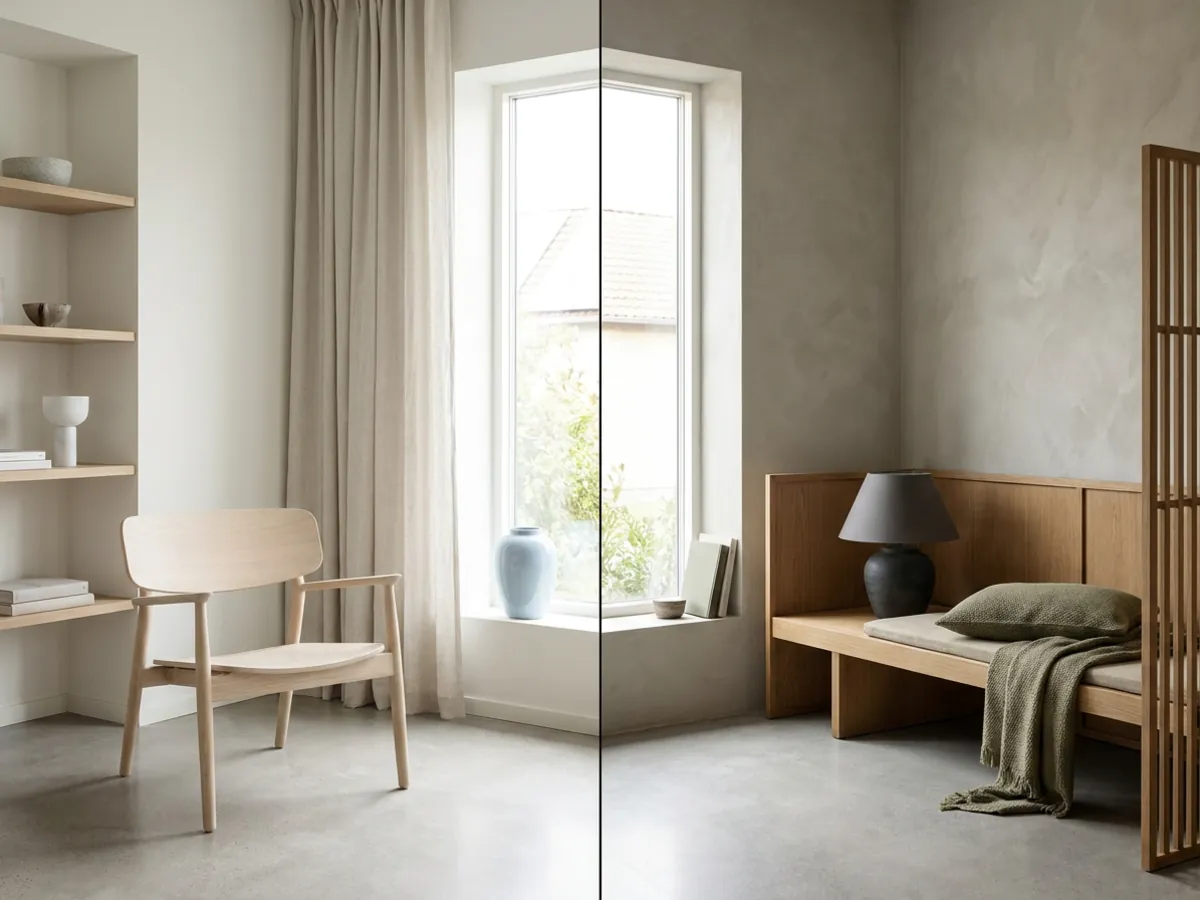
Japandi and Scandinavian look similar at a glance, because both are modern minimalist styles built on natural materials and quality over quantity. But there is a clear difference in temperature and weight:
- Scandinavian is lighter and brighter. It uses pale woods, crisp warm whites, and airy textiles, and it aims for a bright, cosy feeling.
- Japandi is warmer and more grounded. It uses muted earth tones, deeper contrast through charcoal and greens, and more tactile materials like rattan, stone, and matte black metal, and it aims for calm, craft, and a sense of retreat.
The simplest way to choose between them: pick Scandi for a light and cosy feel, and Japandi for calm, craft, and a sense of retreat. Japandi essentially takes the Scandinavian base and adds Japanese depth, a little more shadow, a little more contrast, a little more texture. If a Scandinavian room is a bright morning, a Japandi room is a quiet late afternoon. Once you feel that difference, the palette and materials below follow naturally.
The Japandi color palette: warm neutrals and grounded accents
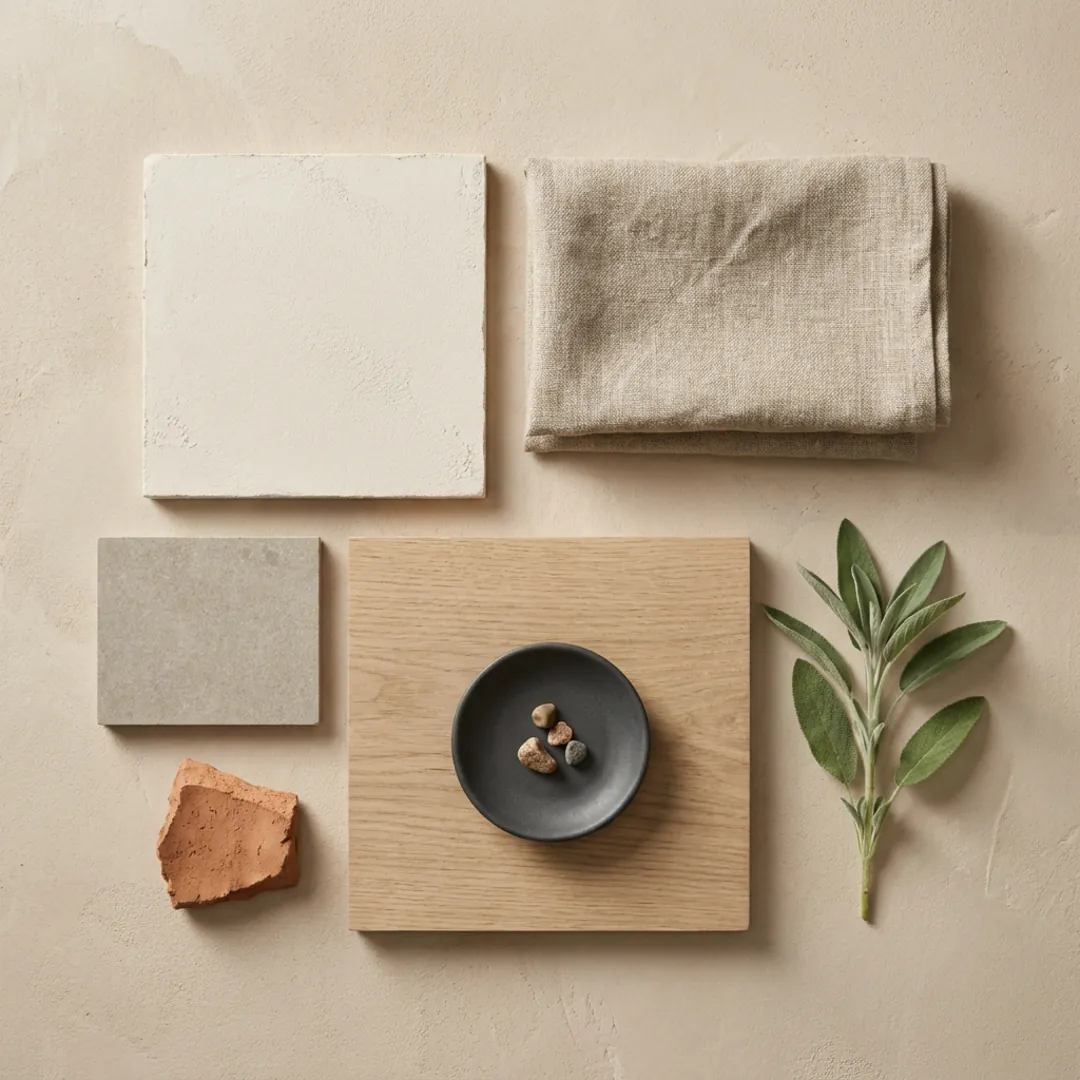
The single most important thing about a Japandi palette is that it is built on warm neutrals rather than bright white. This is what gives it warmth and keeps it from feeling clinical. A good set of base colors includes warm white or plaster white, oat, mushroom or greige, and soft sand. On top of that base you add sparing accents: charcoal, muted terracotta, and earthy greens like sage or olive with warm undertones.
A simple formula keeps it balanced: roughly 60 percent warm neutrals, 30 percent mid-tones and wood, and 10 percent darker earthy accents. That ratio gives you a calm, grounded room with just enough depth to stay interesting. The two colors to avoid are pure white and cool blue-gray, both of which pull the room toward a cold, clinical feeling that is the opposite of Japandi. When you are choosing paint, it is worth testing the exact warm neutral on your own walls, which you can do with an AI restyle of your room before you buy a single tin.
Natural materials and textures that define Japandi
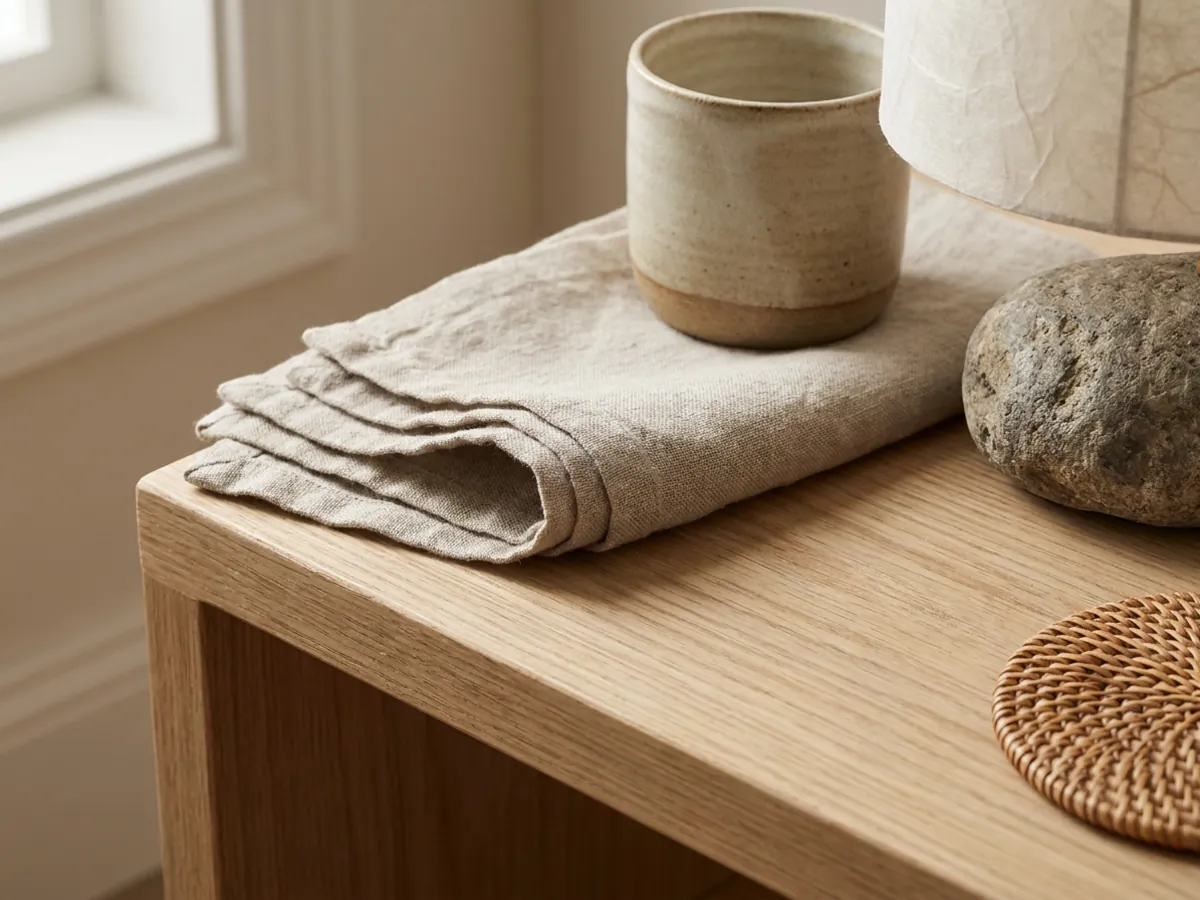
If the palette is quiet, the materials are what give a Japandi room its life. Because the colors are so restrained, texture does the work that color does in other styles. The core materials are natural and tactile: warm woods like oak, walnut, and ash, linen and cotton textiles, rattan and cane, stone and ceramic, paper, and matte black metal for fine contrast.
The art is in layering these textures so a muted room never feels flat. A linen sofa against an oak floor, a rattan chair beside a stone lamp, a ceramic vase on a paper-shaded light, each pairing gives the eye something to read even with almost no color. One important discipline: stick to one main wood tone and let it repeat, rather than mixing several clashing woods, which is one of the fastest ways to make a Japandi room look unresolved. Get the materials and their layering right and the style largely takes care of itself. To compare finishes on your own space before buying, dedicated planning tools and a photo restyle make it low-risk.
Japandi living room ideas
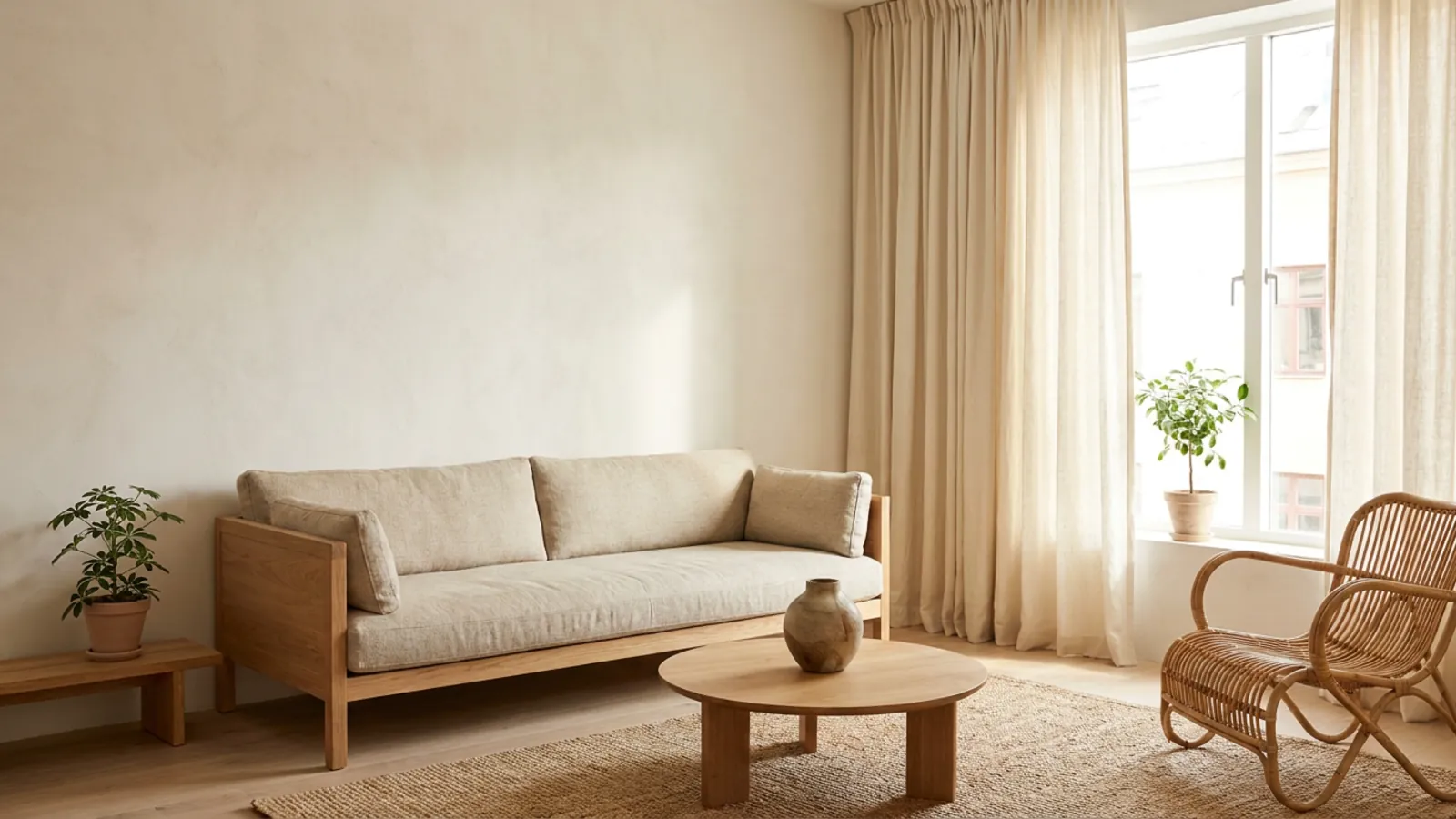
The living room is where Japandi is most rewarding, because it is the room most improved by calm. Build it around a low, oak-framed sofa with oatmeal linen cushions, a simple wood coffee table, a natural-fiber rug, and one or two tactile accents, a rattan chair, a ceramic lamp, a single piece of quiet art. Keep the surfaces clear and let negative space be part of the design rather than something to fill.
If you are building the room piece by piece, a short shopping list keeps it on track: one low sofa in a warm neutral linen, a solid wood coffee table with visible grain, a natural-fiber rug like wool or jute, a single sculptural chair in rattan or bentwood, a paper or ceramic lamp, and one or two handmade objects, a ceramic vessel, a woven basket. That is genuinely most of a Japandi living room. Everything after that should be added slowly and only if it earns its place, because the fastest way to lose the calm is to keep buying.
The Japandi transformation is mostly subtractive: remove the bulky and the busy, swap in low and natural, and add warmth through wood and linen rather than color. Lighting matters here, warm, layered, and low, never a single harsh overhead. A living room does not need to be rebuilt to become Japandi; it needs to be edited down to a few good, natural pieces and given room to breathe. Start from a Japandi living room for reference, then restyle your own living room to find the right level of restraint.
Japandi bedroom ideas
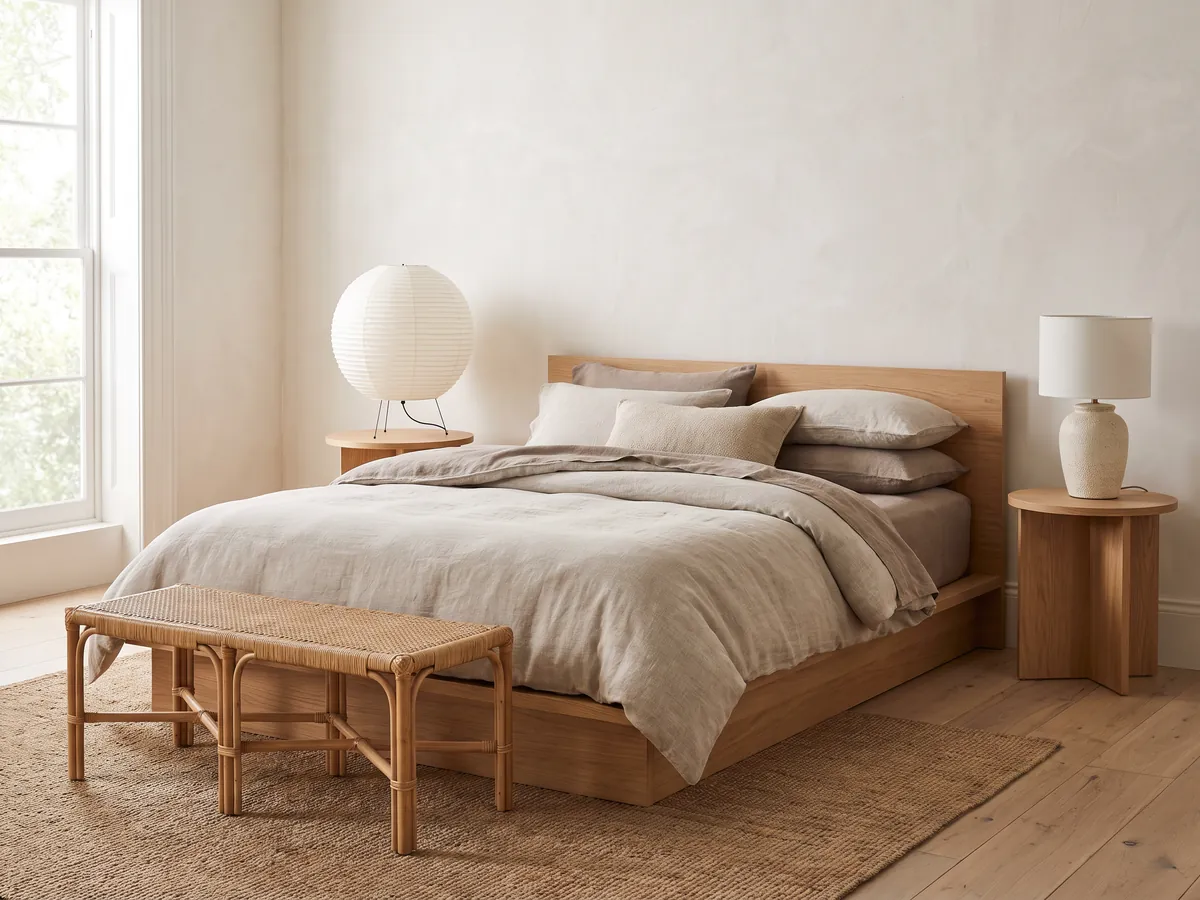
If any room was made for Japandi, it is the bedroom, because rest is exactly what the style is designed to produce. Anchor it with a low platform bed in warm wood, dressed in layered linen bedding in oat and mushroom tones. Add a pair of simple wood nightstands, paper or ceramic lamps for soft light, and keep the floor and surfaces as clear as you can. One tactile accent, a rattan bench, a textured throw, is enough.
The goal is a room with almost nothing extra in it, so that what remains feels intentional and calm. Avoid bright overhead light in favor of warm, low, layered lamps, and keep storage closed and clutter out of sight. This is the room where Japandi's promise of retreat is most literal. You can design a Japandi bedroom with AI on a photo of your own space, or start from a Japandi bedroom for direction, and find the balance of warmth and restraint that suits you.
The details are where a Japandi bedroom is won or lost. Choose bedding in natural fibers, washed linen and cotton, in oat, mushroom, and warm white, and let a slightly rumpled, lived-in look stand in for a crisply made hotel bed, which is more wabi-sabi and more restful. Keep bedside surfaces to a single object each, a book, a small ceramic, a low lamp. Add one natural texture underfoot, a wool rug or a rattan bench at the foot of the bed. And hide the technology: a Japandi bedroom is a screen-light, low-stimulation room by design, which is part of why it feels like such a retreat.
Japandi kitchen ideas
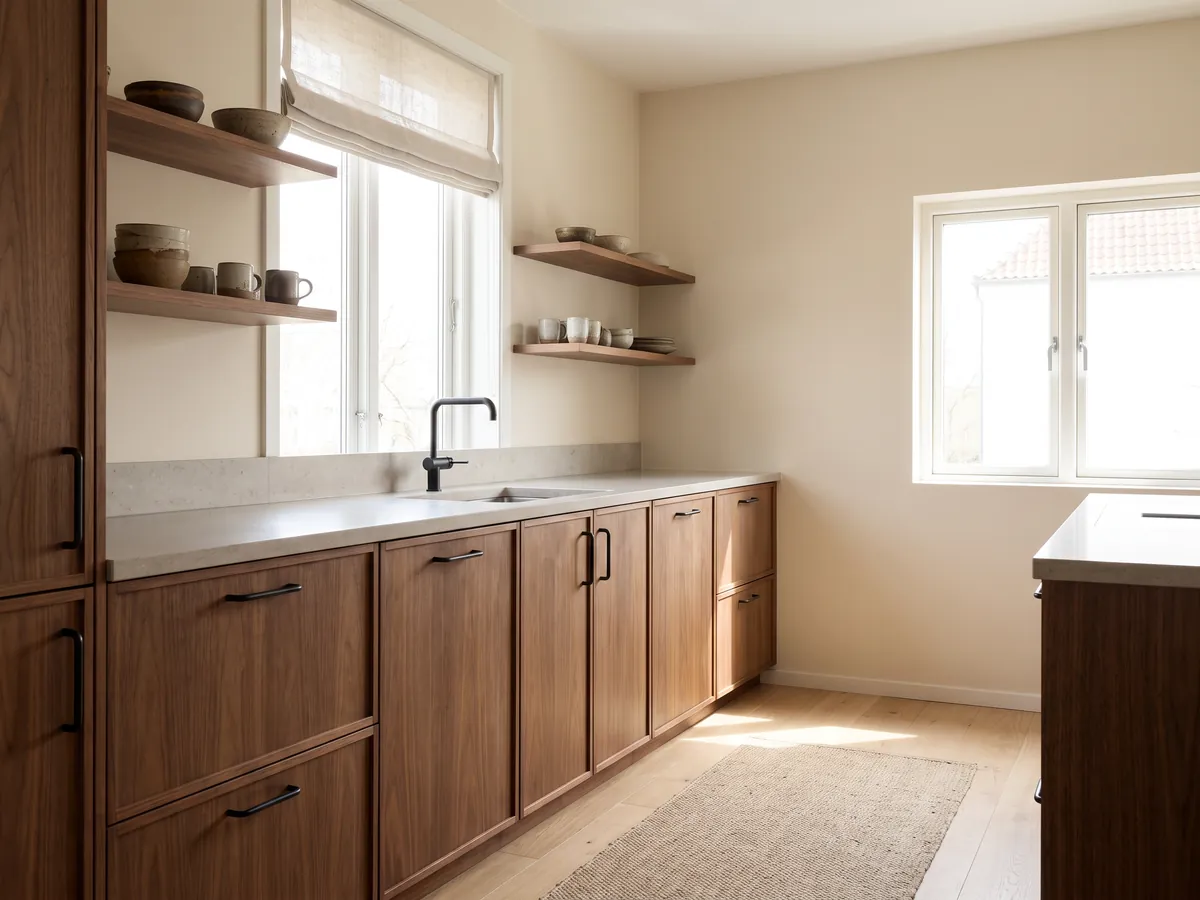
A Japandi kitchen brings the same calm to the busiest room in the house. The core moves are flat-front cabinets in a warm wood or a muted neutral, a stone or wood worktop, simple or handleless hardware in matte black or aged brass, and open shelving used sparingly for a few beautiful, functional objects. Above all, clear counters, since visible clutter is the enemy of the whole style.
The balance to strike is warm against cool and natural against clean: warm wood cabinetry, a cool stone surface, a matte black tap, and a ceramic bowl or two on display. Keep the palette to the warm neutrals and one wood tone, and resist the urge to add color or gadgets to the counters. A Japandi kitchen feels less like a showroom and more like a quiet, well-made workshop. If yours feels dated or busy, you can design a Japandi kitchen with AI to preview the calmer version before committing to cabinetry.
Two habits keep a Japandi kitchen calm long after the renovation. First, storage discipline: give everything a closed home so counters stay clear, and reserve any open shelf for a small, curated group of genuinely used objects, a few ceramic bowls, a wooden board, a single plant, rather than a display. Second, honest materials that age well: solid wood, real stone, and unlacquered metals develop a patina that suits the wabi-sabi spirit rather than looking worn. Skip high-gloss surfaces and busy patterned tile, which fight the restraint. A Japandi kitchen should feel like it will look better, not worse, in five years.
Japandi bathroom ideas
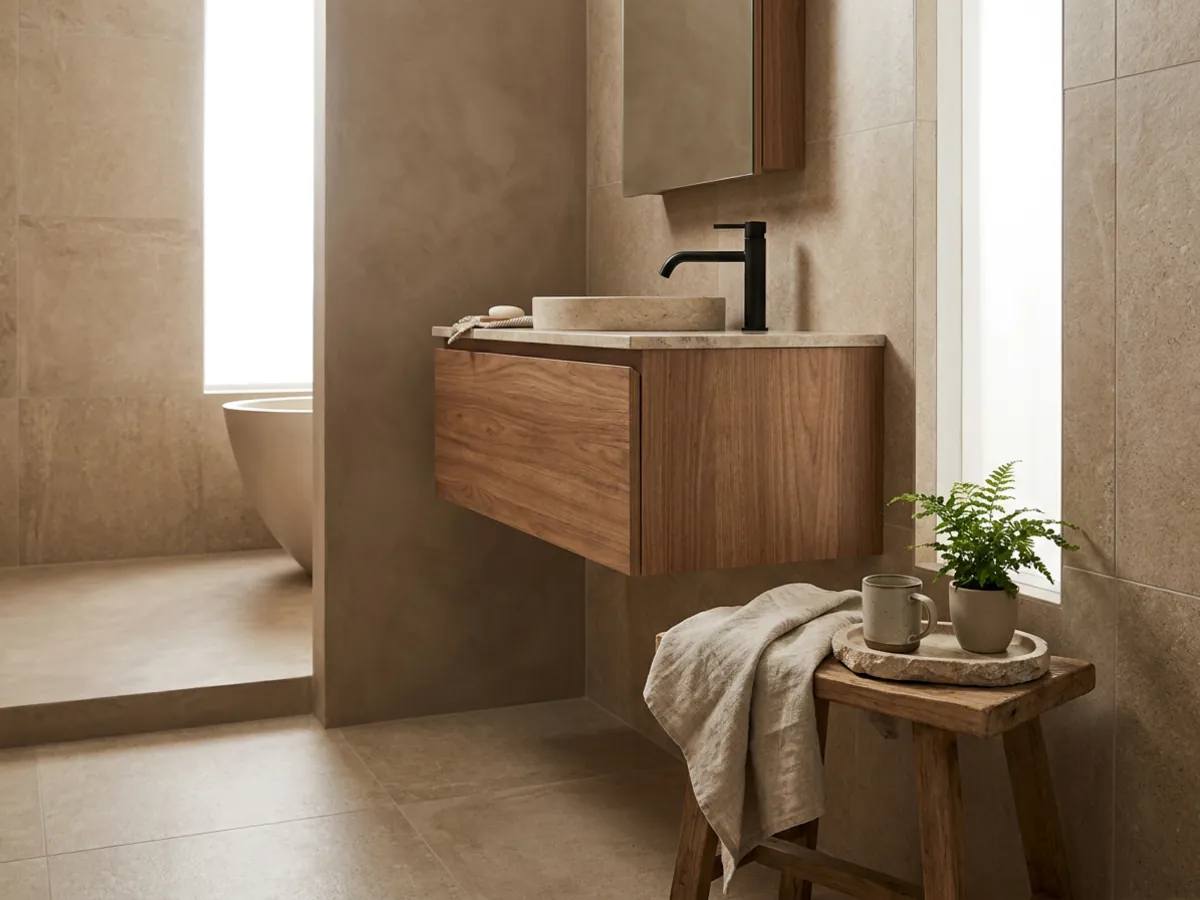
The bathroom is where Japandi turns into a small daily spa. Bring in warm wood for a vanity or a stool, natural stone or microcement surfaces, matte black or aged brass fittings, and warm neutral tiles rather than cold bright white. A few natural touches, a linen towel, a stone tray, a single plant, complete the calm without cluttering it.
The trick in a bathroom is to soften the hard surfaces that come with the room. Wood and stone warm up the tile and glass, and a warm neutral palette keeps the space from feeling clinical the way an all-white bathroom often does. Keep products out of sight and surfaces clear, and even a small bathroom becomes a genuine retreat. Because bathrooms are costly to redo, previewing the materials on a photo first, which you can do with an AI restyle, is an especially smart place to start.
Small, low-cost changes go a long way in a bathroom, which is good news if a full renovation is not on the cards. Swapping bright white towels for warm oat and mushroom linen, adding a wood bath mat or stool, replacing a chrome accessory with matte black or aged brass, and hiding plastic bottles in a simple tray or cabinet will shift the whole mood toward Japandi without touching the tile. If you are renovating, the highest-impact moves are warm-toned tile or microcement in place of stark white, a wood or stone vanity, and warm, dimmable lighting rather than a single cold overhead light.
Lighting and layout in a Japandi home
Two things quietly make or break a Japandi room, and neither is furniture: the light and the layout. On light, the rule is warm and layered, never bright and flat. A single harsh overhead fixture is the fastest way to undo the calm, because it flattens the texture the whole style depends on and casts a cold, clinical tone. Instead, build the light in layers: a soft ambient source, a table or floor lamp with a paper or ceramic shade for a warm pool of light, and perhaps one low accent light to graze a textured wall or a plant. Warm-toned bulbs matter as much as the fixtures, since a cool bulb in a beautiful lamp still reads cold. The goal is the light of a late afternoon, gentle, directional, and warm.
On layout, Japandi treats empty space as a material in its own right. The Japanese influence values ma, the meaningful use of negative space, so the goal is not to fill a room but to arrange a few good pieces with room to breathe between them. Keep furniture low, so the eye travels across open walls and the ceiling feels higher. Leave clear sight lines and clear floor, keep pathways generous, and resist the instinct to push a small object into every corner. A Japandi room should feel calm the moment you walk in, and that calm comes as much from what is not there as from what is. To test how the furniture and the negative space sit together before you commit, an AI room planner lets you try arrangements on your own room.
Common Japandi decor mistakes (and how to fix them)
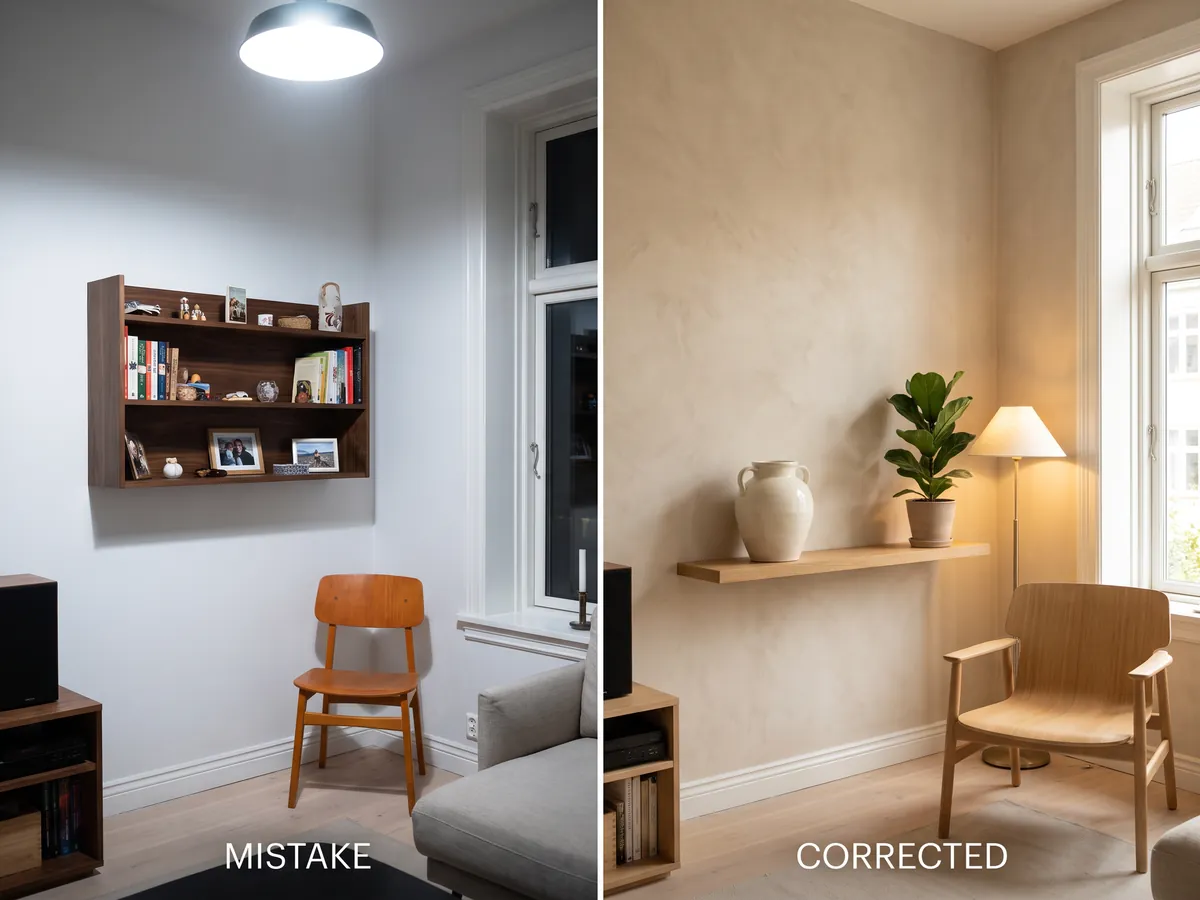
Most Japandi rooms that miss the mark fail in the same handful of ways. Knowing them makes the style far easier to get right:
- Using bright pure white or cool gray instead of warm neutrals. Fix it by shifting to warm white, oat, and greige.
- Treating Japandi as strict, cold minimalism so the room feels empty. Fix it by adding warmth: wood, linen, and a few meaningful objects.
- Skipping texture so the muted palette looks flat. Fix it by layering natural materials, linen, rattan, stone, ceramic.
- Overcrowding with too many objects or accent colors. Fix it by editing back to a few well-chosen pieces.
- Mixing clashing wood tones. Fix it by choosing one main wood tone and repeating it.
- Harsh overhead lighting. Fix it with warm, layered, low light from lamps.
The common thread is that every fix returns to the same principles: warm neutrals, natural texture, one wood tone, a few good pieces, and soft light. If a Japandi room feels off, run through this list and one of these is almost always the reason. The style is forgiving once you keep these guardrails in mind.
Try Japandi on your own room (step by step)
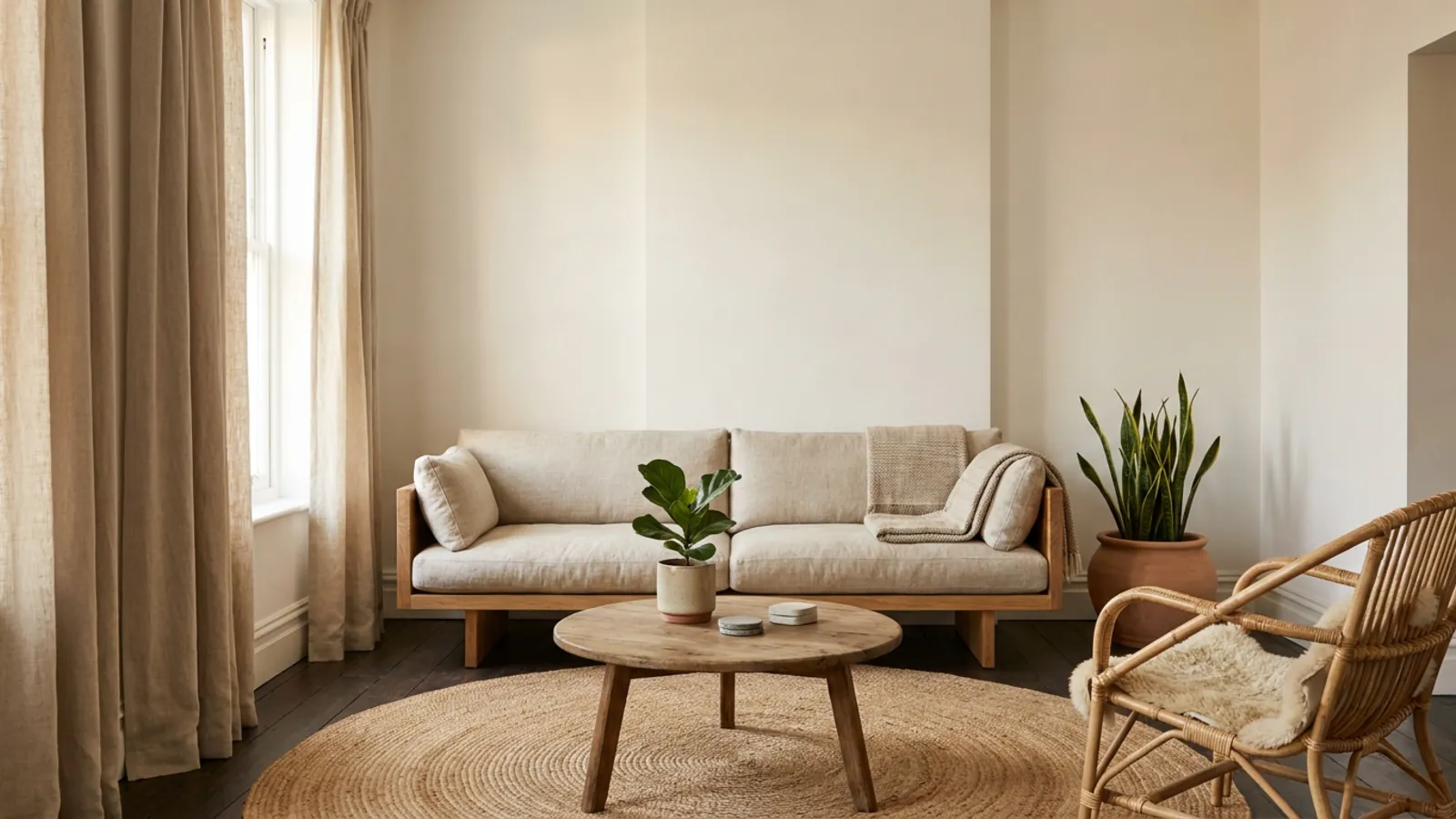
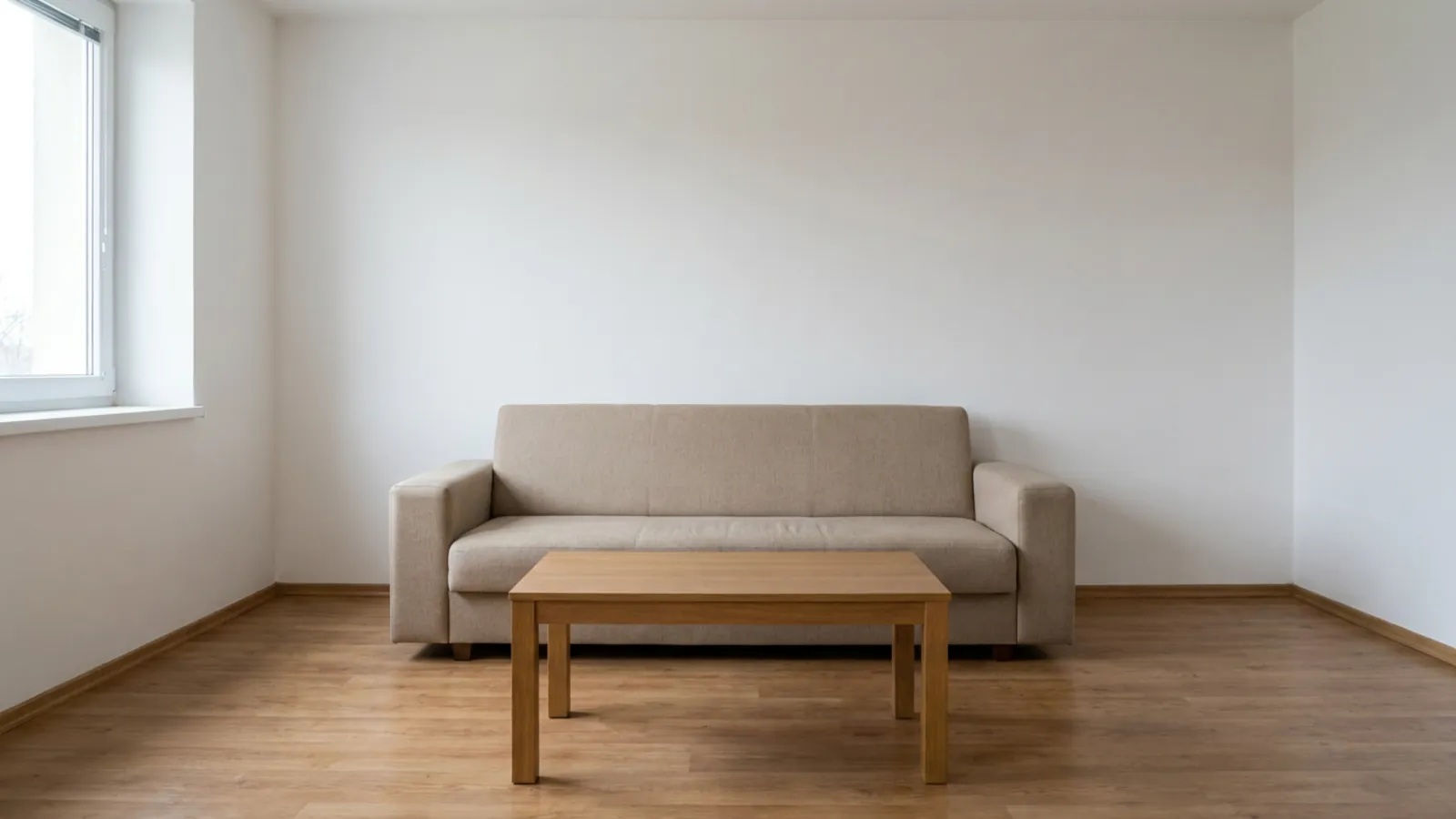 Before
Japandi
Before
Japandi
The best way to know whether Japandi suits your home is to see it on your actual room. The process is short:
- Photograph a room you already have, wide and level, in daylight.
- Upload it and choose the Japandi style.
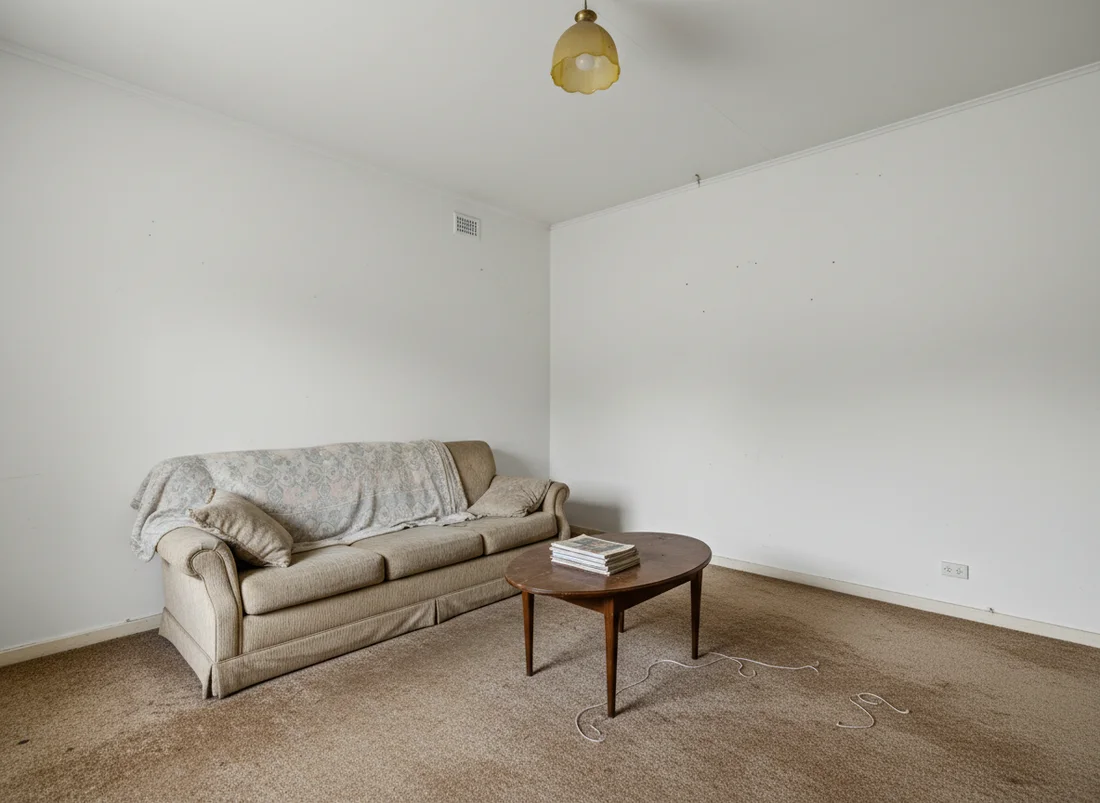
- Preview the before and after restyle in minutes, your real room with warm neutrals, natural materials, and calm, low furniture, keeping your layout and windows.
It is a low-effort way to test the palette and the layout before committing to paint or furniture, and the first render is free to try. Treat the result as a visualization and shopping guide rather than a construction plan: it shows you the direction and lets you judge how much restraint your space wants. You can furnish an empty room first with virtual staging, then try Japandi on your own room and see your space become the calm retreat the style promises.
Frequently asked questions
What is Japandi interior style? +
Japandi is a hybrid interior style that blends Japanese and Scandinavian design. It combines the Japanese idea of wabi-sabi, finding beauty in natural imperfection and restraint, with the Scandinavian idea of hygge, warm everyday comfort. In practice that means calm rooms with warm neutral colors, natural materials like wood and linen, low functional furniture, and only a few meaningful objects rather than clutter.
What is the difference between Scandi and Japandi? +
Both are modern minimalist styles built on natural materials and quality over quantity, so they look similar at a glance. Scandinavian design is lighter and brighter, using pale woods, crisp warm whites, and airy textiles. Japandi is warmer and more grounded, using muted earth tones, deeper contrast through charcoal and greens, and more tactile materials like rattan, stone, and matte black metal. Choose Scandi for a light and cosy feel and Japandi for calm, craft, and a sense of retreat.
What are the best colors for Japandi? +
Japandi is built on warm neutrals rather than bright white. Good base colors include warm white or plaster white, oat, mushroom or greige, and soft sand. Add sparing accents like charcoal, muted terracotta, and earthy greens such as sage or olive with warm undertones. A simple approach is roughly 60 percent warm neutrals, 30 percent mid tones and wood, and 10 percent darker earthy accents, and it helps to avoid pure white and cool blue-gray, which can feel clinical.
What are common Japandi decor mistakes? +
The most common mistakes are using bright pure white or cool gray instead of warm neutrals, and treating Japandi as strict cold minimalism so the room feels empty. Others include skipping texture so the muted palette looks flat, overcrowding with too many objects or accent colors, mixing clashing wood tones, and using harsh overhead lighting instead of warm layered light. Each is easy to fix by returning to warm neutrals, natural texture, one wood tone, and a few well-chosen pieces.
Is Japandi still on trend in 2026? +
Japandi has continued to grow rather than fade, because its focus on calm, natural materials, and restraint suits how many people want their homes to feel. It reads as a durable design direction rather than a short-lived fad. Its neutral base also makes it easy to keep current by swapping a few accents over time.
Can I see Japandi applied to my own room before buying anything? +
Yes. You can photograph a room you already have, upload it to an AI room design tool, choose the Japandi style, and preview a before and after restyle in minutes. It is a low-effort way to test the palette and layout before committing to paint or furniture, and the first render is free to try. Treat the result as a visualization and shopping guide rather than a construction plan.
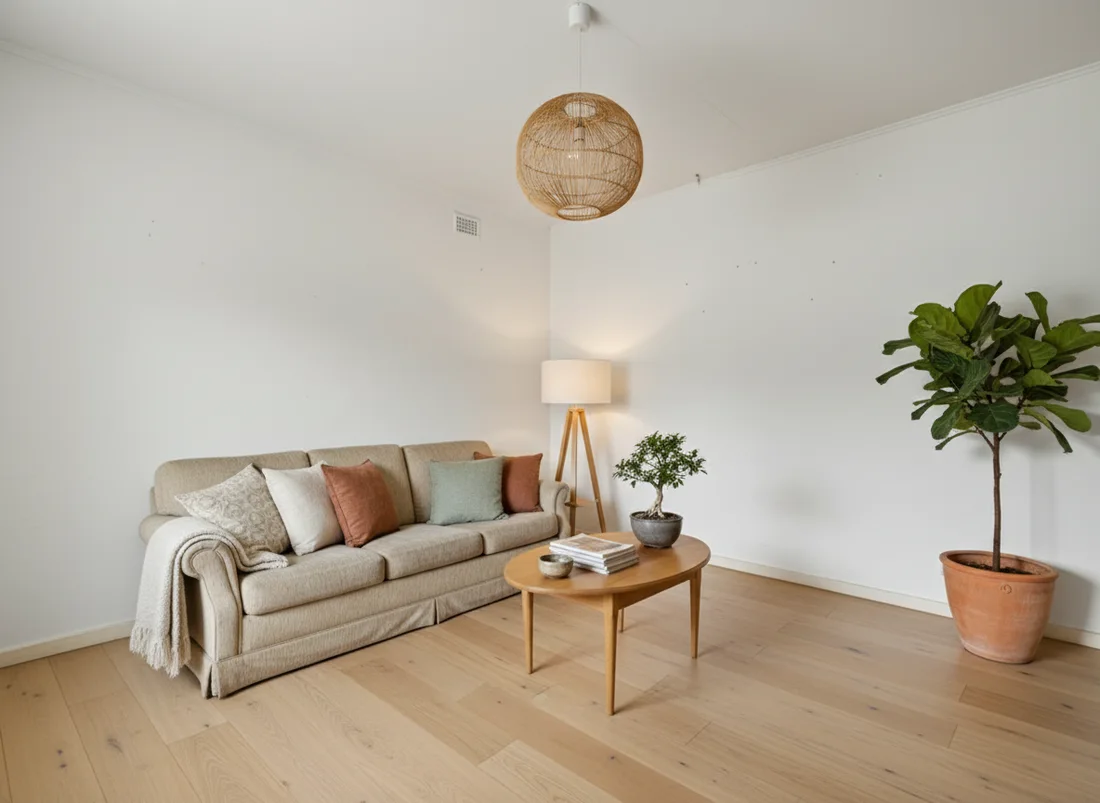 After
After
 Before
See it on your own room
Your room, redesigned
Upload one photo and watch your room restyled in a wide range of designer looks. Your walls, windows and layout stay exactly as they are.
Try it free, no signupOne photo. In seconds. No signup.