restylai blog
Mid Century Modern Interior Design: The Complete Guide
Updated July 19, 2026 · by the restylai team
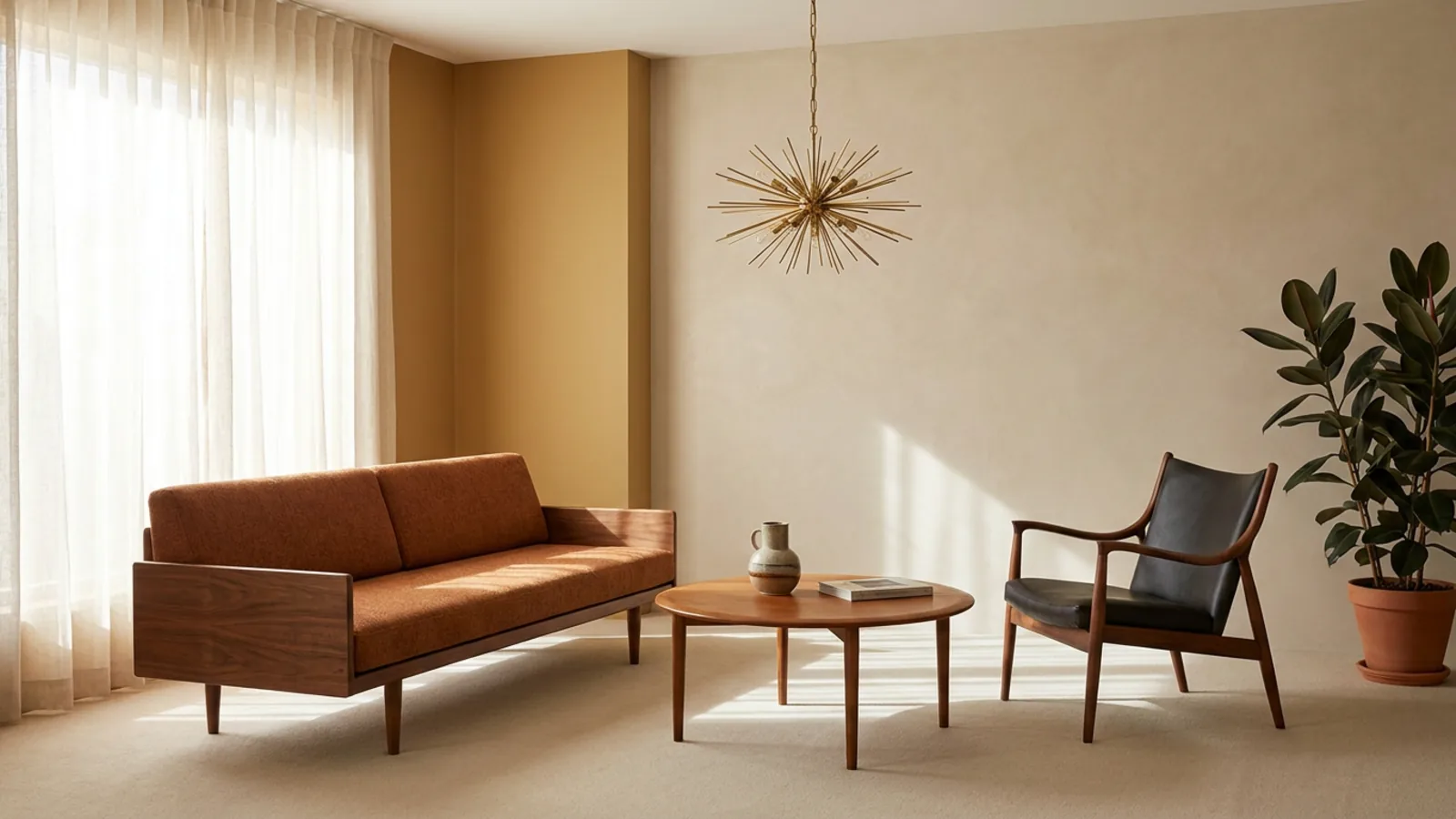
Mid century modern is the rare style that never really left. It arrived in the decades after the Second World War, defined a generation of homes, and then kept coming back, because its clean proportions, warm woods, and easy relationship with light simply age well. Walk into a room with a low walnut sofa on tapered legs, a sculptural lounge chair, and a sputnik pendant overhead, and it reads as both retro and current at once.
This guide covers what mid century modern actually is, the principles behind it, its palette, materials, key furniture, lighting, how it plays room by room, how to get the look on any budget, how it differs from modern and contemporary, and how to preview it on a photo of your own room before you buy anything.
What is mid century modern interior design
Mid century modern is a design style that rose to popularity from roughly the mid 1940s to 1970. It grew out of a postwar optimism about simple, functional, well-made things, and it is defined by clean lines, organic and sculptural shapes, function placed before decoration, and a strong connection to nature through natural materials and large windows. Where earlier styles prized ornament, mid century modern prized clarity: a chair should look like what it is, and look good doing it.
The style grew from two roots that met after the war: the warm, craft-driven simplicity of Scandinavian design and the optimistic, industrial confidence of postwar America. New materials and manufacturing made it possible to mass-produce clean, sculptural furniture for ordinary homes, and designers embraced that rather than hiding it. The result was a look that felt modern and democratic at once, beautiful things made to be lived with, not just admired. That origin story still shows in every honest joint and exposed wood leg.
What keeps it relevant is that those values did not date. A low, honest sofa on tapered legs works as well in a home today as it did in 1958, and the warmth of teak and walnut is a permanent antidote to cold minimalism. That is why the style still appears everywhere, from faithful period restorations to lightly updated versions in brand new homes. Understanding its core is what lets you use it well rather than just scatter a few iconic shapes around.
The core principles behind the style
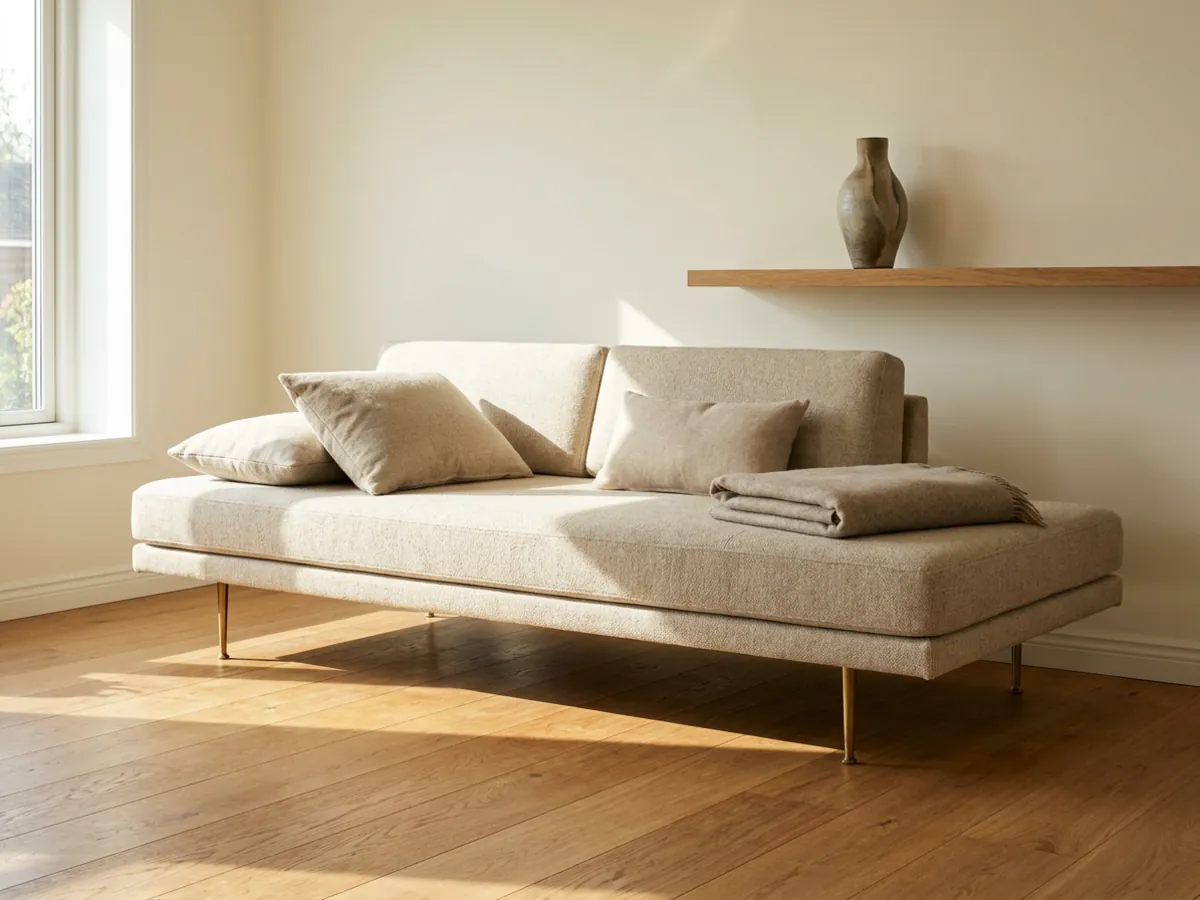
A handful of principles do the heavy lifting, and once you see them you can spot the style anywhere:
- Clean, uncluttered lines. Forms are simple and horizontal, with nothing fussy or over-decorated.
- Function before decoration. Every piece earns its place by being useful as well as beautiful.
- Low profiles on slim legs. Furniture sits low and is raised on tapered wood or metal legs, so the floor shows through and the room feels open and airy.
- Connection to nature. Natural materials, indoor plants, and big windows tie the inside to the outside.
- Organic and sculptural shapes. Softer, curved forms balance the straight lines, so the look is warm rather than severe.
The through-line is restraint with warmth. It is minimal in the sense of being uncluttered, but never cold, because the natural materials and the occasional bold accent keep it human. If you want to plan the look properly before committing, it is worth exploring dedicated interior design software to test the proportions on your own space.
The mid century modern color palette
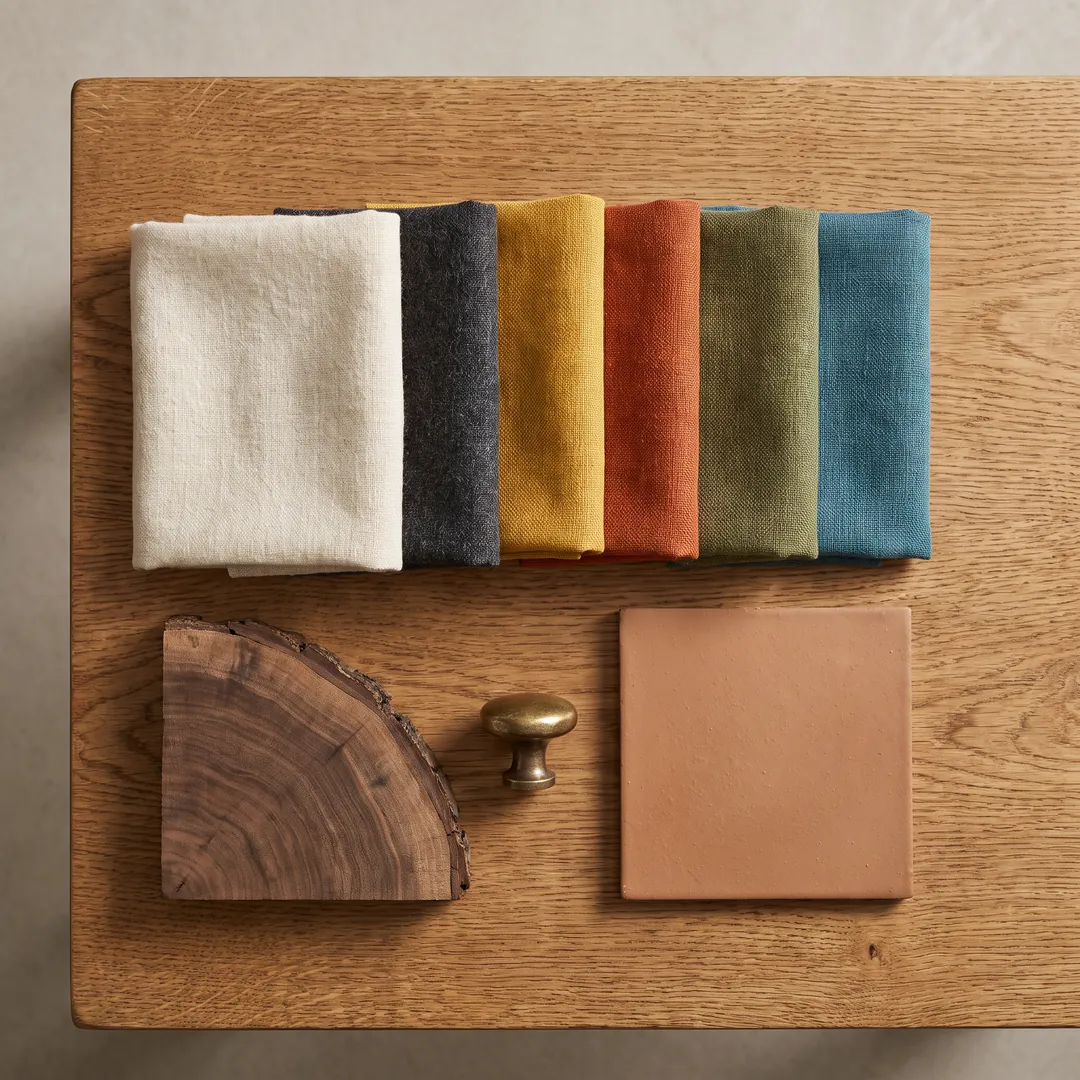
The palette is where mid century modern gets its personality. It starts from a calm, warm base and then lifts it with a few confident accents:
- The base: warm neutrals like cream, greige, and charcoal, alongside the natural tones of teak and walnut wood.
- The accents: bold colors drawn from nature, mustard yellow, burnt orange, olive green, and teal.
The discipline is in how the accents are used. They appear in upholstery, art, a rug, or a few objects rather than being smeared across every surface. One mustard armchair against a greige wall reads as intentional and rich; four walls of mustard reads as a theme park. Keep the base warm and neutral, let the wood do a lot of the work, and add the bold color in small, deliberate doses. That balance is what separates a sophisticated mid century room from a costume.
Materials and textures that define the look
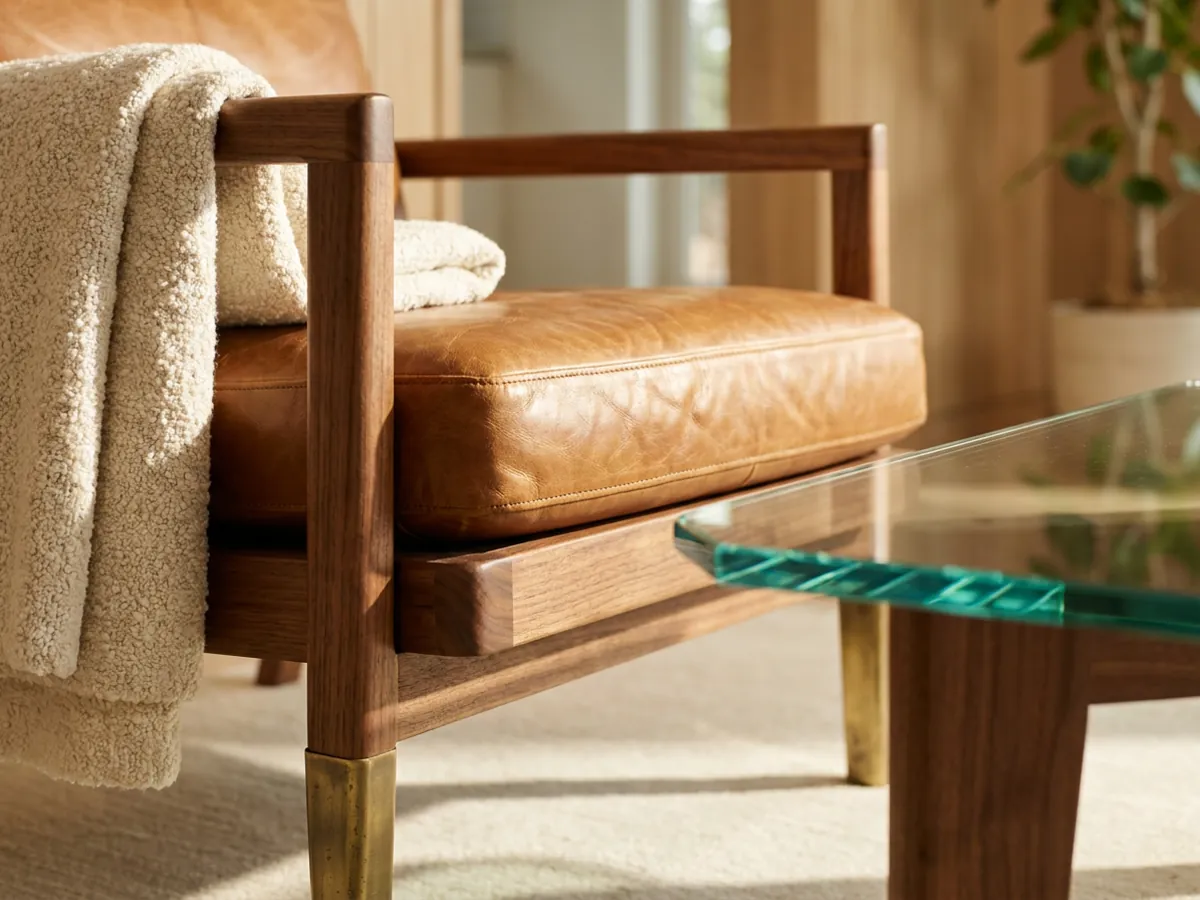
If the palette is the personality, the materials are the soul. Mid century modern leans on a specific, tactile mix: warm hardwoods above all, teak and walnut, joined by leather, metal, glass, and textured textiles. A caramel leather cushion on a walnut frame, a brass leg catching the light, a boucle throw, a glass tabletop, these are the textures that make the style feel rich rather than flat.
The key is contrast within a warm range. Hard against soft, matte against gloss, wood against metal, so the eye always has something to read even in an uncluttered room. Natural wood grain is doing constant quiet work, which is why cheap, flat, grainless surfaces are the fastest way to make a mid century room look like a knock-off. Invest your attention in the materials that carry the look, real or convincingly reproduced wood, a genuine textile, one good metal finish, and the rest falls into place.
Key furniture pieces that anchor the style
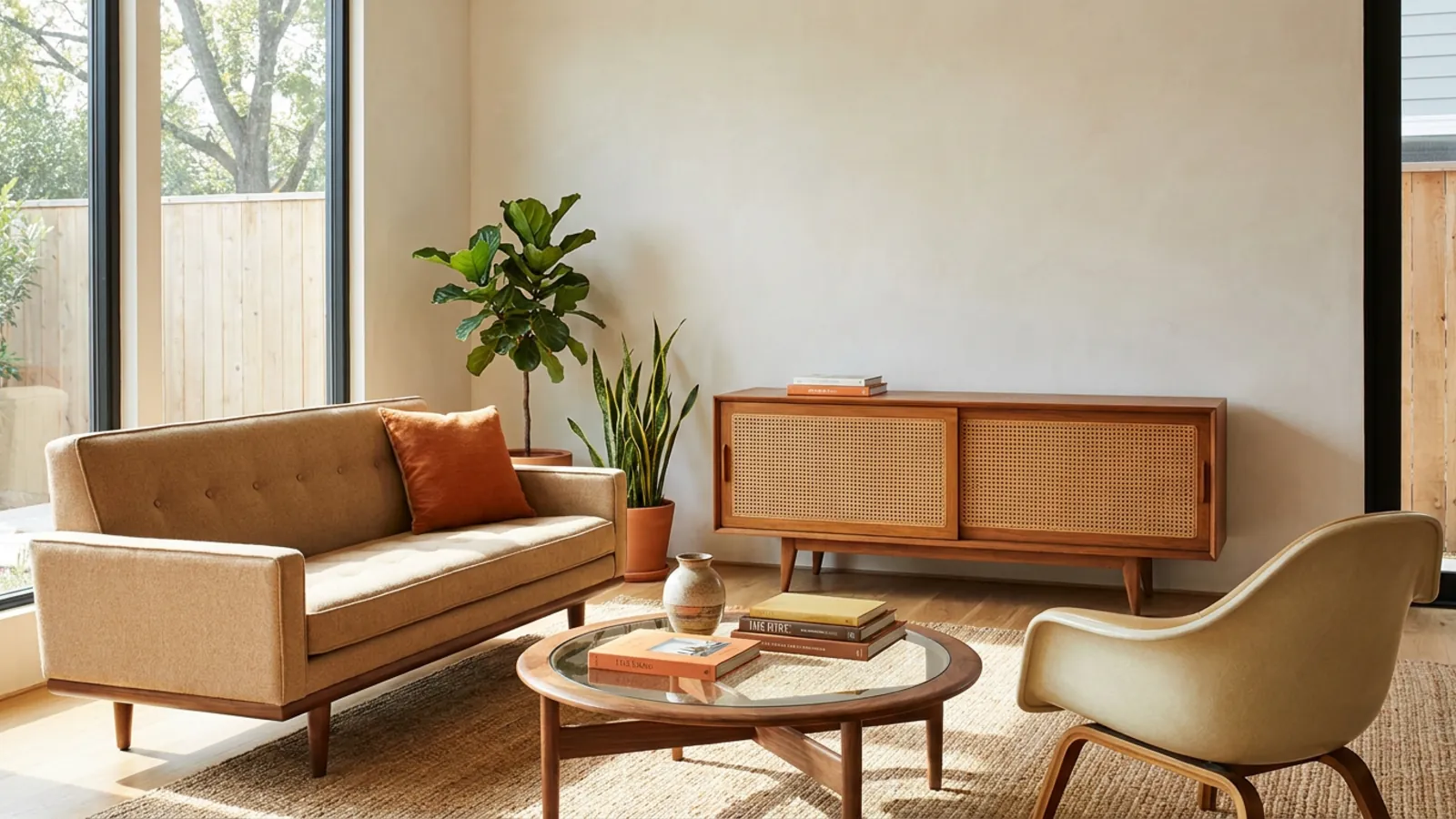
You do not need a houseful of icons to get the look. A few anchor pieces set the tone, and the rest of the room can be quieter around them. The hallmark pieces are:
- A low, clean-lined sofa on tapered wood legs, the centerpiece of most mid century living rooms.
- Molded shell chairs, in lounge or dining form, with slim wood or metal bases.
- A sculptural lounge chair, often with a matching ottoman, as a single statement seat.
- A teak or walnut sideboard on splayed legs, the workhorse storage piece that also anchors a wall.
- Round or organic coffee tables and spindle-back dining chairs to soften the straight lines.
Buy the anchors first and let them lead. One genuine low sofa and a teak credenza will do more for the room than a dozen small accessories, because they establish the proportions and the material story that everything else keys off. Get those right and the style is most of the way home.
Lighting and statement accents
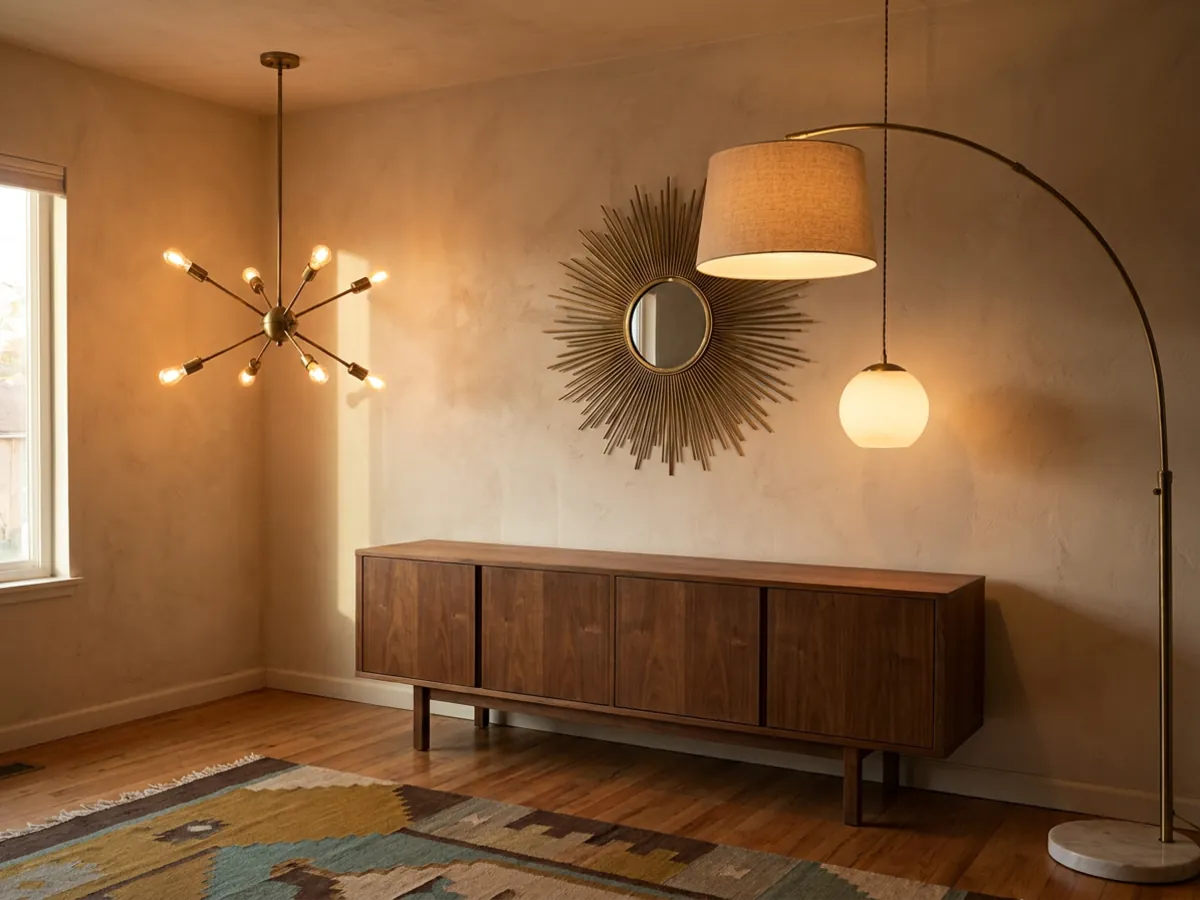
Lighting is where mid century modern earns its drama. The fixtures are sculptural in their own right, and they double as the room's jewelry: a brass sputnik chandelier with its radiating arms, a smooth globe pendant, an arc floor lamp sweeping over a sofa. These are not afterthoughts bolted to the ceiling, they are chosen as focal points.
Beyond lighting, a few statement accents complete the look: a sunburst mirror, a geometric rug, a piece of abstract art in the accent palette. The rule is the same restraint that governs everything else, one or two strong moments per room, not a competition of loud pieces. A single great light fixture and one graphic rug will define a space more convincingly than a scattering of small mid century trinkets. Choose the hero accents deliberately and let them breathe.
Mid century modern room by room
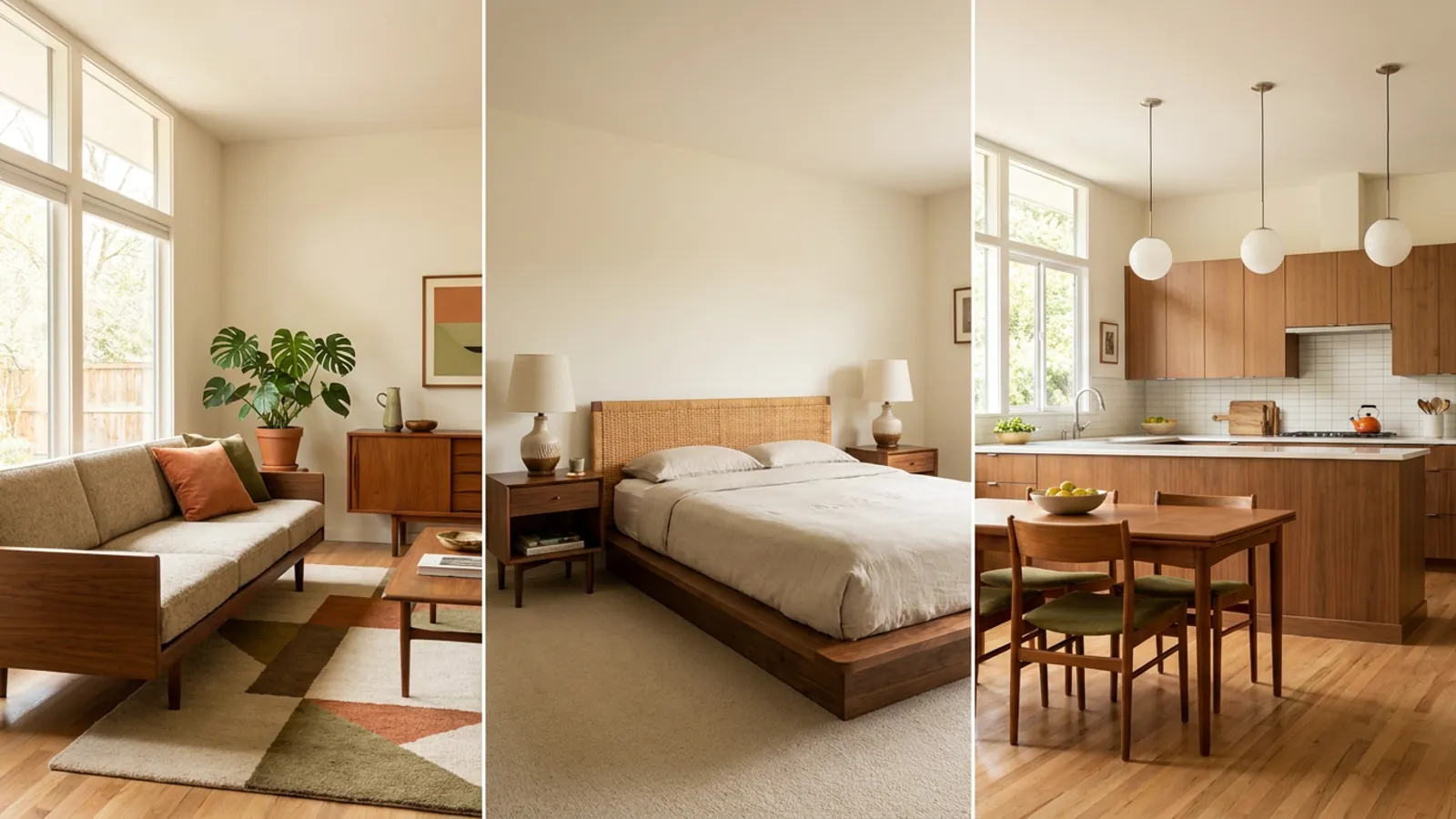
The style adapts naturally to every room, each with its own emphasis.
The living room is the classic showcase: a low sofa on tapered legs, a sculptural lounge chair, a round coffee table, a statement light, and one bold accent. It is the easiest room to get right and the most rewarding. Browse modern living room ideas for finished directions close to the look.
The bedroom keeps it low and calm: a low platform bed, walnut nightstands, a pair of globe or spindle lamps, and warm neutral bedding with a single accent. You can design a mid century modern bedroom with AI or start from a modern bedroom reference.
The kitchen reads through flat-front wood cabinets, simple hardware, globe pendants, and warm counters. If yours feels dated, you can design a mid century modern kitchen to preview a refresh before committing.
The dining room is a natural fit, since so many icons of the style are dining pieces: a round or oval table on a pedestal or splayed legs, spindle-back or molded shell chairs, and a single sculptural pendant overhead. A home office or entryway takes the same cues in miniature, a compact teak desk, a shell chair, a graphic rug, so even a small transitional space feels considered. Across every room the unifying thread is the same warm palette and low, clean-lined furniture, so the whole home reads as one coherent place rather than a series of themed sets.
How to get the look on any budget
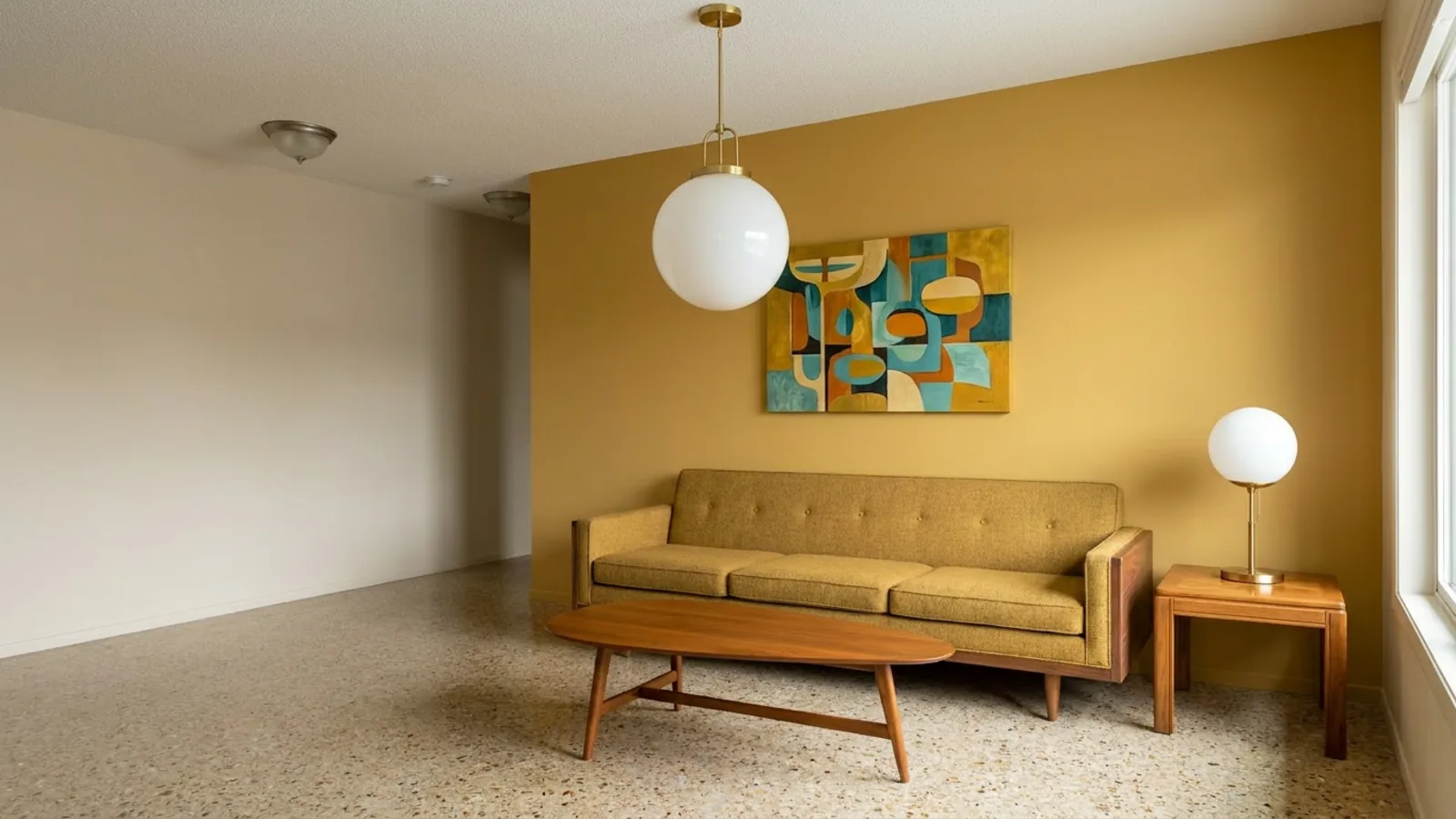
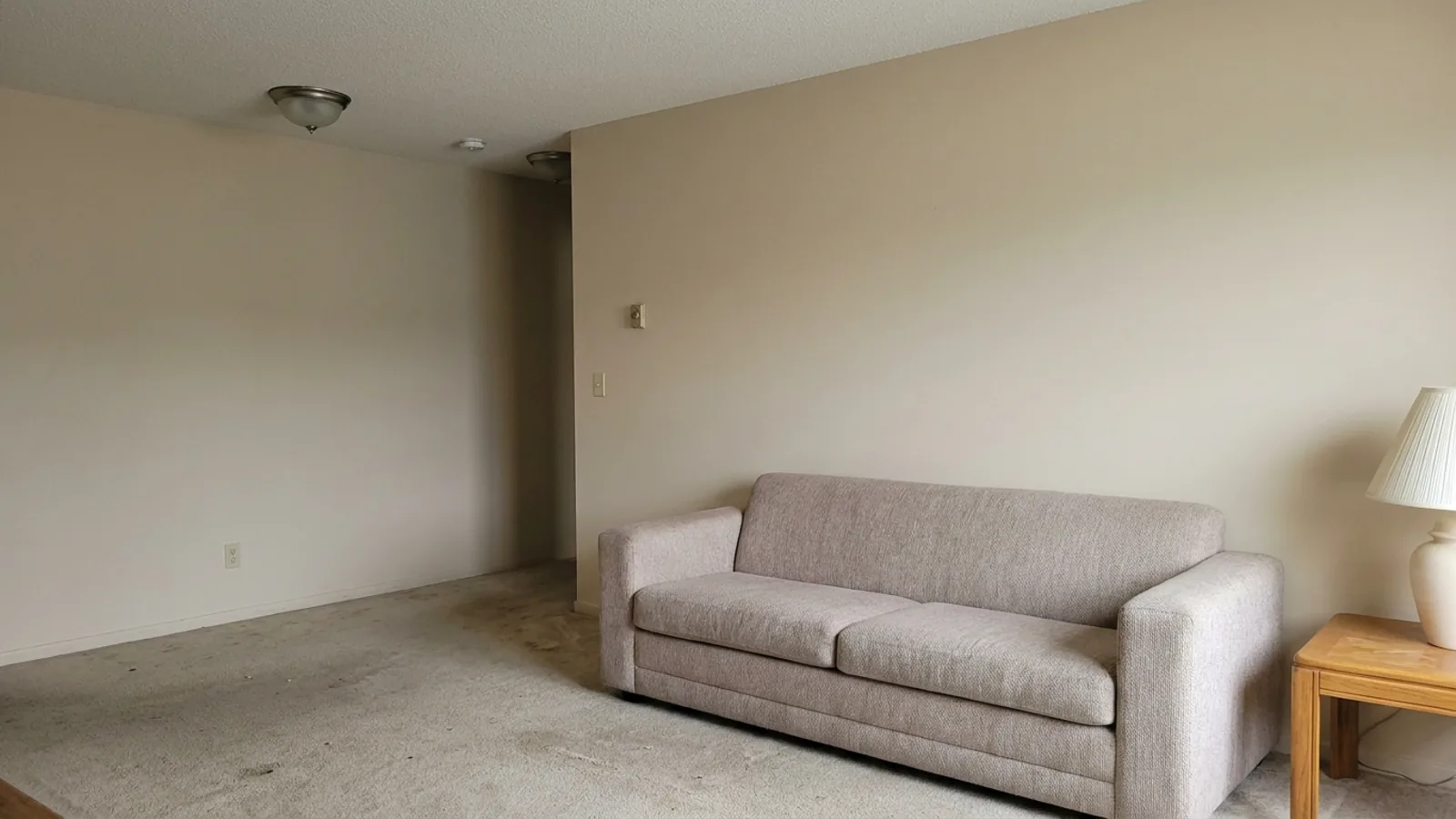 Before
Restyled
Before
Restyled
Mid century modern has a reputation for expensive icons, but the look is achievable on almost any budget if you spend where it counts. The approach is to anchor and adapt rather than replace everything at once:
- Buy one or two anchor pieces, a low sofa or a teak sideboard, rather than furnishing the whole room in the style at once.
- Mix good reproductions with genuine vintage finds. A real mid century sideboard from a secondhand shop next to a well-made reproduction chair is both authentic and affordable.
- Use paint and a single accent wall to shift the mood cheaply, a warm neutral base with one confident accent.
- Lean existing furniture toward the style with tapered legs, warm textiles, and a graphic rug.
- Open up the layout so the low furniture can breathe.
Where you spend matters as much as how much. Put the budget into the anchor pieces that carry the look and get touched daily, the sofa and a real wood sideboard, and save on the accents, which a graphic cushion, a thrifted lamp, or a good reproduction can deliver for very little. A single genuine vintage piece also buys authenticity that ten new items cannot, so one real teak find often does more than a whole showroom of look-alikes.
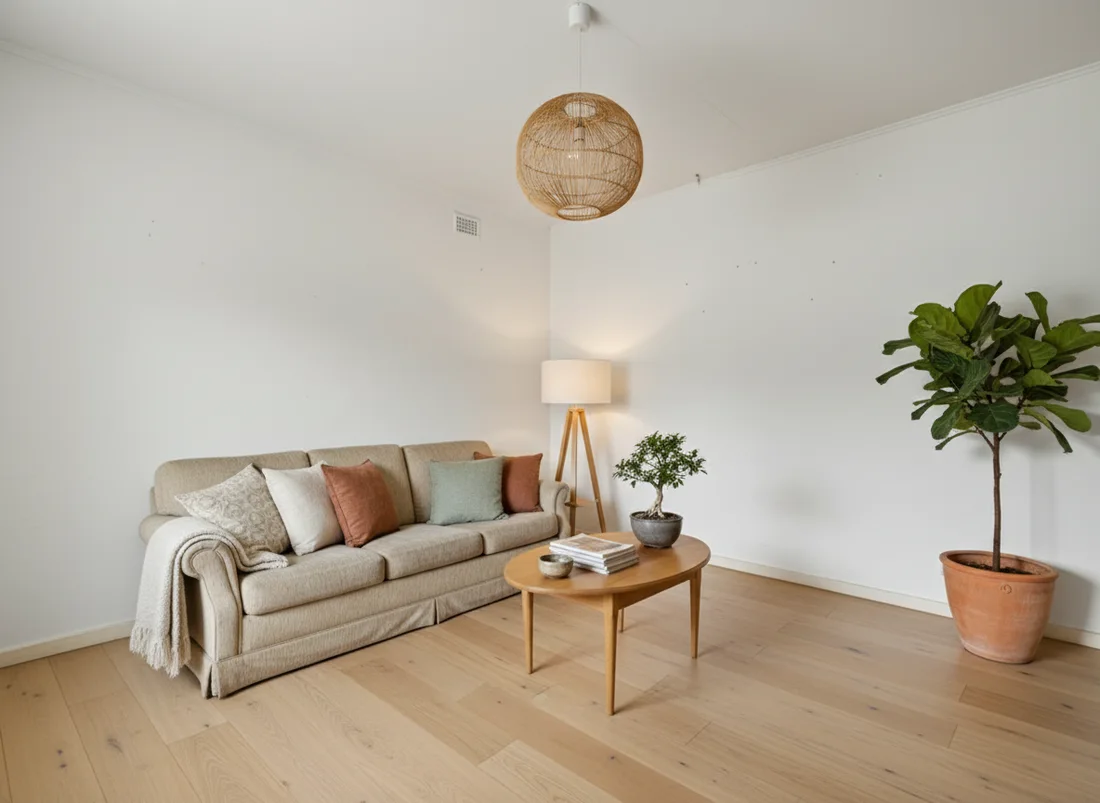
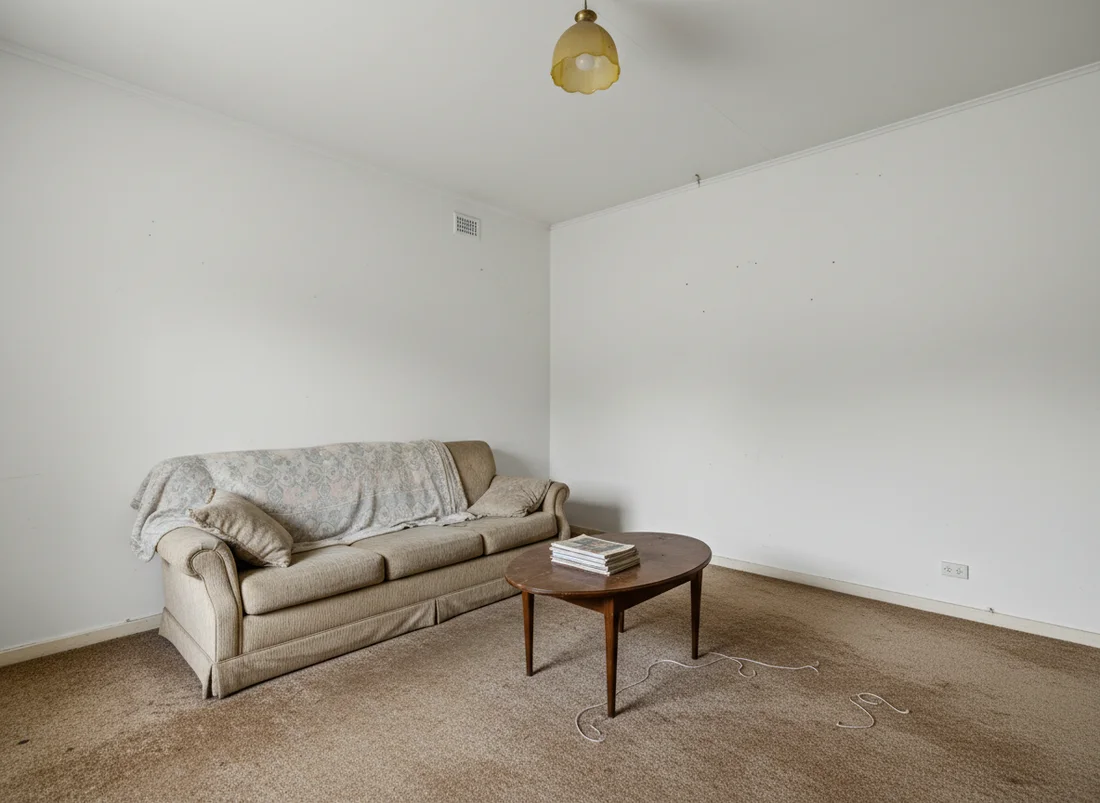
The single most cost-effective step is previewing the look before you buy. Testing the palette and the anchor pieces on a photo of your actual room, which you can do when you redesign a room from a photo, means you spend money only on the pieces you have already seen working in the space. That alone prevents the most expensive mistake in any restyle: buying the wrong thing.
Mid century modern vs modern and contemporary
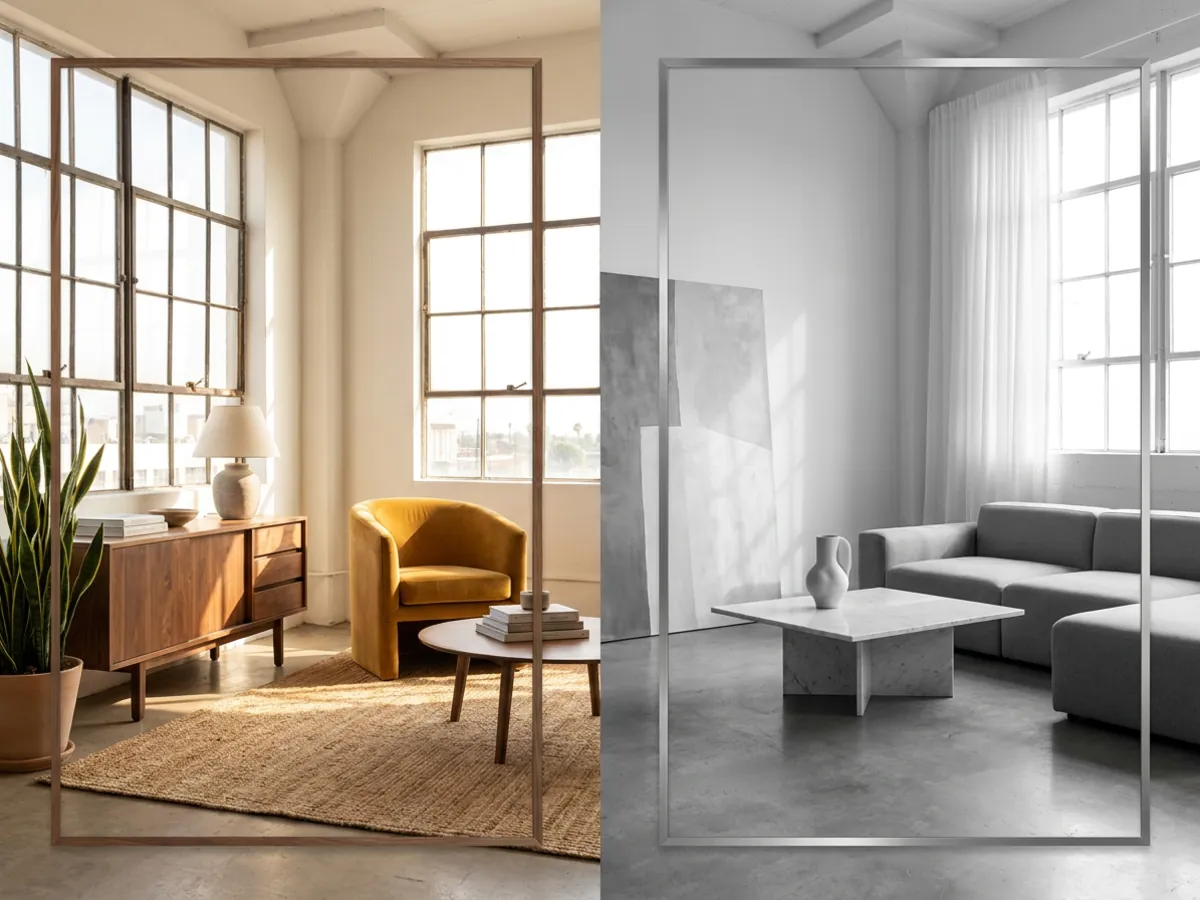
These three terms get used interchangeably, but they mean different things, and the difference is worth knowing:
- Mid century modern is a specific historical style, roughly 1945 to 1970, with retro warmth, natural materials, and bold accent colors.
- Modern is a broader minimalist umbrella that tends to be more monochromatic and pared back, cooler and more austere than mid century.
- Contemporary is different again: it simply means whatever is current now, so it shifts over time and borrows from many styles, including mid century.
In short, mid century modern is warm and specific, modern is cool and minimal, and contemporary is a moving target. Many of today's most liked rooms are actually a blend, mid century bones softened with contemporary comfort, which is why the style keeps finding new life. Knowing the distinctions lets you borrow deliberately rather than by accident.
See mid century modern in your own room with AI
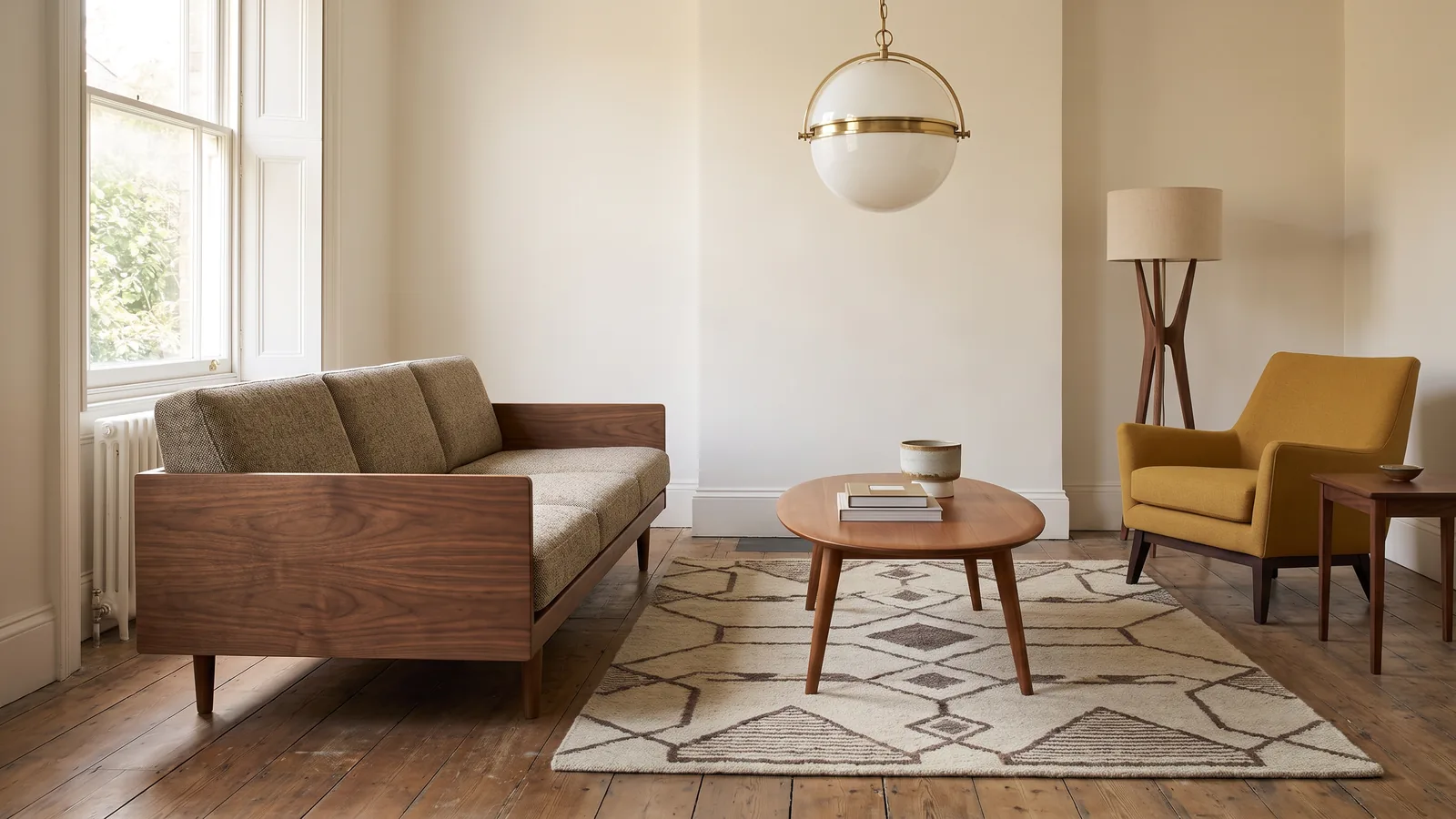
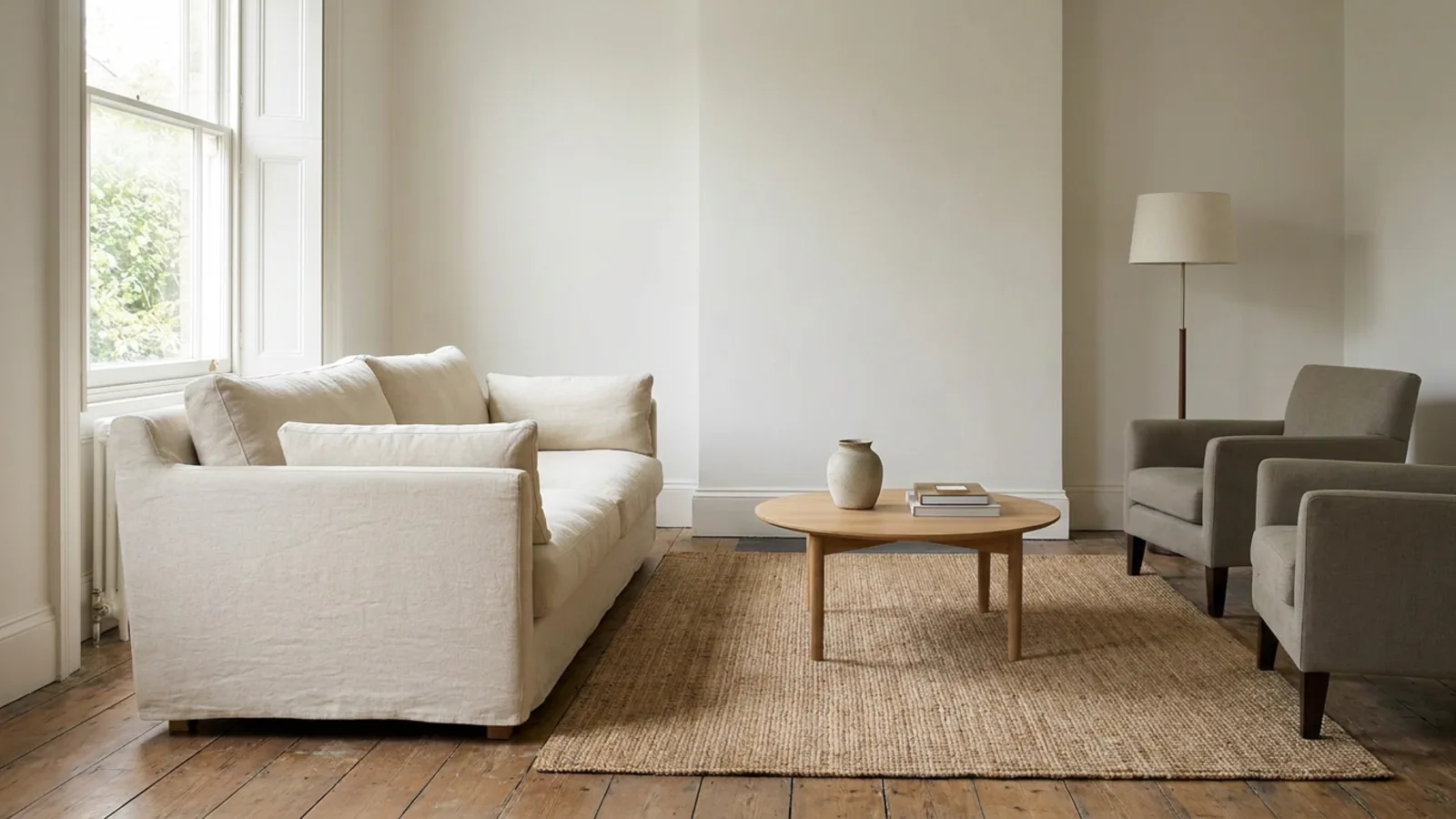 Before
Mid century modern
Before
Mid century modern
The surest way to know whether mid century modern will work in your home is to see it there. Instead of imagining a walnut sofa against your wall, upload a photo and let the AI restyle your actual room in the style, keeping your layout and windows and changing the furniture, palette, and finishes. You see your own space with a low sofa, tapered legs, a warm accent, and a globe pendant, in seconds.
It is the honest test that no mood board can give you, because it uses your room's real proportions and light. The first render is free with no signup, so you can find out whether the look lands before spending anything. Try the AI room design tool on your own room, or start here and see your space in mid century modern.
Frequently asked questions
What is mid century modern interior design? +
Mid century modern is a design style that became popular from roughly the mid 1940s to 1970. It is defined by clean lines, organic and sculptural shapes, function before decoration, and a strong link to nature through natural materials and large windows. The look has stayed influential long after the era, which is why it still appears in homes today.
What are the key characteristics of mid century modern design? +
The signature traits are simple uncluttered lines, low profile furniture raised on slim tapered legs, and warm natural materials like teak and walnut. Rooms mix those woods with metal, glass, and leather, keep a neutral base, and add a few bold accent colors. Open layouts and statement lighting complete the look.
What colors are used in mid century modern design? +
The palette starts with warm neutrals like cream, greige, and charcoal, plus natural wood tones. Those are lifted by bold accents drawn from nature such as mustard yellow, burnt orange, olive green, and teal. The accents usually appear in upholstery, art, and objects rather than on every surface.
Is mid century modern still in style? +
Yes. It remains one of the most popular and widely used home styles, in part because its clean proportions and natural materials age well. Many current interiors blend it with softer contemporary touches for a lighter, updated version.
What is the difference between mid century modern and modern design? +
Mid century modern is a specific historical style from about 1945 to 1970 with retro warmth, natural materials, and bold accent colors. Modern is a broader minimalist umbrella that tends to be more monochromatic and pared back. Contemporary is different again, since it simply means whatever is current now and changes over time.
How do I decorate mid century modern on a budget? +
Start with one or two anchor pieces such as a low sofa or a teak sideboard rather than replacing everything at once. Mix good reproductions with genuine vintage finds, use paint and a single accent wall to shift the mood cheaply, and add tapered legs, warm textiles, and a graphic rug to lean existing furniture toward the style. Previewing the look on a photo of your room first helps you avoid buying the wrong pieces.
What furniture is considered mid century modern? +
Look for low, clean lined sofas on tapered legs, molded shell lounge and dining chairs, sculptural lounge chairs with matching ottomans, and teak or walnut sideboards on splayed legs. Round or organic coffee tables and spindle back dining chairs are also hallmarks. Statement lighting like sputnik chandeliers and globe pendants finishes the set.
 After
After
 Before
See it on your own room
Your room, redesigned
Upload one photo and watch your room restyled in a wide range of designer looks. Your walls, windows and layout stay exactly as they are.
Try it free, no signupOne photo. In seconds. No signup.