restylai blog
How to Make a Small Room Look Bigger: 9 Real Tricks
Updated July 19, 2026 · by the restylai team
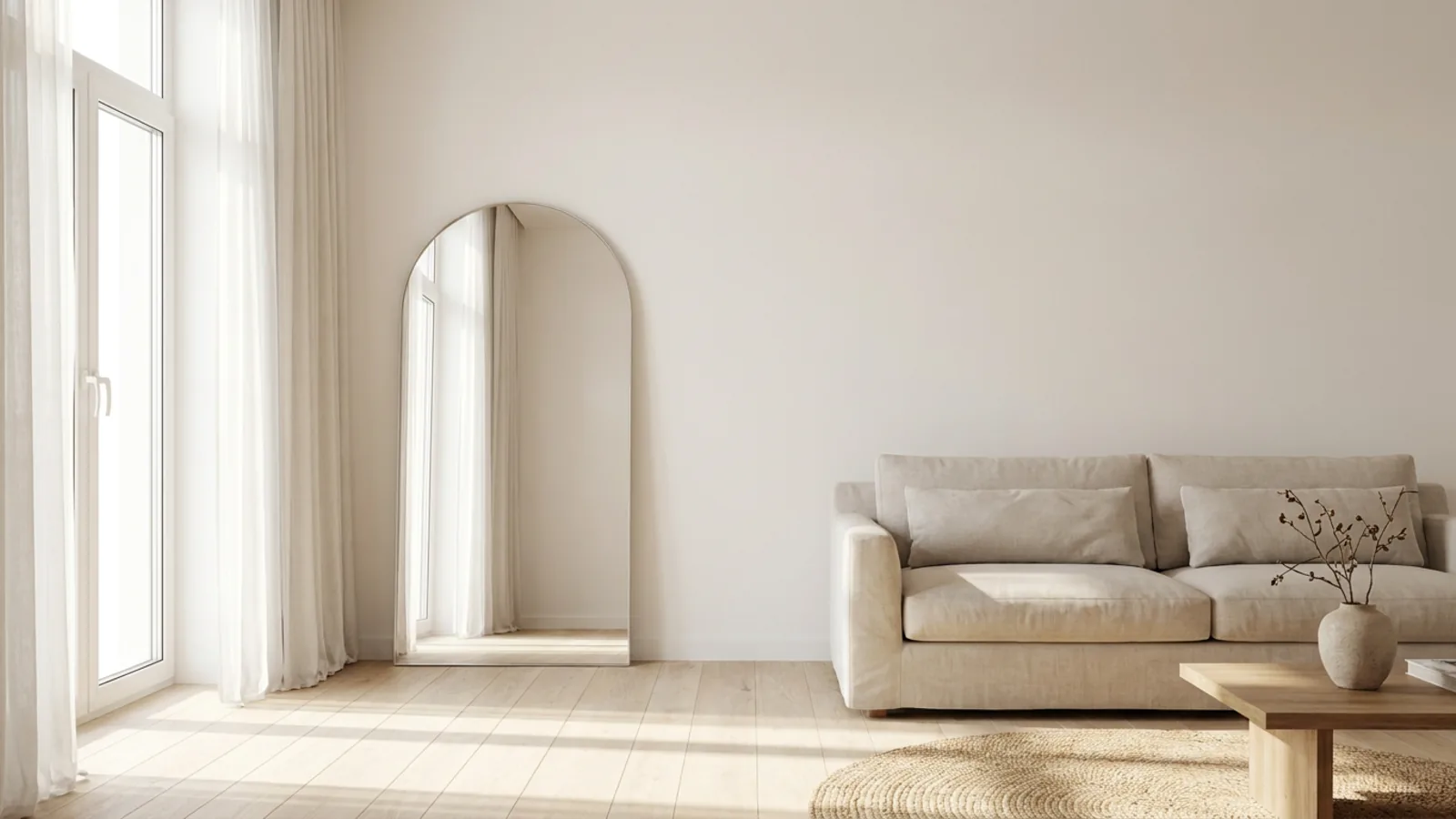
Making a small room look bigger is mostly a trick of perception. You cannot add square meters, but you can change how the eye reads the space, and a handful of well-understood techniques do exactly that: lighter color, more reflected light, furniture that shows the floor, and unbroken lines that let the eye travel. The catch has always been knowing which of them will work in your particular room before you paint or buy. Now you can test them on a photo first.
This guide covers the tricks that actually enlarge a small room, color, mirrors, furniture, light, flooring, and vertical lines, plus the cheapest ways to do it and how to handle a tiny bedroom, and shows how to preview each one on your own space.
How to make a small room look bigger, the short version
If you only remember five things, remember these: paint in light, low-contrast tones; add a large mirror opposite a window; choose furniture that floats on legs; keep the flooring pale and continuous; and draw the eye upward with vertical lines and high curtains. Together they make a room feel brighter, taller, and more open without moving a single wall.
Underneath all of them is one idea: reduce the number of hard visual boundaries and let light and sightlines flow. Every trick below is a version of that principle. And because each depends on your room's specific light, proportions, and existing pieces, the fastest way to know which will help most is to try them on a photo, which you can do when you redesign a room from a photo. This article is the small-room companion to our small living room ideas, which goes deeper on the living room specifically.
What colors make a small room look bigger
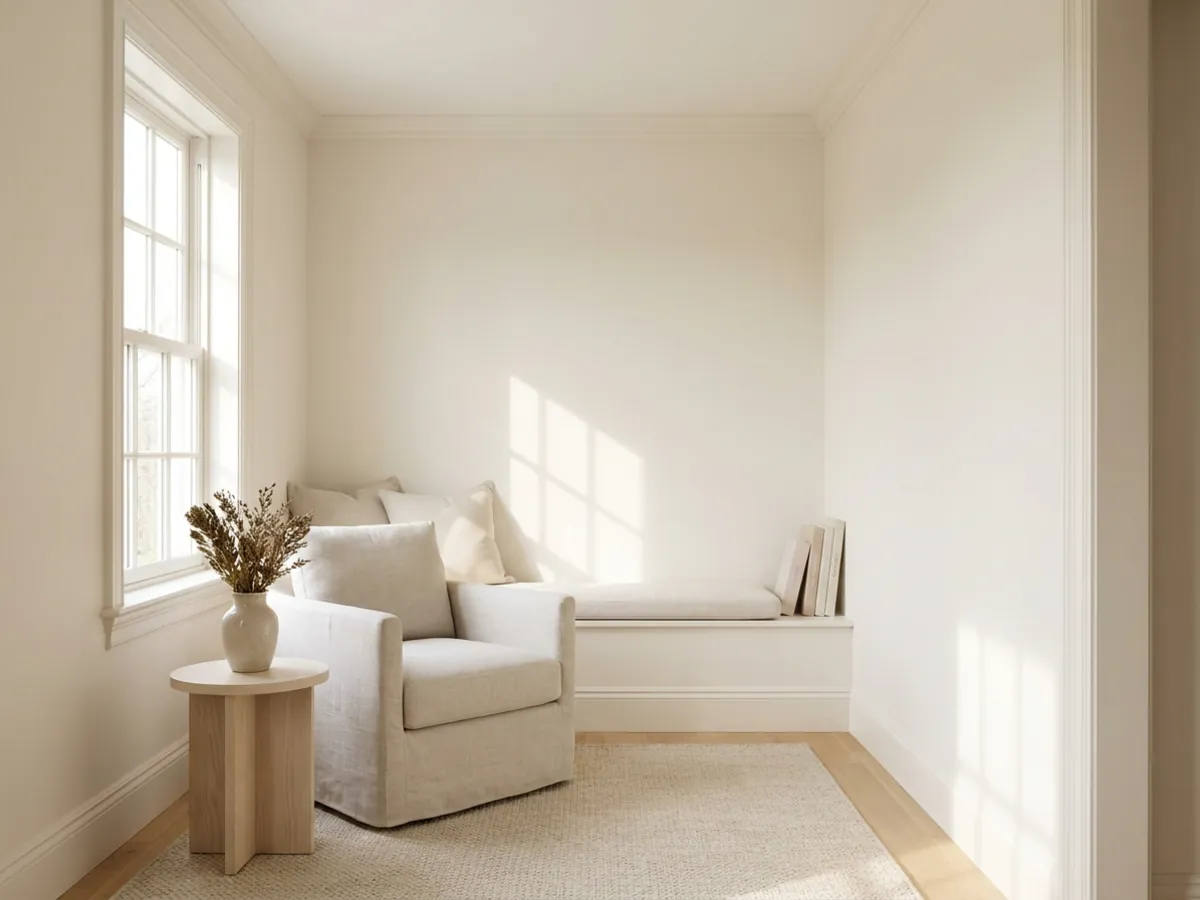
Color is the highest-leverage change you can make. Light, low-contrast colors work best because they reflect more light and soften the line where walls meet, so soft whites, warm off-whites, pale grays, and taupe are reliable choices. Cool, receding tones like an airy blue or a soft green also visually push the walls back. The single most effective move is to paint walls, trim, and ceiling in one close tone, which removes the hard boundaries that chop a small room into pieces and lets it read as one larger volume.
It is worth naming the exception, because it comes up constantly: a dark, moody small room can look wonderful. A deep, enveloping color makes a small space feel intimate and cocooning rather than larger, which is a perfectly good goal for a study, a snug, or a bedroom you want to feel like a retreat. The mistake is only expecting dark walls to make a room feel bigger, which they will not. Decide first whether you want the room to feel larger or cosier, then choose light and continuous for larger, or deep and enveloping for cosy, and commit to it rather than landing in between.
A useful nuance: a soft warm white usually beats a bright, crisp white, which can sharpen the shadows in corners and actually make a small room feel more boxed in. The goal is softness and continuity, not brightness for its own sake. Because the right shade depends entirely on your room's light and orientation, rendering your room in two or three candidate tones side by side is the easiest way to choose before you open a tin of paint.
Use mirrors to double the light and stretch sightlines
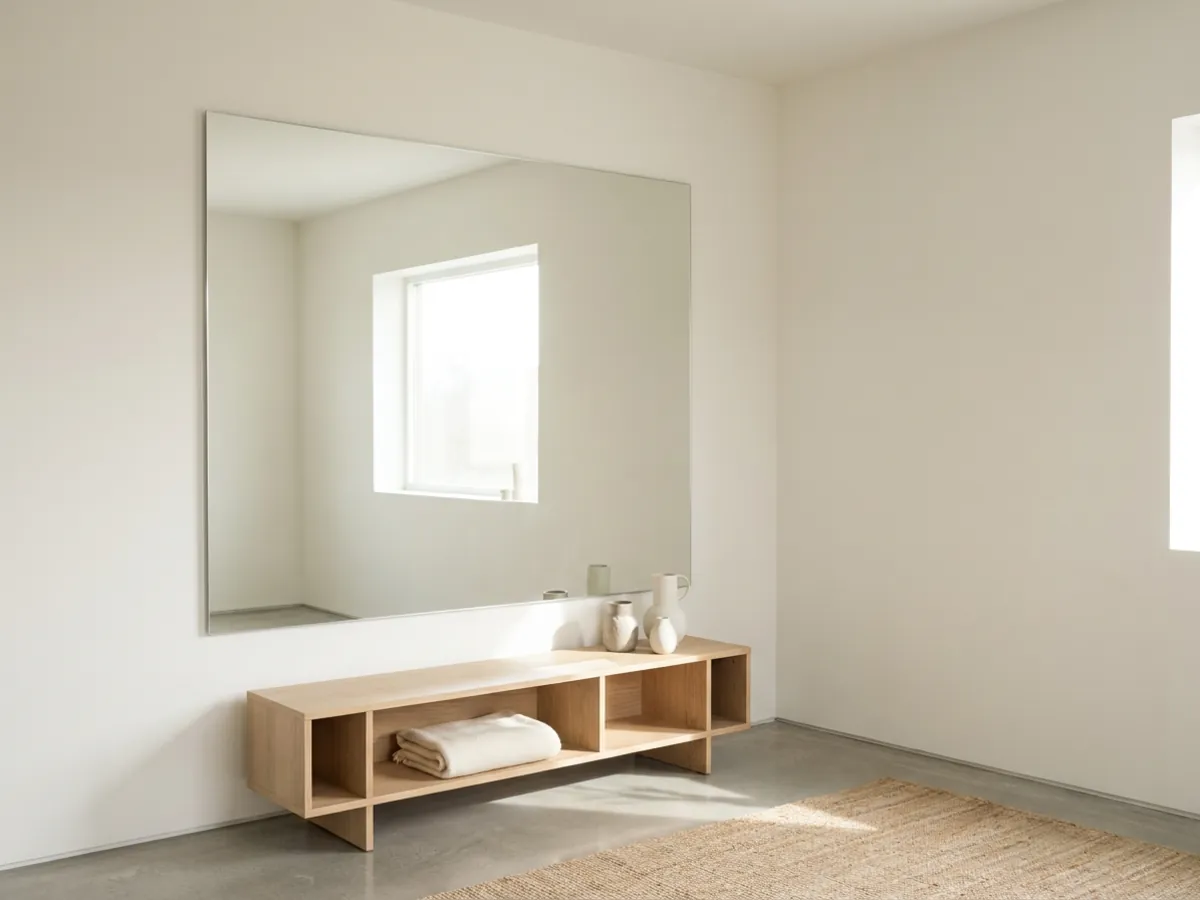
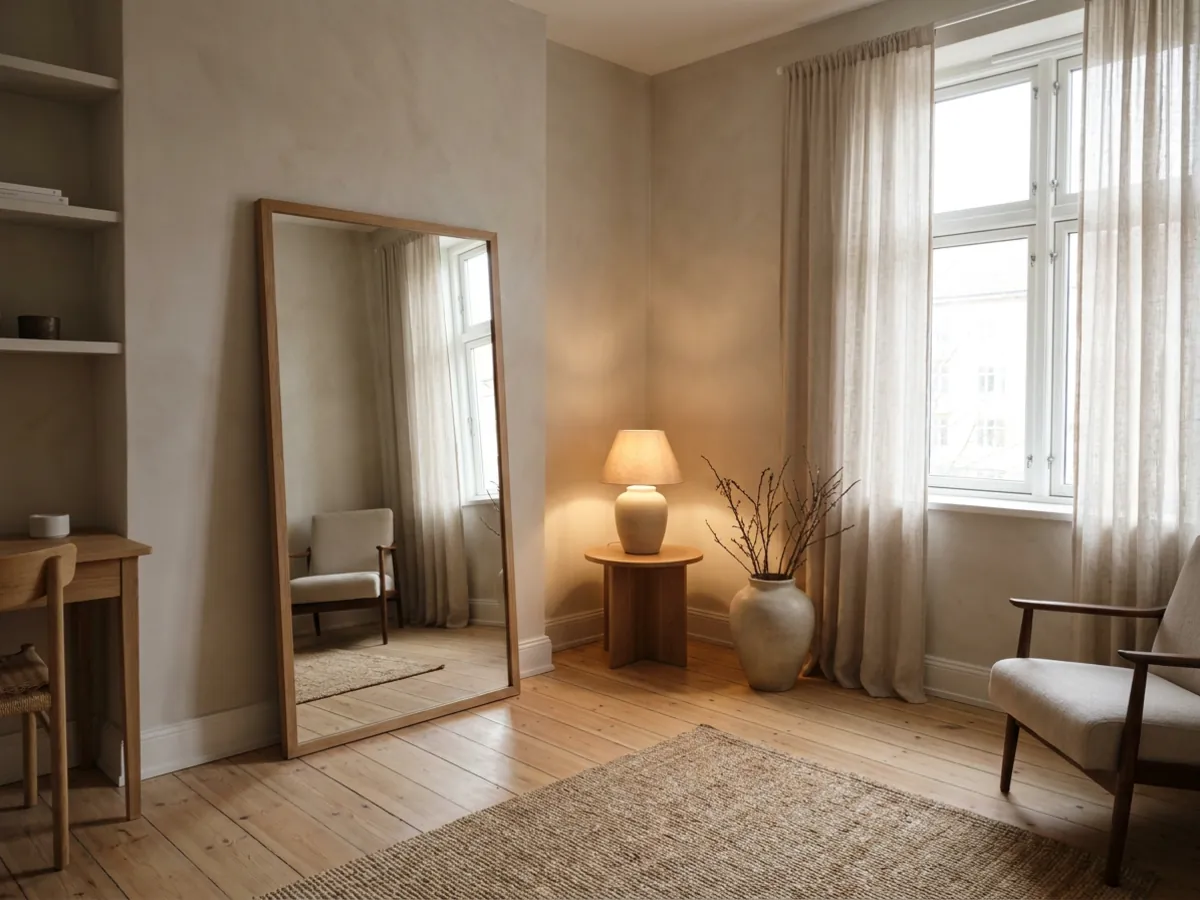
Mirrors are the oldest trick in the book because they genuinely work. A mirror placed across from or beside a window bounces daylight back into the room and adds a sense of depth, so the space reads both brighter and larger. A large wall mirror or a leaning floor mirror works best; a scatter of tiny mirrors does not have the same effect.
There is one rule: never aim a mirror at clutter, because it will faithfully double whatever it reflects. Point it at the window, at a view, or at the most open, considered part of the room. Used well, a single well-placed mirror adds more perceived space than almost any other change of its cost, which is why it is a staple of every small-room makeover.
Right-size your furniture and let it float
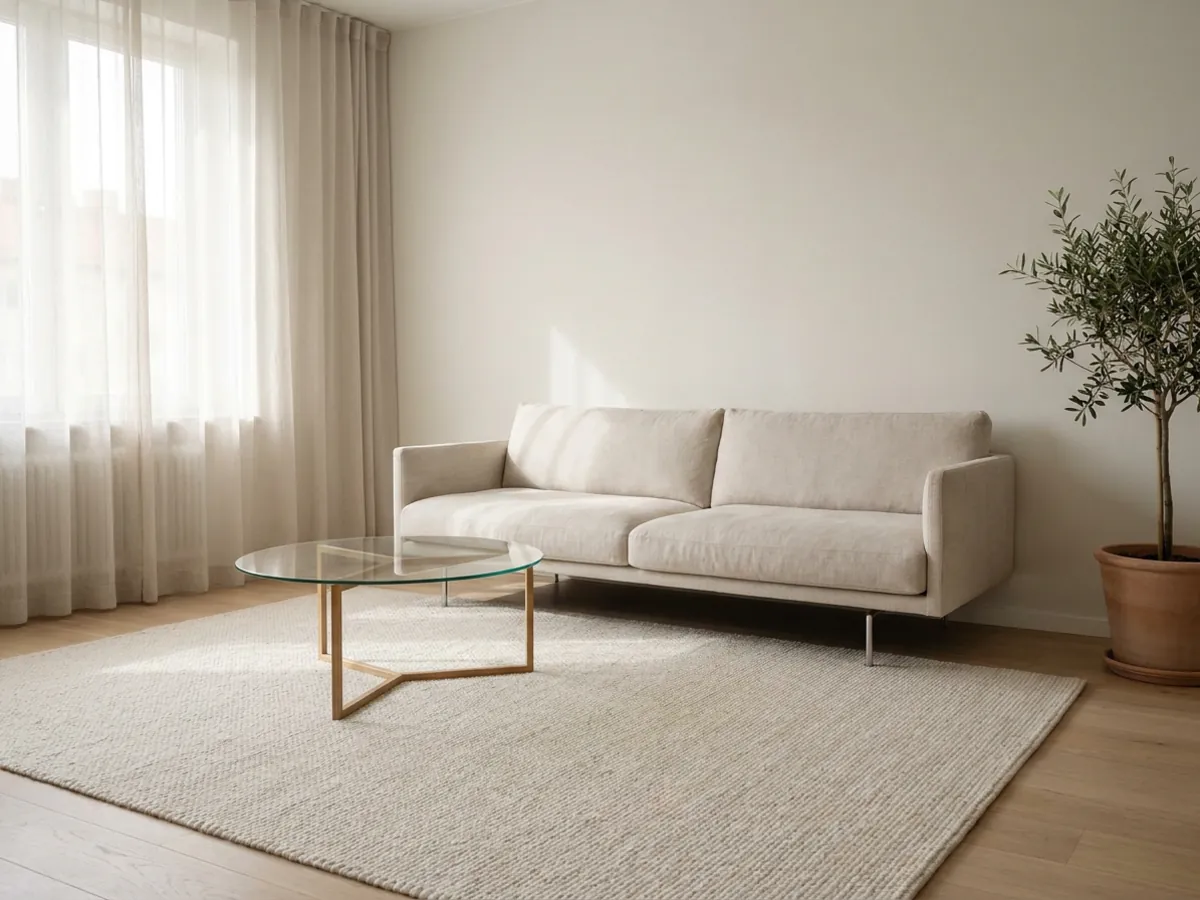
Two furniture mistakes shrink a small room: pieces that are too big, and pieces that sit heavy on the floor. Fix the first by scaling furniture to the room rather than buying the largest thing that fits, so there is still space to move around it. Fix the second by choosing furniture on legs, which lets the floor show through underneath. Visible floor reads as more space, so leggy, raised pieces make the whole room feel larger than skirted, floor-hugging ones.
The same logic applies to how you place things. Pulling furniture a few inches off the wall, rather than jamming it against the plaster, actually gives a room a more open, considered feeling. And leaving clear sightlines and a clear path through the space matters more than filling the center. Right-sized, raised, and slightly floated furniture is one of the biggest levers you have, and an AI room planner lets you test the scale and placement before you commit.
Layer natural and lamp light so the room feels open
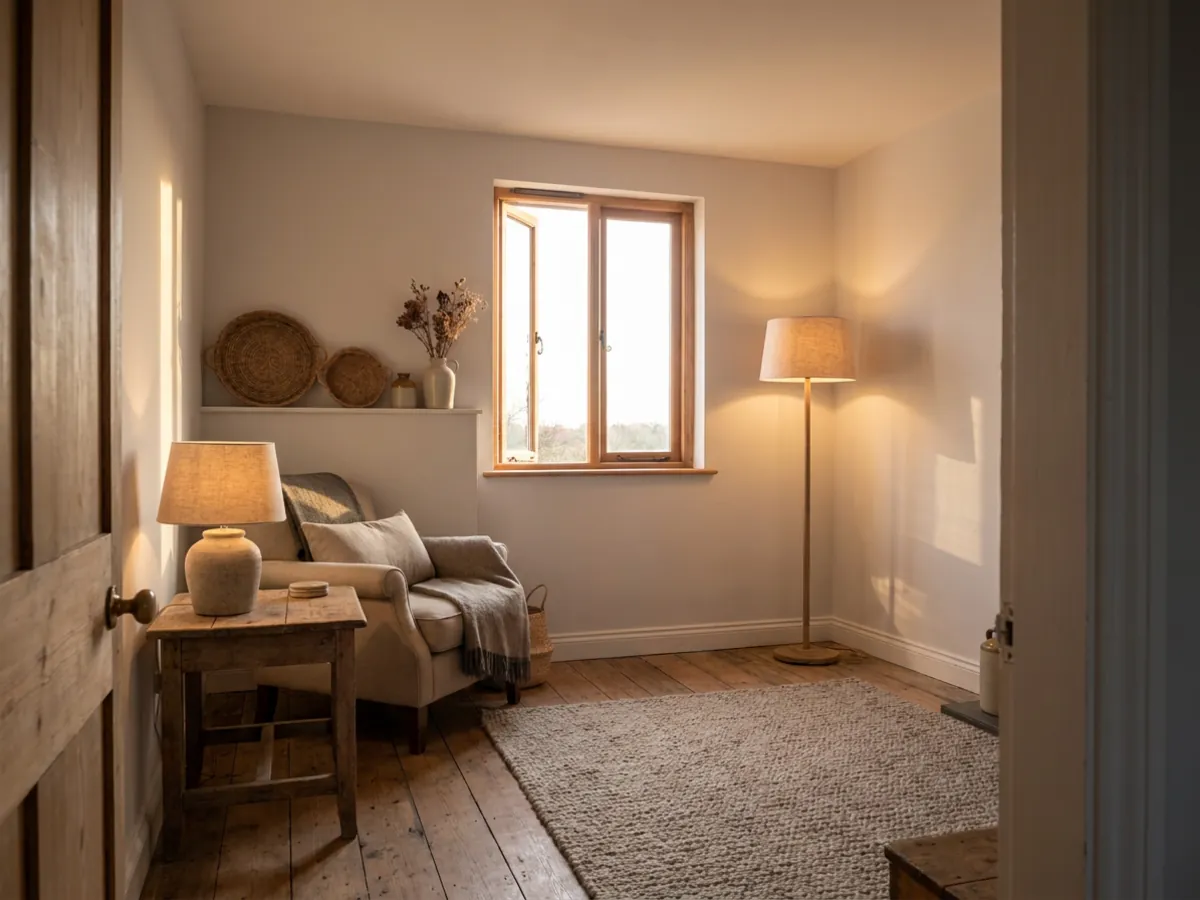
Light is space. A dim room always feels smaller, and a single harsh overhead light flattens a room and deadens its corners. The fix is to layer light: maximize the daylight first by keeping windows clear, then add a floor lamp, a table lamp, and warm bulbs so the room has depth and glow after dark rather than one flat overhead glare.
Lighting the corners is the specific trick that opens a small room, because dark corners make a space feel like it stops sooner than it does. A lamp in a corner pushes the boundary of the room outward. Warm, layered light also simply makes a small room feel considered and inviting rather than cramped, which is half the battle. Combine it with the mirror above and the daylight does double duty.
Choose pale, continuous flooring
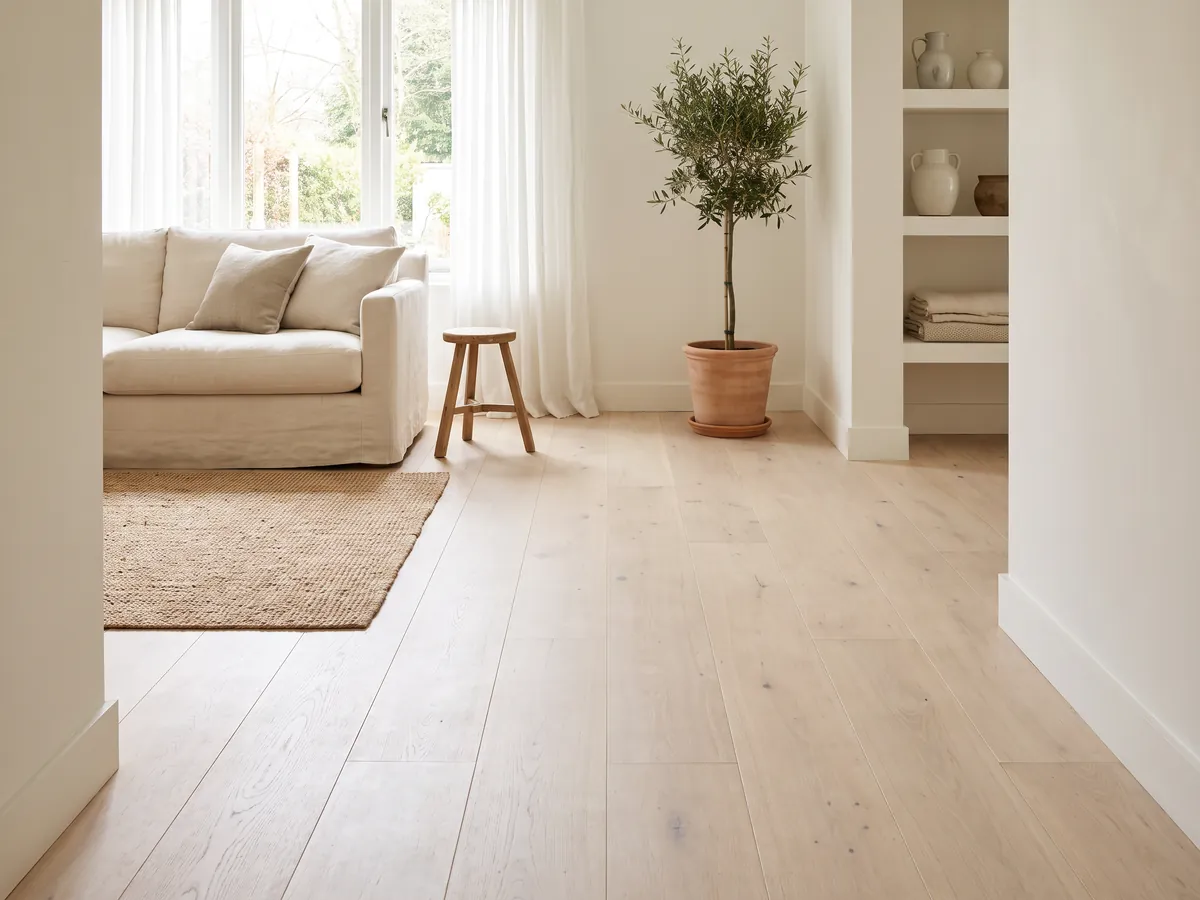
The floor is a large, uninterrupted surface, so what it does has an outsized effect. Pale, continuous flooring makes a small room feel larger, because a light, unbroken floor reads as more space, and running the same flooring through adjoining areas removes the visual thresholds that make each room feel like a separate little box. Light oak, pale wood-look, or a large-format light tile all work.
The enemies here are dark, busy, or chopped-up floors: a dark floor absorbs light, a busy pattern draws the eye down and stops it, and lots of small rugs or thresholds cut the floor into fragments. If you keep one large light rug rather than several small ones, and let the flooring run continuously, the floor works for you instead of against you. It is a bigger renovation than paint, which is all the more reason to preview it before committing.
Draw the eye up with vertical lines and high curtains
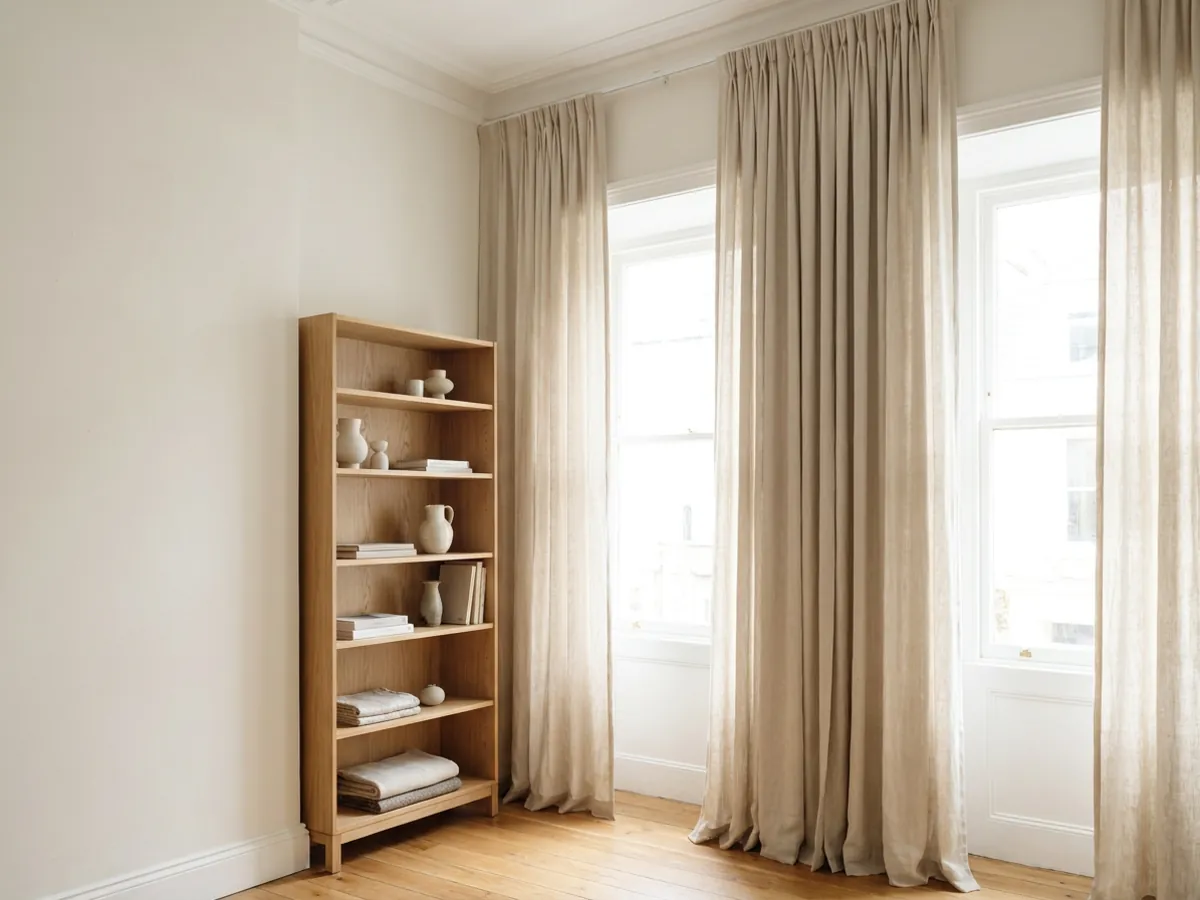
If a room feels cramped, add height. Vertical lines draw the eye upward and make a room feel taller, which reads as bigger. The easiest and cheapest version is curtains: hang them close to the ceiling and wide of the window, so the fabric falls in long vertical lines and the window, and the whole wall, feels grander than it is. Floor-to-ceiling drapes are one of the most reliable small-room upgrades there is.
Beyond curtains, tall vertical storage, a full-height bookcase, vertical panelling, or a tall piece of art all lift the perceived ceiling. A light ceiling in the same soft tone as the walls helps too, because it removes the hard line between wall and ceiling and lets the eye travel up without a stop. The theme is the same as everywhere else: fewer hard boundaries, more continuous flow, this time in the vertical direction.
Cheap ways to make a small room look bigger
Not every fix costs money. In fact the highest-impact change of all is free:
- Declutter and clear surfaces. Visual clutter is the single biggest thing that makes a room feel small, and clearing it costs nothing.
- Rehang your existing curtains close to the ceiling and wider than the window.
- Pull furniture a few inches off the wall for a more open feel.
- Move a mirror you already own to face a window.
- Add a fresh coat of light paint, the highest-impact low-cost change if you want to go one step further.
Do the free things first. A cleared, decluttered room with the curtains rehung and a mirror repositioned can feel dramatically larger before you spend anything at all. Then, if you want more, light paint is the best value upgrade. Previewing the room decluttered and repainted first shows you how far the free and cheap changes get you before you decide to invest more.
How to make a tiny bedroom or studio look bigger
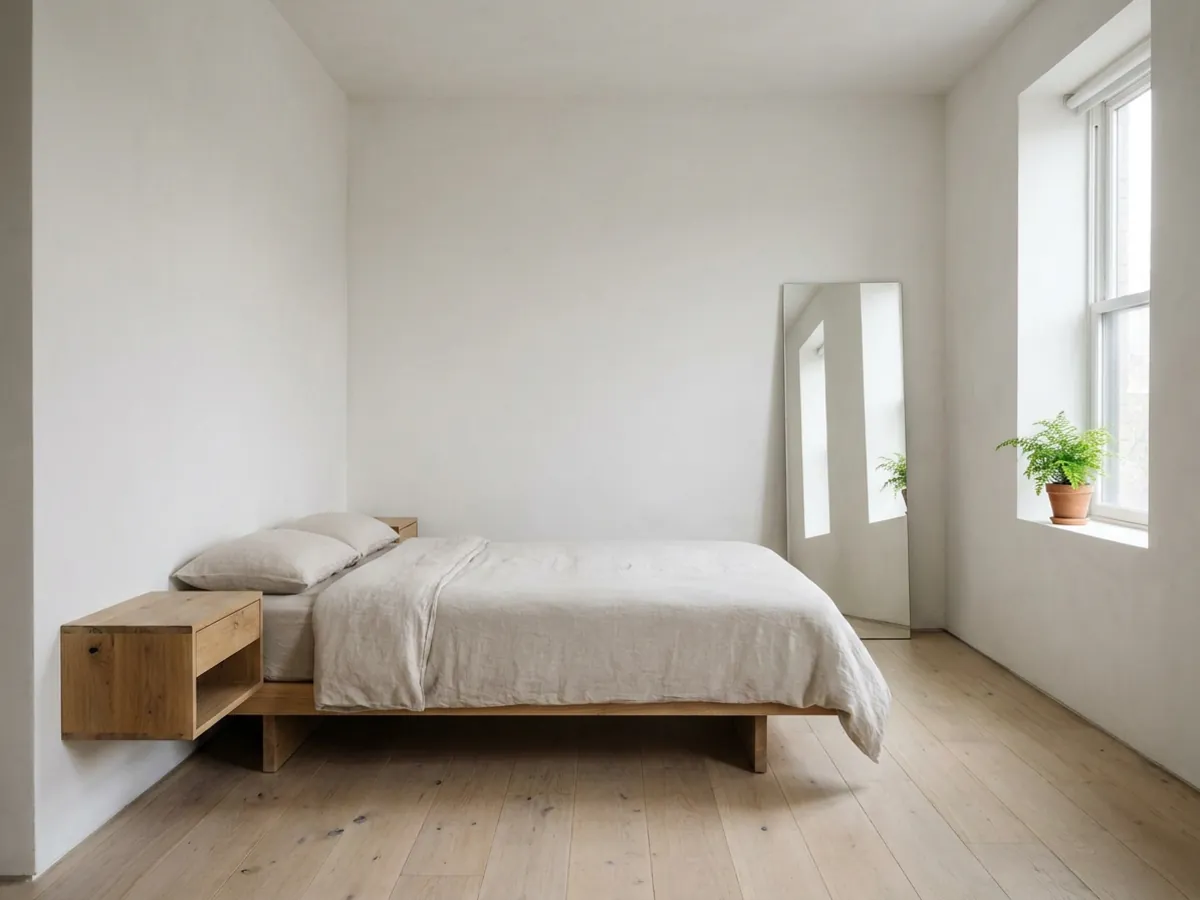
A tiny bedroom concentrates all the tricks above into one small space. Use a low or platform bed to open up the wall above it and lower the visual weight, and choose floating nightstands so the floor stays visible. Add vertical and under-bed storage to keep surfaces clear, since clutter is even more damaging in a small bedroom, and keep to one soft wall tone throughout. A single mirror does more than lots of small decor.
Finish with continuous pale flooring and light curtains hung high, and the room will feel noticeably larger than its footprint. The same approach scales to a studio: keep one palette across the whole space, float the furniture, and use continuous flooring to make separate zones read as one open room. You can design a small bedroom with AI to test it, and a calm, airy look like a coastal bedroom or a Scandinavian scheme suits a tiny room especially well.
Preview every trick on your own room first
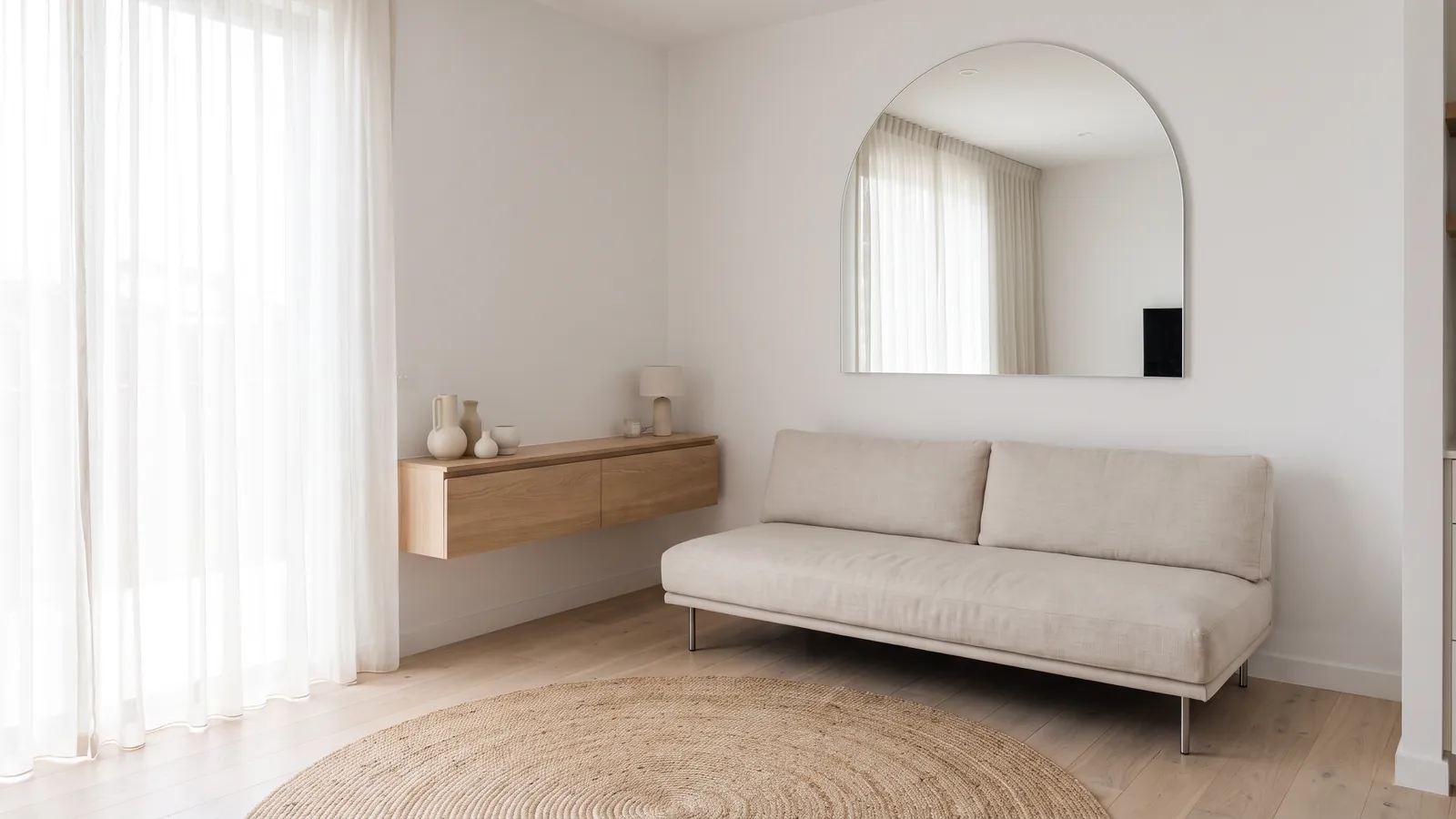
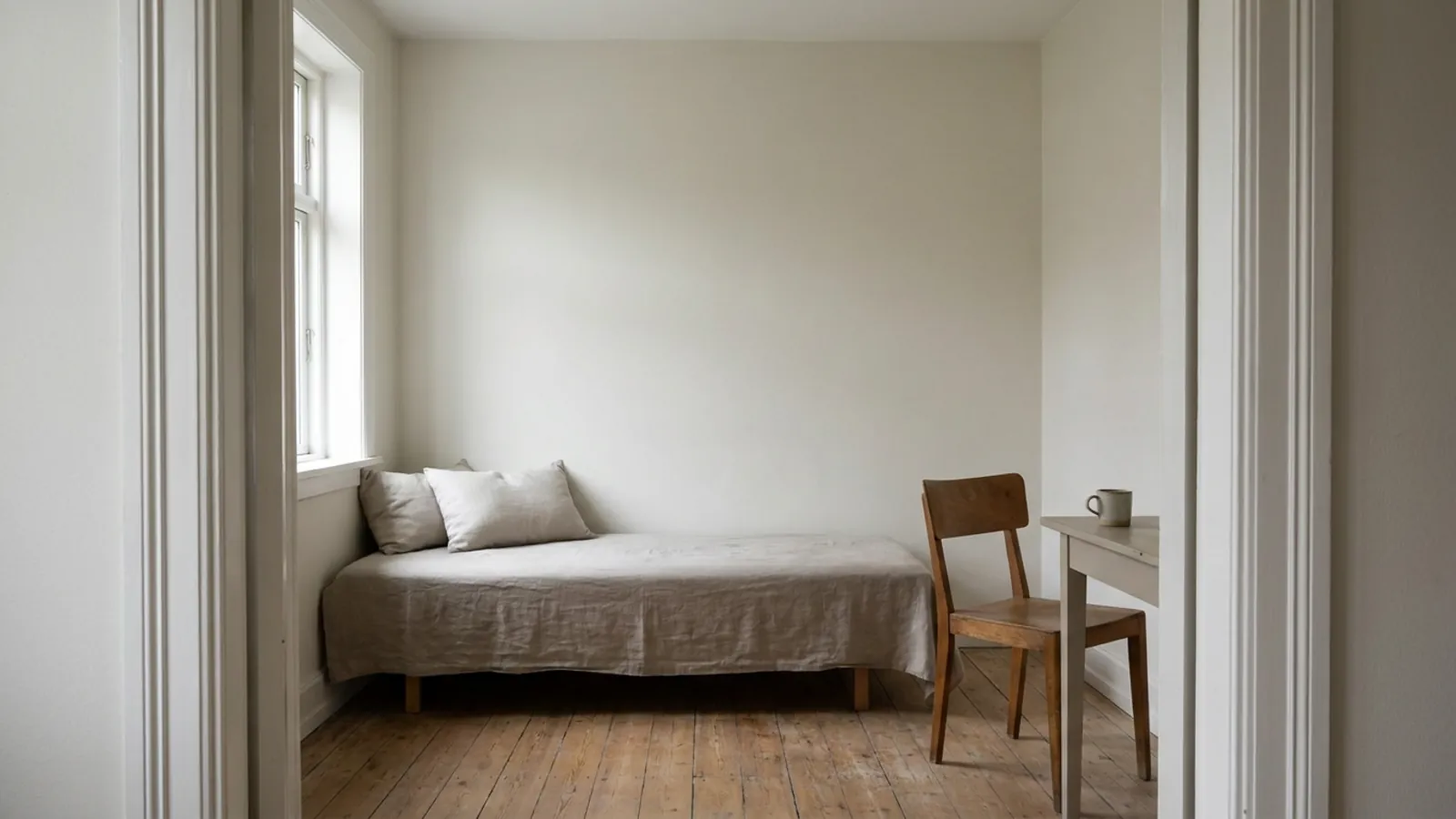 Before
Restyled
Before
Restyled
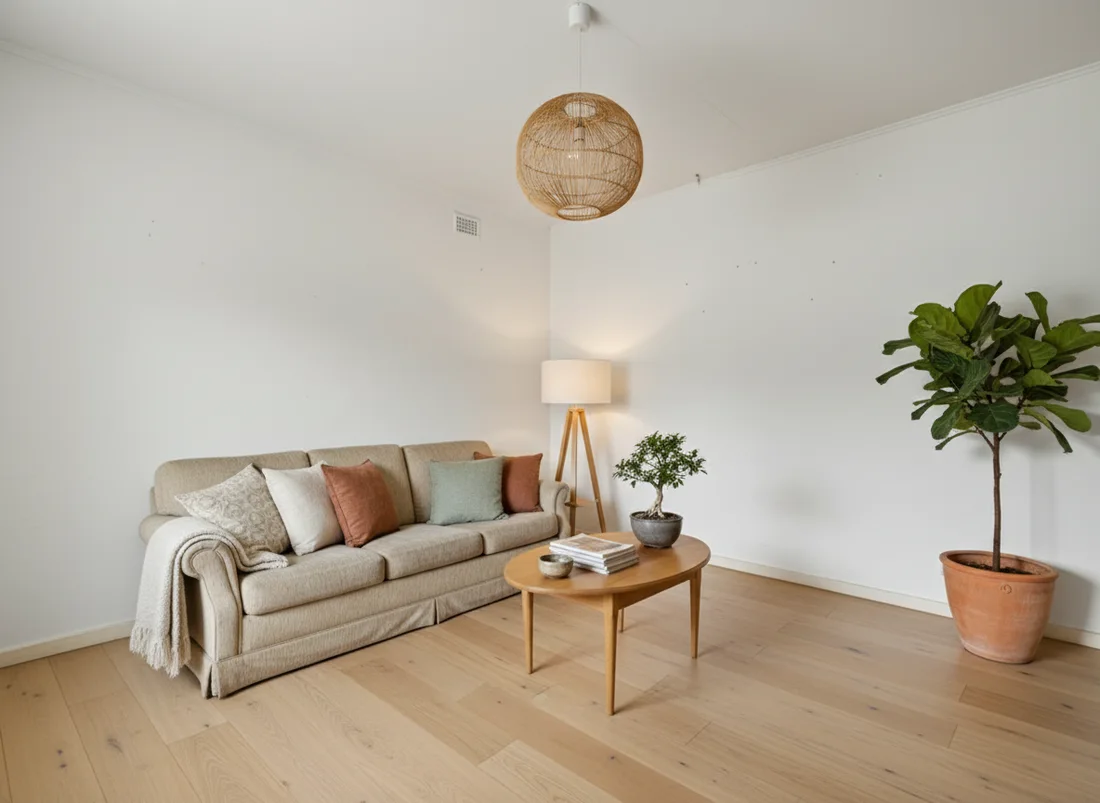
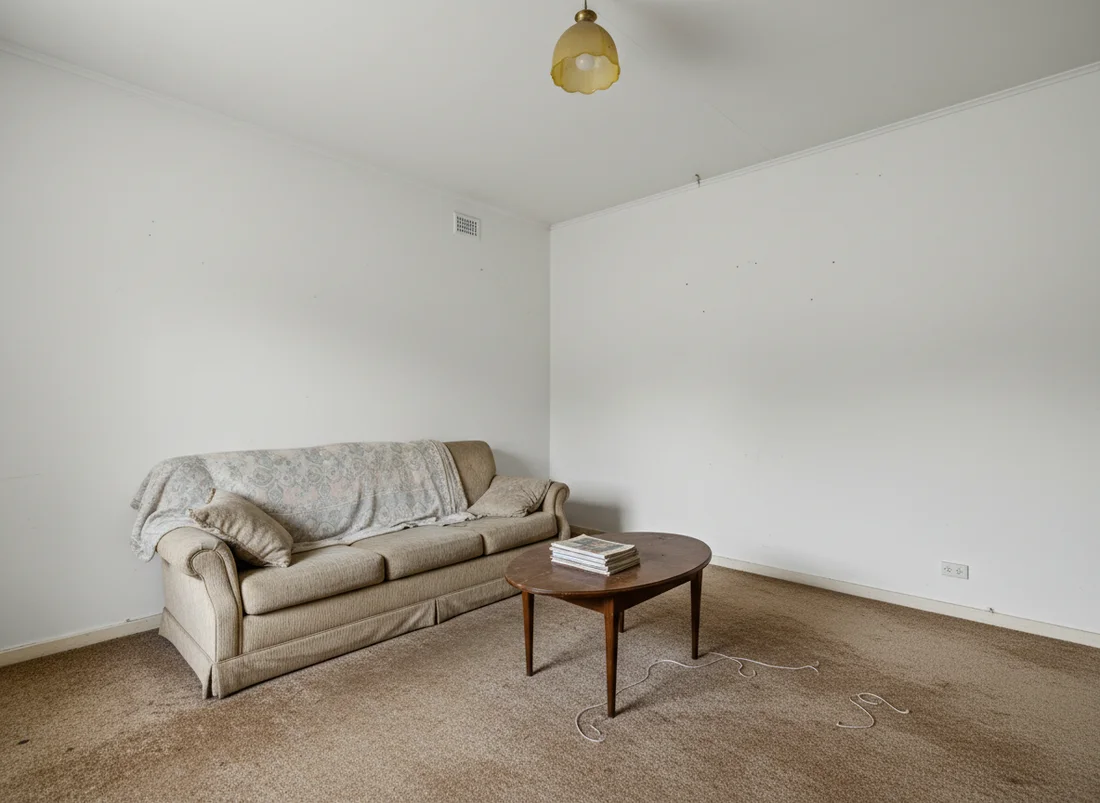
The reason to preview rather than guess is that these tricks interact with your room's real light and proportions, and what opens one room can fall flat in another. Upload one photo of your room and preview lighter paint, a mirror, floating furniture, or pale flooring on the actual space before spending anything. You can compare options side by side and pick the one that genuinely opens the room, rather than repainting twice.
The first render is free with no signup. You can furnish an empty room first with virtual staging, then restyle your small room with each trick and keep the combination that makes it feel biggest, before you buy a tin of paint or a single piece of furniture.
Frequently asked questions
What colors make a small room look bigger? +
Light, low-contrast colors work best because they reflect more light and soften the line where walls meet, so soft whites, warm off-whites, pale grays and taupe are reliable choices. Cool receding tones like airy blue and soft green also visually push walls back. Painting walls, trim and ceiling in one close tone removes hard boundaries and makes the room read as larger. A soft warm white usually beats a bright crisp white, which can sharpen shadows in corners.
What are the cheapest ways to make a small room look bigger? +
Start by decluttering and clearing surfaces, since visual clutter is the biggest thing that makes a room feel small, and it costs nothing. Rehang existing curtains close to the ceiling, pull furniture a few inches off the wall, and place a mirror you already own opposite a window. A fresh coat of light paint is the highest-impact low-cost change if you want to go one step further.
How do you make a tiny bedroom look bigger? +
Use a low or platform bed to open up the wall above it, and choose floating nightstands so the floor stays visible. Add vertical and under-bed storage to keep surfaces clear, keep to one soft wall tone, and use a single mirror rather than lots of small decor. Continuous pale flooring and light curtains hung high finish the effect.
Do mirrors really make a room look bigger? +
Yes, a mirror placed across from or beside a window bounces daylight back into the room and adds a sense of depth, so the space reads brighter and larger. A large mirror or a leaning floor mirror works best. Just avoid aiming a mirror at clutter, because it will double whatever it reflects.
Does a light or dark ceiling make a room look bigger? +
A light ceiling in the same soft tone as the walls usually makes a small room feel taller and more open because it removes the hard line between wall and ceiling. Very dark ceilings can feel intentional in some designs but tend to lower the perceived height of a small room. Keeping the ceiling pale and continuous with the walls is the safer choice for making a space feel bigger.
Can I see how these changes would look before I commit? +
Yes. You can upload one photo of your room and preview lighter paint, a mirror, floating furniture or pale flooring on the actual space before spending anything. The first render is free, so you can compare options and pick the one that genuinely opens the room. The tool can also generate a short video walkthrough of the restyled room.
 After
After
 Before
See it on your own room
Your room, redesigned
Upload one photo and watch your room restyled in a wide range of designer looks. Your walls, windows and layout stay exactly as they are.
Try it free, no signupOne photo. In seconds. No signup.