restylai blog
Scandinavian Interior Design: How to Get the Look
Updated July 19, 2026 · by the restylai team
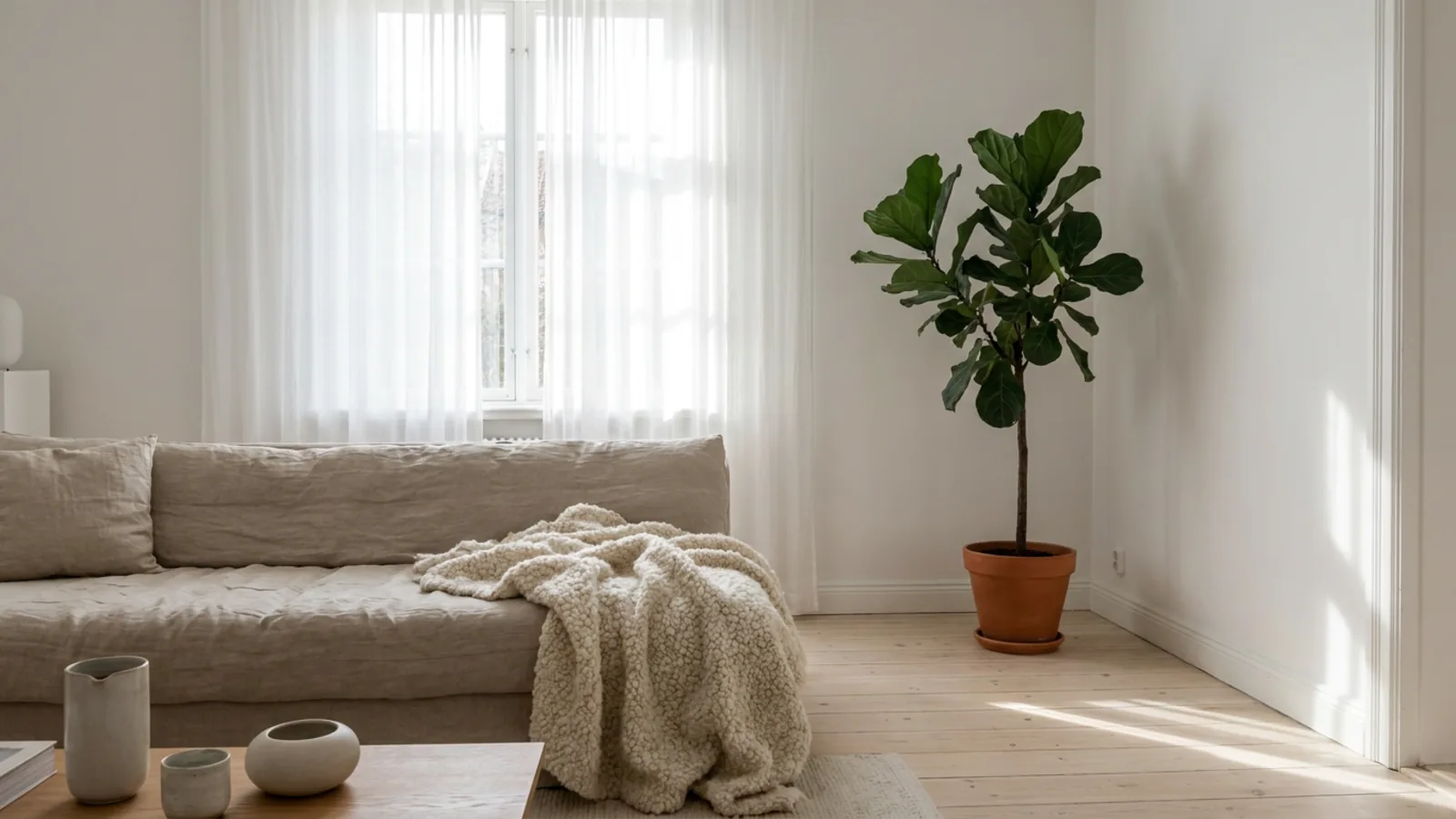
Scandinavian design is the most searched interior style in the world, and it is easy to see why: it is light, calm, functional, and endlessly liveable. Born in the Nordic countries where winters are long and daylight is precious, it evolved to make homes feel bright, warm, and welcoming even in the dark months. The result is a look built on pale woods, soft neutrals, natural textiles, and a deep respect for light and function, a style that feels fresh decades after it first appeared.
This guide covers what Scandinavian style actually is, the elements that define it, its palette and the 60-30-10 balance, its materials and furniture, the role of light and greenery, how it compares to Japandi and minimalism, and how to get the look room by room, then how to preview it on your own space.
What Scandinavian interior style actually is
Scandinavian interior design is a style defined by light, function, and calm. It emerged in the Nordic countries in the mid twentieth century, shaped by the long, dark winters that made maximizing daylight a necessity and by a cultural belief that good, functional design should be available to everyone. At its heart are a few simple ideas: keep it light and bright, keep it simple and functional, and make it cozy and warm through natural materials rather than color.
The style has real history behind it. It took shape across Denmark, Sweden, Norway, and Finland in the 1930s to 1950s, part of a broader movement that believed beautiful, functional objects should be affordable and available to everyone, not just the wealthy. That democratic, practical spirit is why Scandinavian design still feels honest and unpretentious: the pieces are made to be used, the materials are natural and durable, and nothing is decorative for its own sake. Understanding that origin explains why the look has never really dated.
The feeling it aims for is hygge, the Danish sense of cozy, everyday contentment, a home that feels calm, uncluttered, and genuinely comfortable to live in. It is minimal, but never cold, because the pale palette is always softened by warm woods and tactile textiles. That balance, bright and simple but warm and cozy, is the whole style, and everything below is a way of achieving it. You can see it applied to your own space when you redesign a room from a photo.
The core elements that define the look
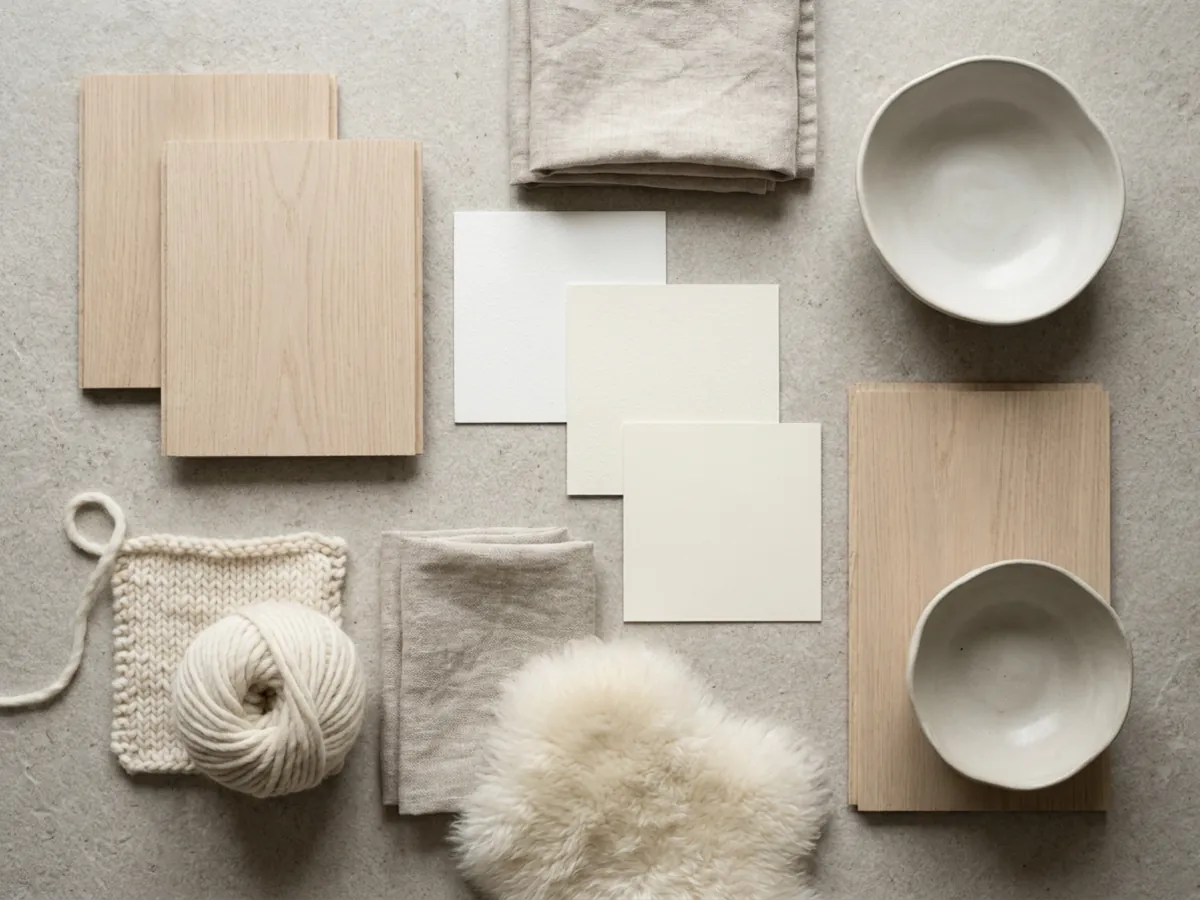
A handful of elements appear in almost every Scandinavian room:
- A light, neutral base. White and off-white walls that reflect what daylight there is and keep the room feeling airy.
- Light woods. Birch, ash, pine, and pale oak, used generously on floors and furniture for warmth.
- Clean, functional forms. Simple, uncluttered furniture where function comes first and nothing is ornamental for its own sake.
- Soft, natural textiles. Wool, linen, cotton, and sheepskin layered for comfort and texture.
- Maximized light and a few plants. Bare or sheer windows, plenty of lamps, and greenery to bring life to the neutral scheme.
The common thread is that warmth comes from material and texture, not from color. A Scandinavian room can be almost entirely neutral and still feel cozy, because the wood, wool, and light are doing the work. Get these five elements right and the style largely takes care of itself.
The Scandinavian color palette and the 60-30-10 balance
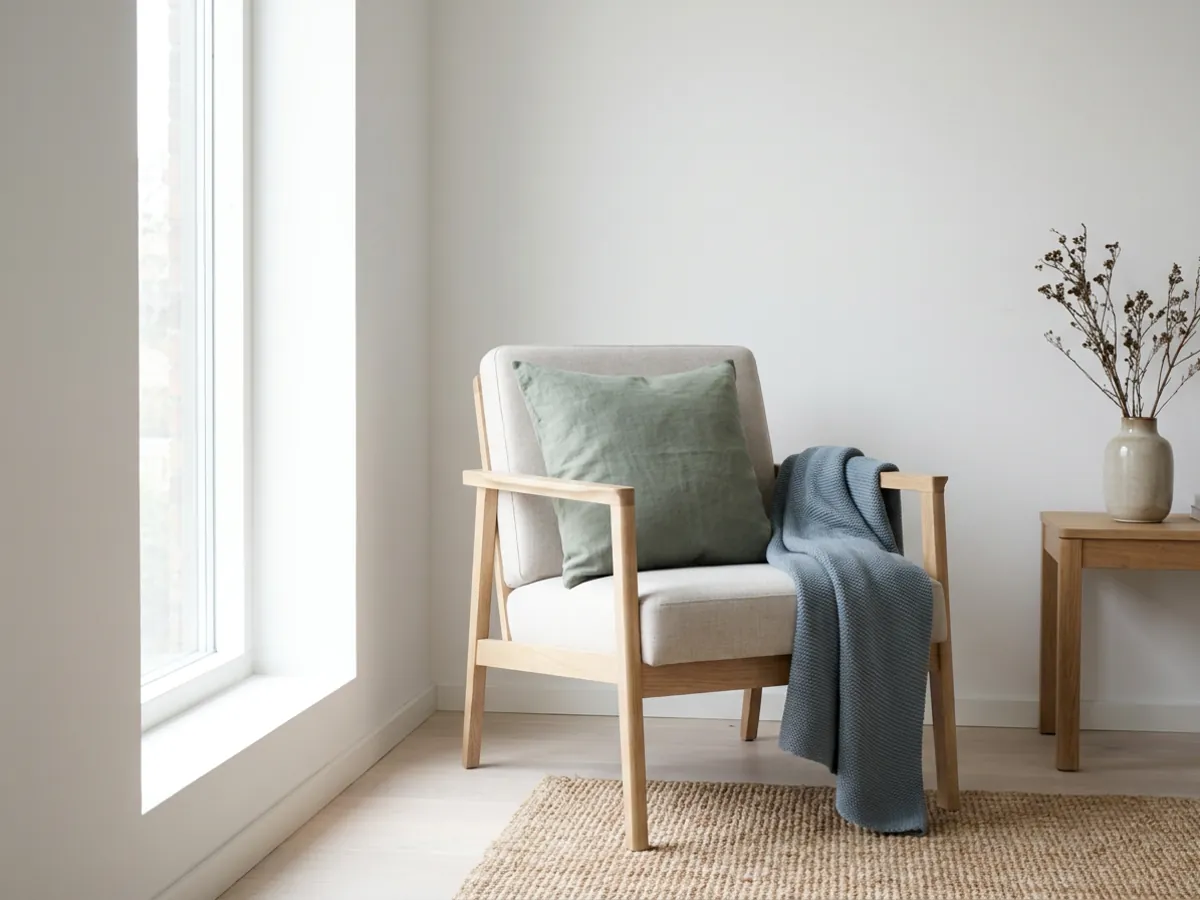
The palette is deliberately restrained. It starts from a base of whites and warm off-whites, adds a supporting layer of soft greys and warm beiges, and finishes with muted accents, dusty blue, sage green, soft blush, or black for contrast, used sparingly. Warm off-whites tend to work better than a stark, crisp white, which can feel cold in northern light.
The 60-30-10 rule keeps it balanced: roughly 60 percent in the light base on walls and large surfaces, 30 percent in the secondary neutrals through furniture and textiles, and 10 percent in a muted accent via cushions, art, or a single piece. Because the whole palette is low-contrast, texture carries the interest that color would in a bolder scheme. Keeping the accents muted and few is what gives a Scandinavian room its serene, put-together calm.
Light, natural, and warm: the material palette
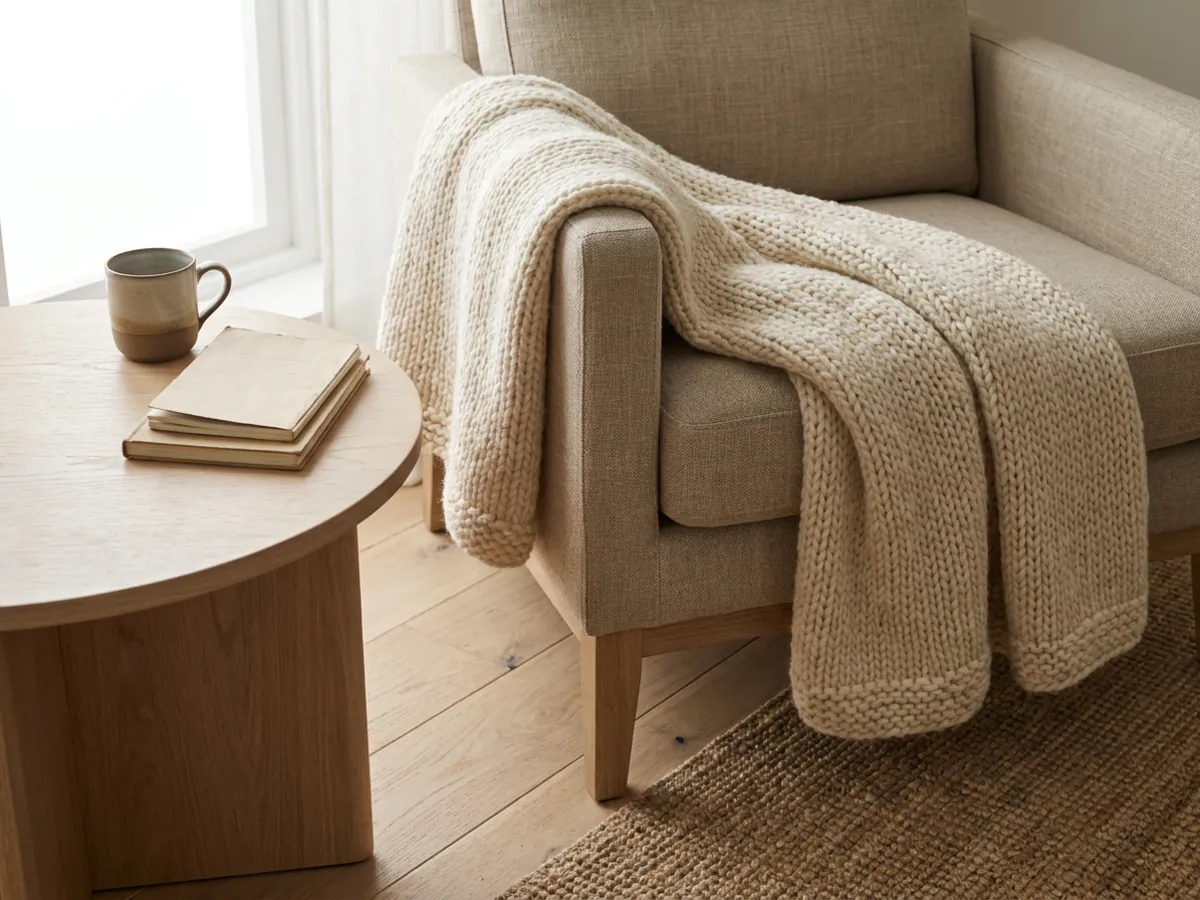
If the palette is quiet, the materials are where a Scandinavian room comes alive. Everything is natural and tactile: light woods above all, joined by wool, linen, cotton, sheepskin, leather, and matte ceramics. Because the colors are so restrained, the layering of these textures is what stops a room feeling flat, a chunky wool throw over a linen sofa, a sheepskin on a wooden chair, a jute rug on a pale oak floor.
The one discipline worth keeping is to lean on a consistent light-wood tone and repeat it, rather than mixing several clashing woods. Warm oak or birch running through the floor, furniture, and details gives the room a cohesive, gathered feeling. Get the materials and their layering right and the style is most of the way home, which is exactly the kind of thing worth testing on your own room with interior design software before buying.
Furniture and shapes: clean lines, tapered legs, low profiles
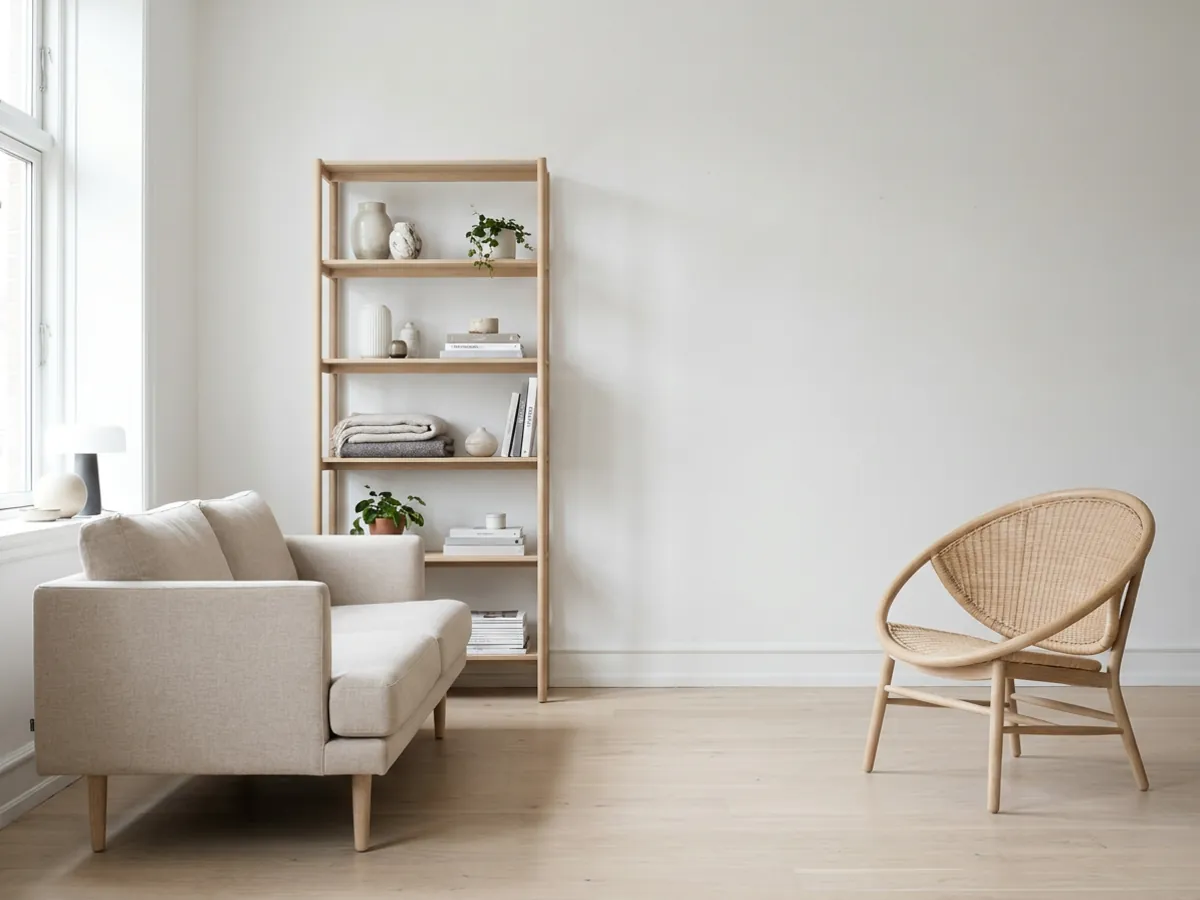
Scandinavian furniture is defined by clean lines and honest function. Pieces are simple and uncluttered, often raised on slim, tapered wood legs that lift them off the floor and keep the room feeling light and open. Profiles tend to be low, and forms are gently organic, softened curves balancing the straight lines, so the look is warm rather than severe.
The emphasis is always on quality over quantity: a few well-made, well-designed pieces rather than a crowded room. That leggy, low, uncluttered furniture is a big part of why Scandinavian rooms feel so airy, because the visible floor and the space around each piece read as openness. When you are choosing furniture for the look, favor slim legs, low profiles, and light wood, and give each piece room to breathe.
Light and greenery: sheer curtains, mirrors, and plants
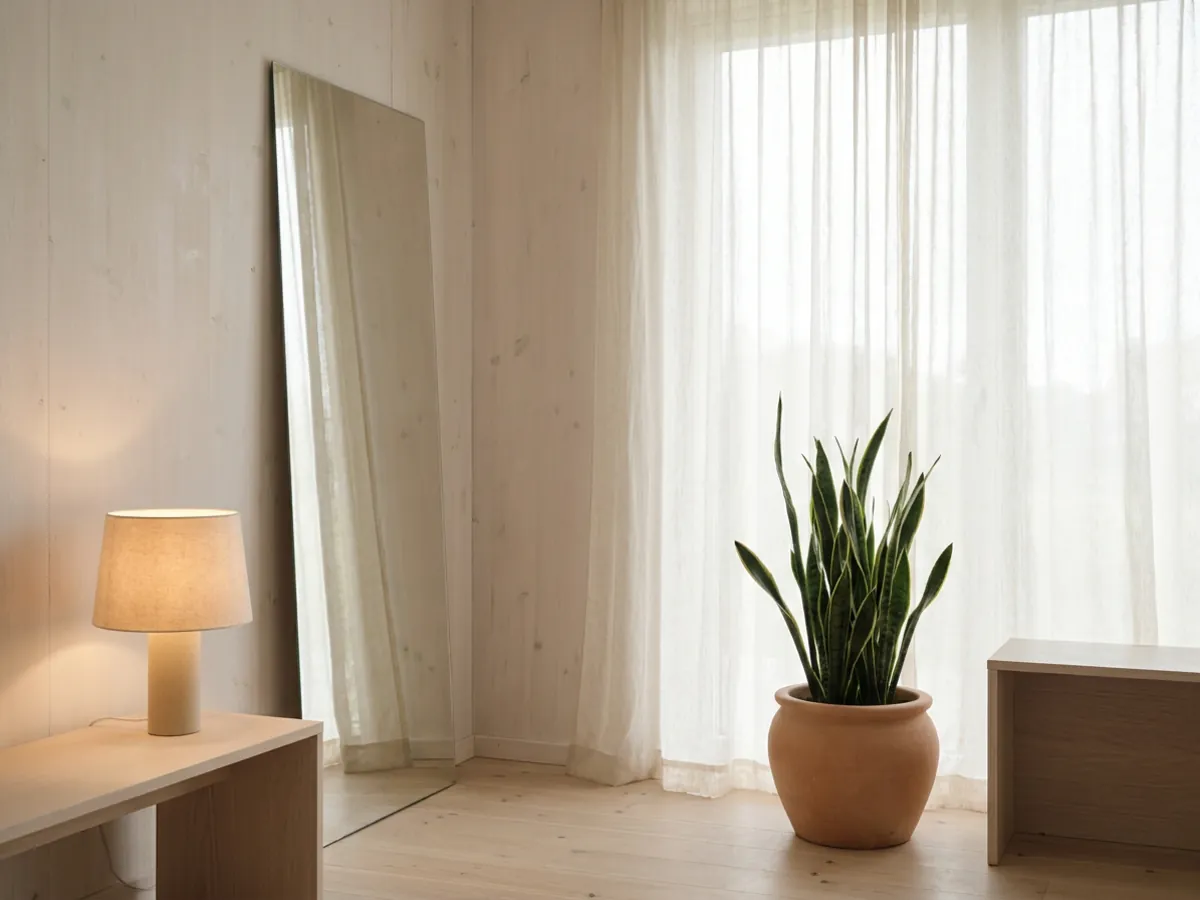
Light is the soul of Scandinavian design, so the whole room is arranged to catch and spread it. Keep windows bare or dressed only in the lightest sheers, so nothing blocks the daylight. Add a mirror to bounce that light deeper into the room, and layer in plenty of lamps, warm and low, for the long evenings, since Scandinavian lighting is about a warm glow rather than a single bright overhead.
Greenery is the finishing touch. A few plants bring life, color, and a connection to nature into the neutral scheme, softening the palette without adding clutter. Together, maximized daylight, warm layered lamplight, and a little greenery are what make a Scandinavian room feel alive and welcoming rather than merely pale. In a dark room they matter even more, since the pale palette and reflected light are what keep it from feeling gloomy.
Scandinavian vs Japandi vs minimalism
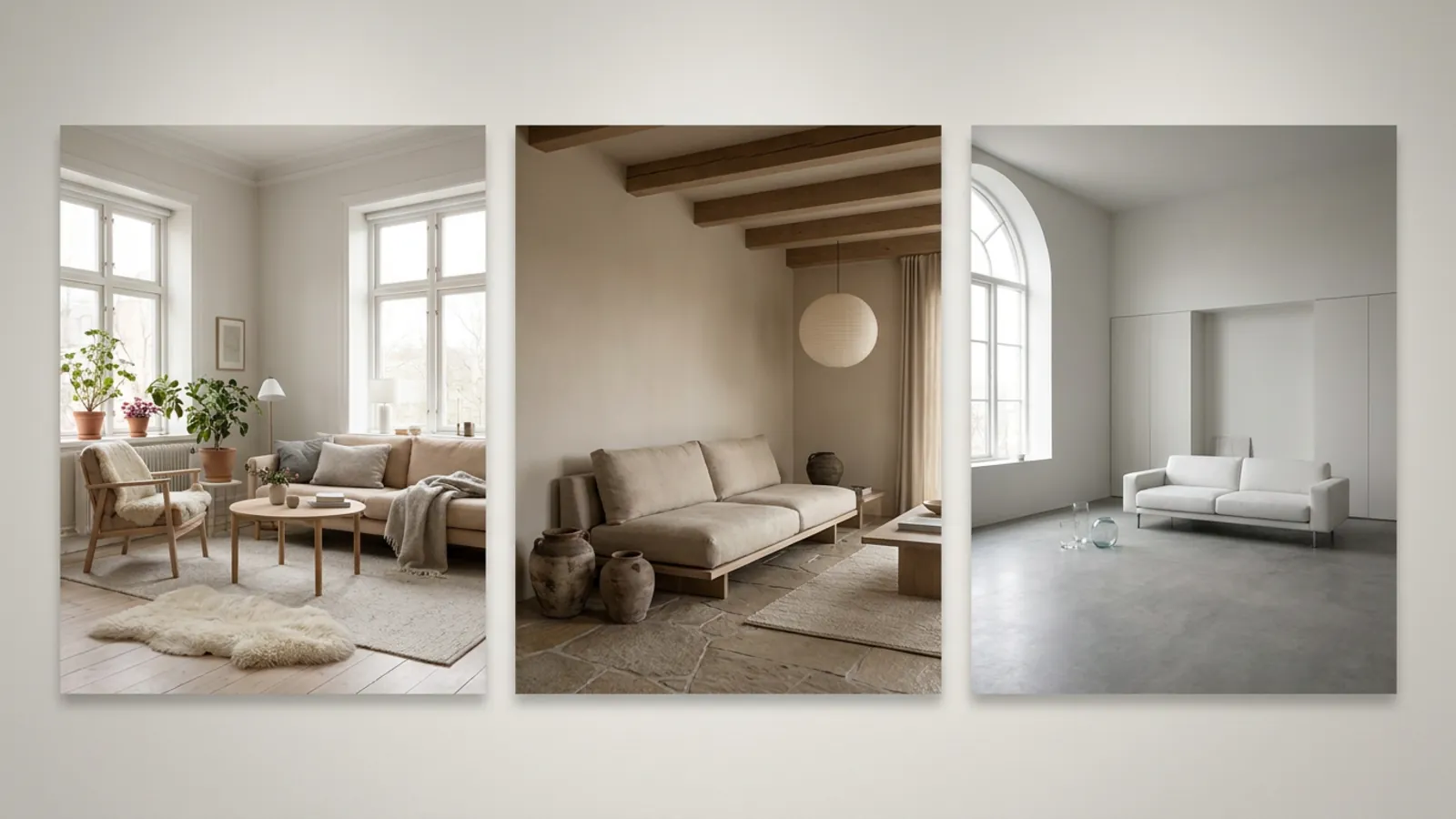
Scandinavian is often confused with two neighbors, so it helps to place it. Compared with Japandi, the two share a love of calm, natural materials, and light woods, but Japandi adds darker woods, more sculptural restraint, and a warmer, earthier contrast, where Scandinavian stays lighter and brighter. Compared with minimalism, Scandinavian is related but warmer: it keeps the cozy textiles and hygge comfort that pure minimalism strips further back.
The simplest way to hold the differences: Scandinavian is light and cozy, Japandi is warm and grounded, and minimalism is spare and pared back. All three value simplicity and quality, but they balance warmth and restraint differently. For a deeper look at the closest comparison, see Scandinavian vs Japandi, which breaks the two down side by side.
Getting the look, room by room
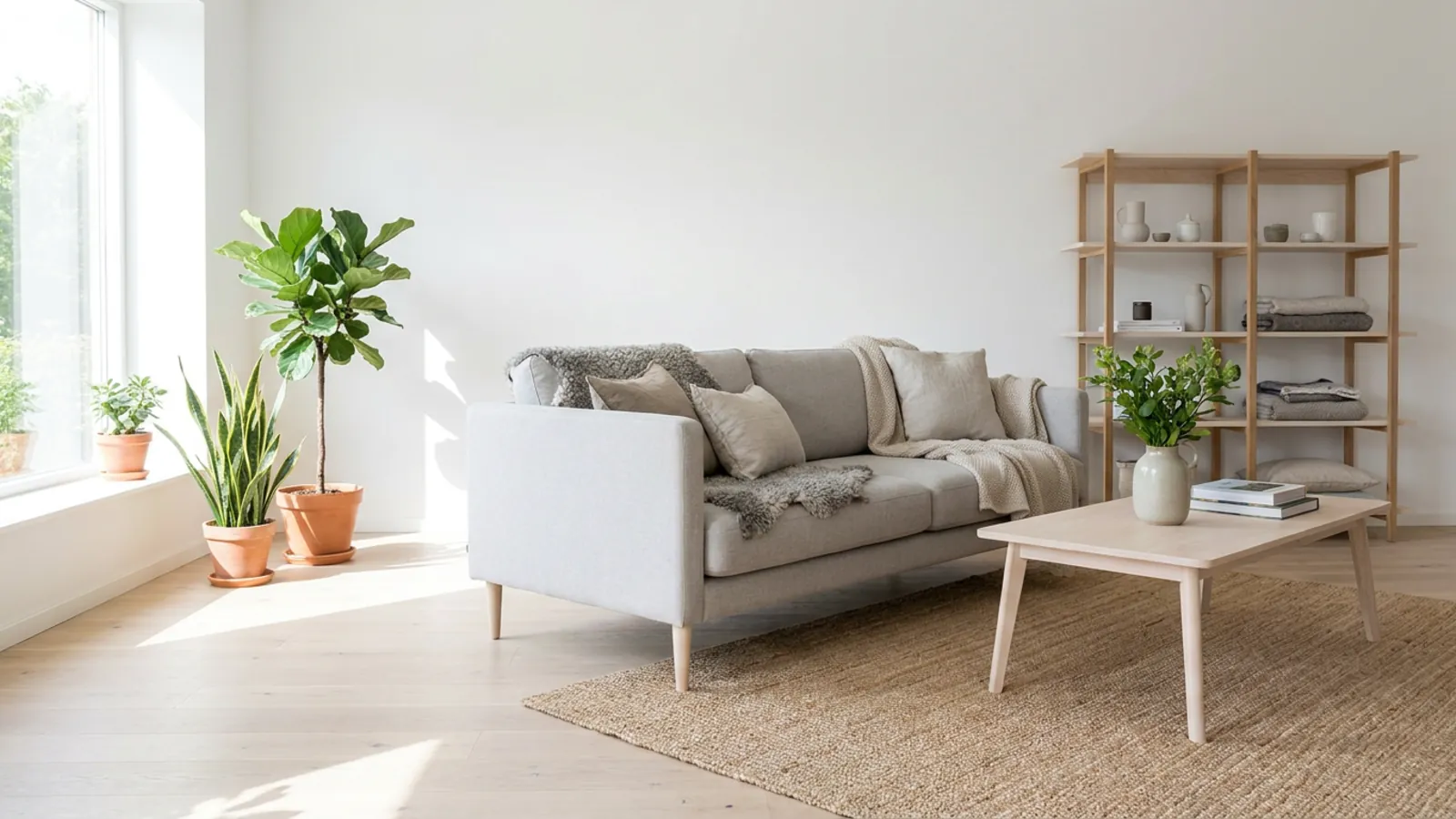
Scandinavian style suits every room, each with its own emphasis. In the living room, build around a light-grey or linen sofa on tapered legs, a pale wood coffee table, a jute or wool rug, and one or two muted accents, and let the daylight lead. Start from a Scandinavian living room for reference.
In the bedroom, keep it calm and layered: a low wood bed, white and warm-neutral linen, sheepskin or wool for texture, and soft low lighting. You can design a Scandinavian bedroom from a photo, or begin with a Scandinavian bedroom. In the kitchen, the look reads through pale or white cabinets, light wood, simple hardware, and clear counters, and a kitchen restyle previews it before you commit to cabinetry. In the dining room, a light wood table with simple, often iconic chairs and a single sculptural pendant is the whole recipe, and a small home office or entryway takes the same cues in miniature: a pale wood desk or bench, one plant, and plenty of light. Across every room the thread is the same: light base, light wood, soft texture, and function first, so the whole home feels like one bright, calm place.
See it on your own room before you buy anything
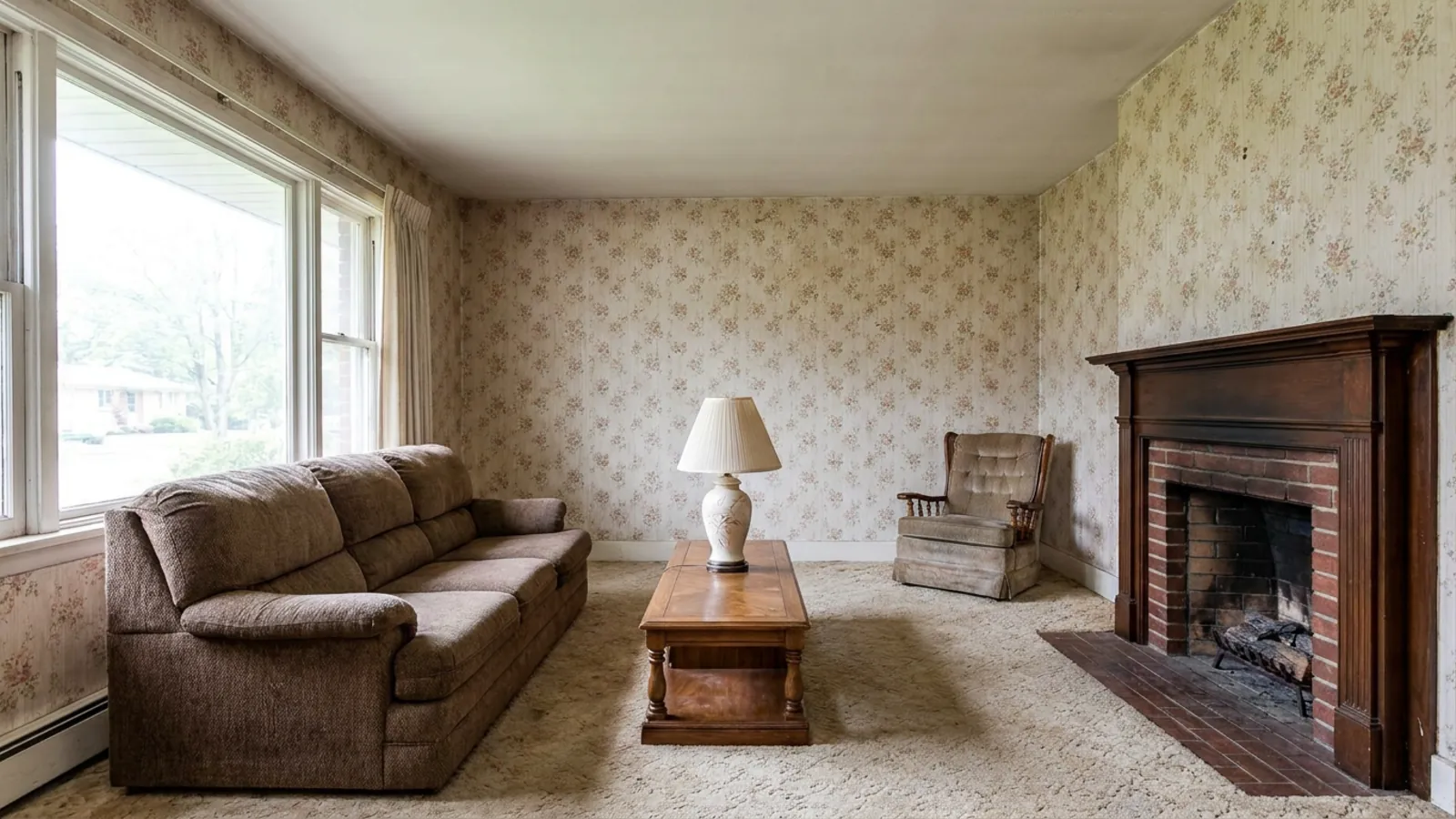 Before
Scandinavian
Before
Scandinavian
The surest way to know whether Scandinavian style suits your home is to see it there. Upload a photo and restyle your actual room in the look, keeping your layout and windows while the palette, materials, and furniture change, and you will see your own space with light woods, a neutral palette, and soft textiles in seconds. It is the honest test that no mood board can give, because it uses your room's real proportions and light.
The first render is free with no signup, so you can find out whether the look lands before spending anything. You can plan the layout with an AI room planner, furnish an empty room with virtual staging, then restyle your own room in Scandinavian and keep what genuinely works for your space.
Frequently asked questions
What defines Scandinavian interior style? +
Scandinavian style is defined by light, function, and calm: a pale white and off-white base, light woods like birch and oak, simple functional furniture, and soft natural textiles, with as much daylight as the room allows. Warmth comes from material and texture rather than color, so a mostly neutral room still feels cozy.
What colors are used in Scandinavian design? +
A restrained palette of whites and warm off-whites for the base, soft greys and warm beiges as the secondary, and muted accents like dusty blue, sage, soft blush, or black used sparingly. Warm off-whites usually beat a stark crisp white. The 60-30-10 balance keeps it composed, and texture carries the interest.
What is the difference between Scandinavian and Japandi? +
The two share a love of calm, natural materials, and light woods, but Japandi adds darker woods, more sculptural restraint, and a warmer, earthier contrast, while Scandinavian stays lighter and brighter. In short, Scandinavian is light and cozy, Japandi is warm and grounded.
Does Scandinavian style work in small or dark rooms? +
Yes, it is one of the best styles for them. The pale palette, mirrors, low leggy furniture, and light woods bounce what daylight there is and make a small, dim room feel larger and brighter, which is exactly the problem the style evolved to solve.
Is Scandinavian style the same as minimalism? +
They are related but not the same. Scandinavian is a warmer form of minimalism: it keeps the cozy textiles, layered wood, and hygge comfort that pure minimalism strips further back. Both value simplicity, but Scandinavian never aims for austere.
What flooring suits Scandinavian design? +
Light oak or other pale woods in wide planks are the classic choice, often with a soft wool or jute rug layered on top. A pale, continuous floor reflects light and keeps the room feeling bright and open, which is central to the whole look.
How do I add warmth so a pale room does not feel cold? +
Layer natural textures, wool, linen, and sheepskin, add warm, low lighting from lamps rather than a single overhead, repeat a warm wood tone through the room, and bring in a few plants. Warmth in Scandinavian design comes from material, light, and greenery, not from color.
How can I see my own room in Scandinavian style? +
Upload a photo of your room and restyle it in the Scandinavian look, keeping your walls, windows, and layout while the palette, materials, and furniture change. You see a photorealistic version of your actual room in seconds, and the first render is free.
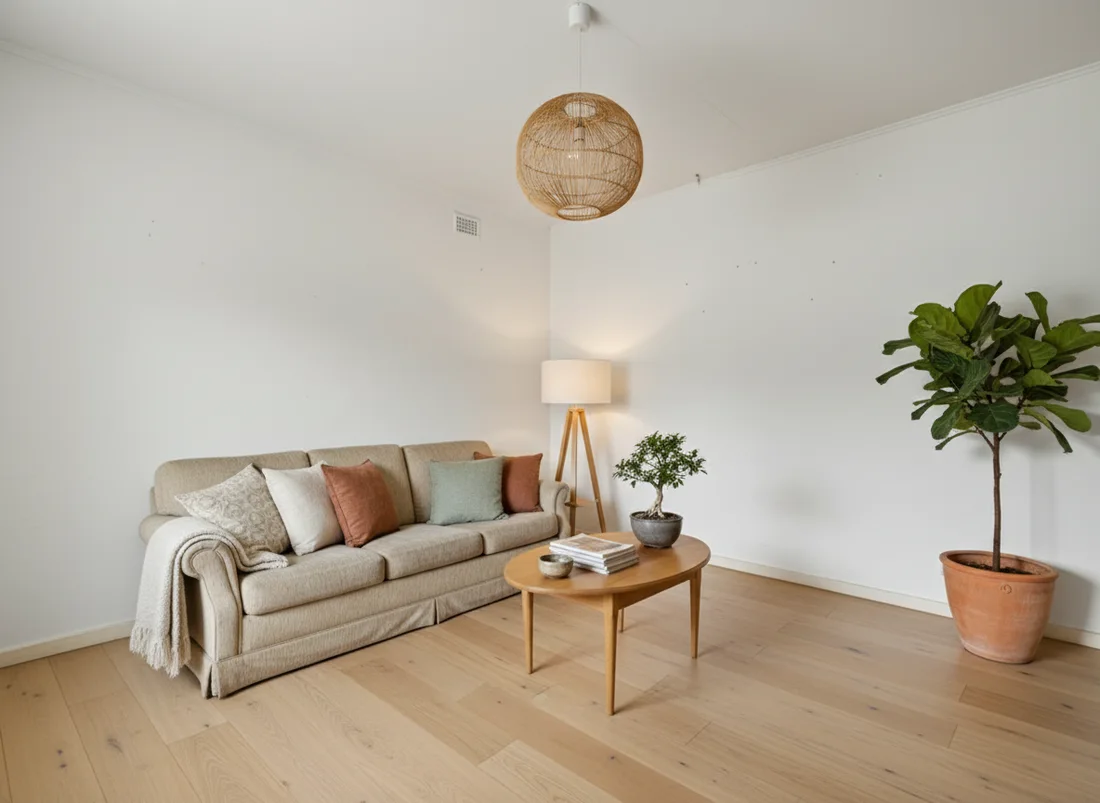 After
After
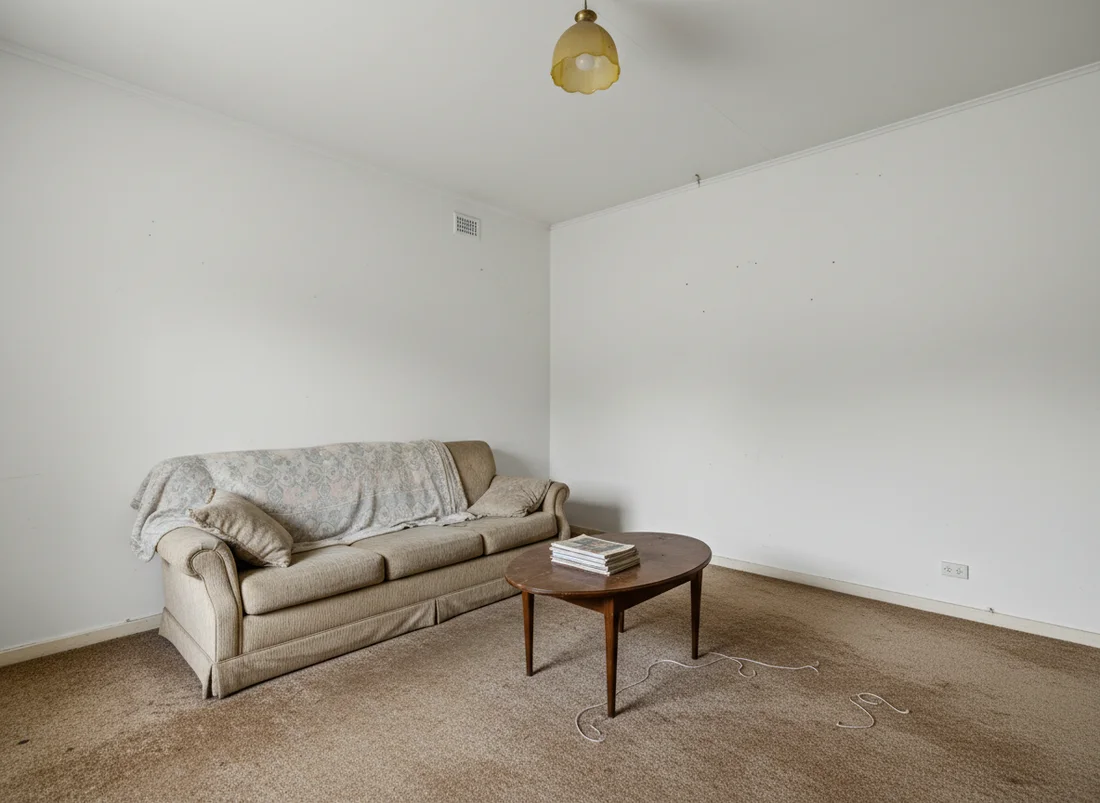 Before
See it on your own room
Your room, redesigned
Upload one photo and watch your room restyled in a wide range of designer looks. Your walls, windows and layout stay exactly as they are.
Try it free, no signupOne photo. In seconds. No signup.